
Spain
From flamenco and sevillanas to the sardana, the jota and the muiñeira: twenty living dance traditions
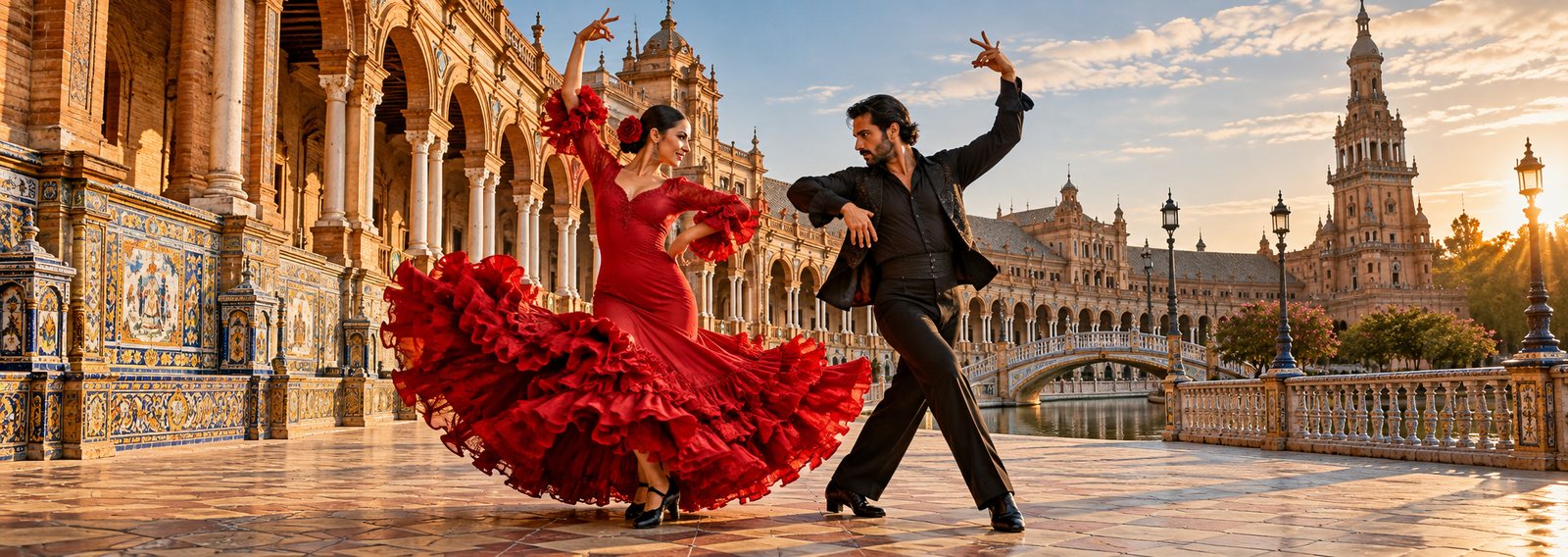
Spain is far more than flamenco. Each region dances in its own language and rhythm: Catalonia joins hands in the sardana, Aragon leaps to the jota, Galicia and Asturias dance to bagpipes, the Basques honour guests with the aurresku, Madrid turns the chotis on a single tile and the islands keep the isa and the ball pagès. Andalusia gave the world flamenco — UNESCO heritage since 2010 — and its sevillanas, verdiales and fandangos, while today’s companies and b-girls write new chapters.
Traditional dances
- Flamenco — Andalusia’s art of song, guitar and dance — UNESCO heritage since 2010
- Sevillanas — Seville’s festive partner dance in four coplas — the dance of the April Fair and the Rocío
- Sardana — Catalonia’s open circle dance, hands joined, to the sound of the cobla
- Jota aragonesa — Aragon’s soaring sung dance of leaps, castanets and fiery coplas
- Muiñeira — Galicia’s lively bagpipe dance in 6/8, from village romerías to folk stages
- Aurresku — The Basque dance of honour — high kicks and solemn steps to the txistu
- Chotis madrileño — Madrid’s castizo couple dance, turned ‘on a single floor tile’
- Fandango — A family of lively triple-time dances and songs that once took all Europe by storm
- Escuela bolera — Spain’s classical dance with castanets — ballet technique with Spanish soul
- Pasodoble — Spain’s brass-band march, the soundtrack of bullrings, fiestas and ballrooms
- Verdiales — The festive fandangos of the Montes de Málaga, played and danced by ‘pandas’ in flowered hats
- Isa canaria — The Canary Islands’ graceful version of the jota, danced to timple and guitars
- Ball pagès — Ibiza and Formentera’s ancient peasant dance: her tiny steps, his soaring leaps
- Danza prima — Asturias’ ancient sung chain dance, little fingers linked under the stars
- Seguidillas manchegas — La Mancha’s lively sung couple dance, ancestor of the sevillanas
- Paloteado — Stick dances of Aragon, Navarre and Castile, danced for the patron saint
- Zambra del Sacromonte — The Gitano wedding dance of Granada’s Sacromonte caves
- Rumba catalana — Barcelona’s Gitano party music and dance, born in the 1950s
- Contemporary dance in Spain — From the Compañía Nacional de Danza to La Veronal: Spain’s bold new choreography
- Breaking & hip-hop in Spain — Spain’s urban dance scene — breaking battles, crews and the road to the Olympics
Explore
- History & Heritage — From the dancers of ancient Gades and al-Andalus to the bolero, flamenco’s cafés cantantes and today’s new choreography.
- Regions & Traditions — Ten dance regions: Andalusia, Catalonia, Aragon, Galicia, the Basque Country, Madrid, La Mancha, Asturias and the Canary and Balearic Islands.
- Festivals & Events
- Schools & Organizations
Places
Eight places where Spain’s history and dance meet: the Alhambra, Seville, Barcelona, Madrid, Santiago de Compostela, Córdoba, Bilbao and Tenerife.