
History
Escuela bolera
Jumps, beats and castanets in perfect elegance
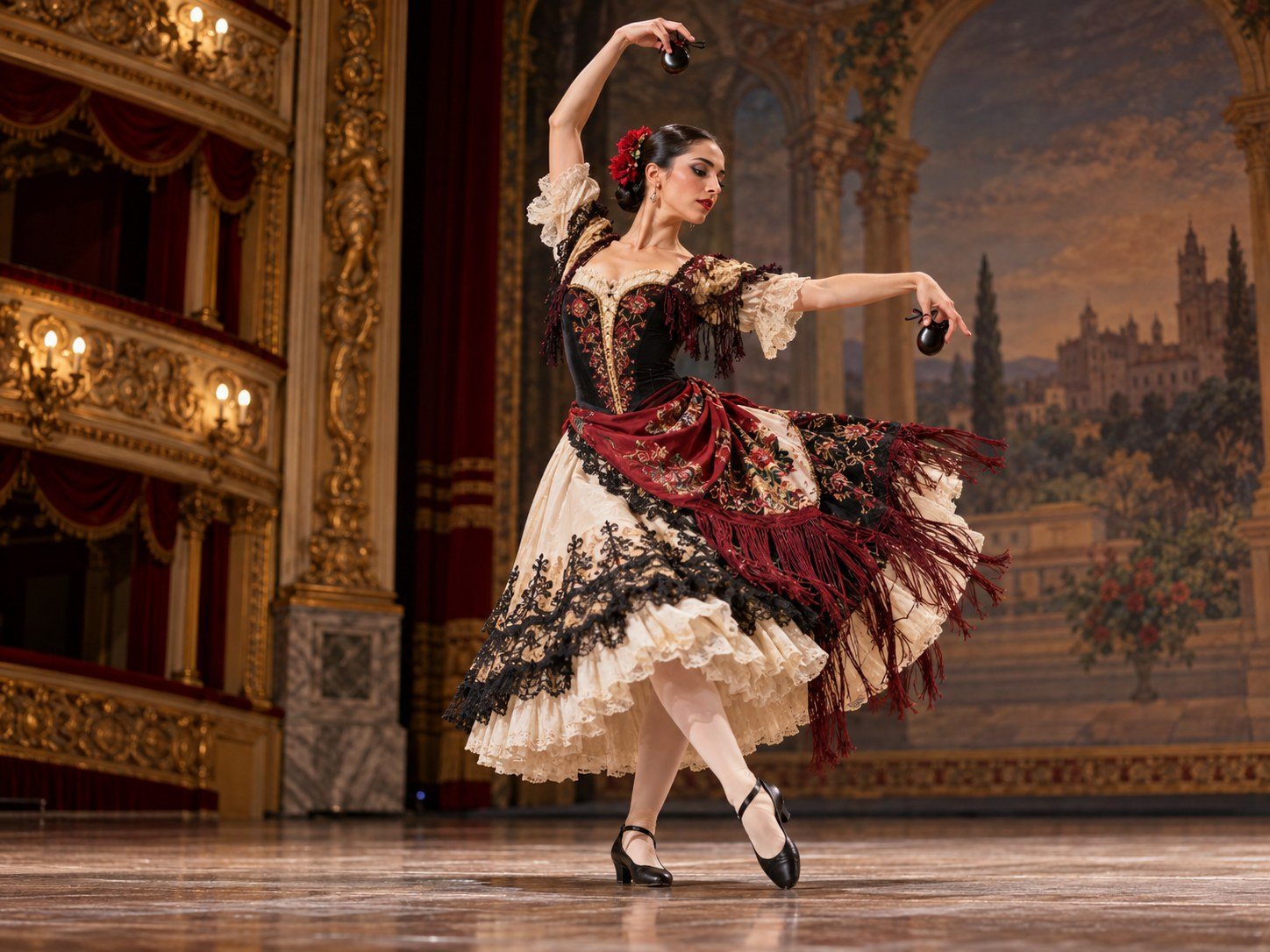
The escuela bolera is the academic, classical style of Spanish dance. It joins popular dances such as the seguidilla, the fandango and the bolero with the technique of 18th-century ballet: turned-out legs, jumps, beats (batería) and pointed feet, always with castanets and soft, rounded arms. Dancers wear light slippers rather than heeled shoes, and choreographies such as the ‘Bolero liso’, ‘El Vito’ or the ‘Panaderos’ are taught in conservatories.
Why it matters
The bolero appeared in the late 18th century, when dancing masters refined the popular seguidillas with the vocabulary of the French court ballet; tradition credits a dancer named Sebastián Cerezo with its creation around 1780. In the 19th century ‘boleros’ toured European stages and influenced romantic ballet — Fanny Elssler’s famous ‘Cachucha’ came from this world. Families of teachers kept the style alive when fashion changed, above all the Pericet dynasty of Seville and Madrid, whose name is carried today by the Conservatorio Superior de Danza de Málaga. The Ballet Nacional de España preserves the repertoire in works such as ‘Invocación bolera’, and the escuela bolera is one of the four forms of Spanish dance taught in Spain’s conservatories.
Key facts
- Type: Classical Spanish stage dance, solo or couples
- Since: Late 18th century (c. 1780)
- Rhythm: Mostly 3/4 (boleros, seguidillas)
- Music: Orchestra or guitar; castanets played by the dancers
- Where: Seville, Madrid; conservatories across Spain
- Level: Demanding
History timeline
- c. 1780 — The bolero is created from the seguidillas.
- 1836 — Fanny Elssler dances the ‘Cachucha’ in Paris.
- Late 1800s–1900s — The Pericet family preserves and teaches the style.
- Today — Ballet Nacional de España and conservatories keep it alive.
Did you know?
- Ravel’s ‘Boléro’ (1928) borrows the name, but the Spanish bolero is far older and quicker.
- The Danish choreographer August Bournonville was inspired by the bolero dancers he saw in Paris.
Performances to watch
- Rehearsing ‘Invocación bolera’
- ‘Paso a cuatro’ — Ballet Nacional de España
- Flamenco meets the escuela bolera
Related dances
Why this dance?
How it's danced
Schools
Promote
Promote your classes on this page
Dancers