
History
Isa canaria
Timple strings, magos costumes and a chain that winds and turns
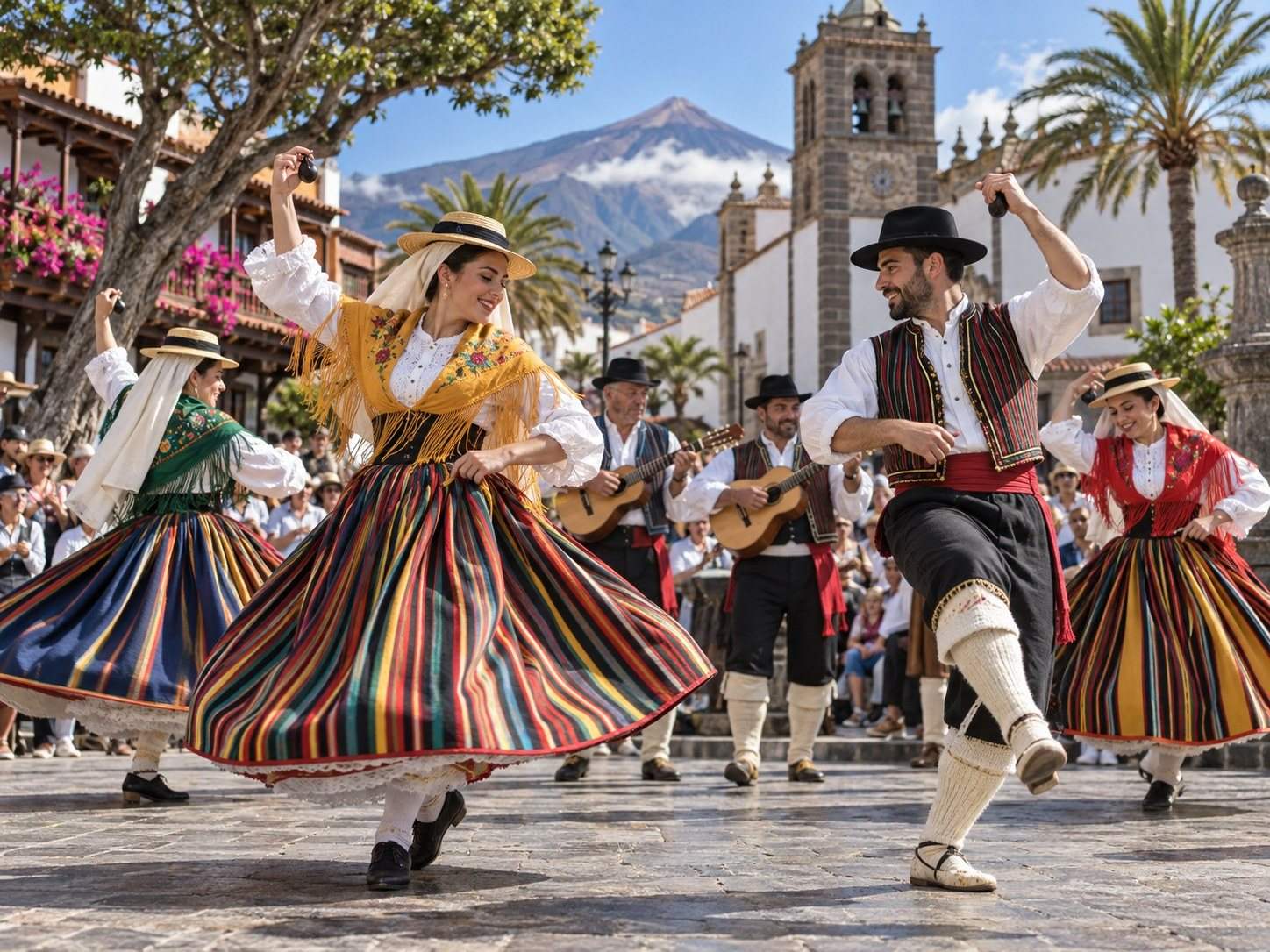
The isa is the best-known dance of the Canary Islands — a local variation of the jota, gentler and more flowing. Couples and groups dance in lines and circles; in some places a leader (the ‘capitán’) guides a chain of dancers through figures that grow ever more complex. It is accompanied by a rondalla of guitars, lutes, bandurrias and the timple — the small five-string Canarian guitar — with sung verses between the dance sections.
Why it matters
The isa grew from the jotas and dances brought by settlers from the Spanish mainland, reshaped over centuries by island life and musicians. Each island — Tenerife, Gran Canaria, La Palma, Lanzarote, Fuerteventura, La Gomera, El Hierro — has its own isas, alongside other Canarian dances such as the folía, the malagueña and the seguidilla. Isas are the heartbeat of the romerías, the pilgrimages in honour of local saints, where carts, oxen and groups in traditional ‘magos’ (country) dress parade and dance; the Romería of San Benito Abad in La Laguna (Tenerife) each July gathers dozens of folk groups. Ensembles such as Los Sabandeños, founded in Tenerife in 1966, helped bring Canarian folk music to the whole Spanish-speaking world.
Key facts
- Type: Couple and group folk dance
- Since: From mainland jotas, reshaped over centuries
- Rhythm: Triple time, flowing and lilting
- Music: Rondalla: timple, guitars, lutes, bandurrias
- Where: All seven Canary Islands
- Level: Beginner-friendly
History timeline
- 1500s onwards — Settlers bring mainland dances and instruments to the islands.
- 1800s–1900s — The isa becomes the islands’ signature dance at romerías.
- 1966 — Los Sabandeños are founded in Tenerife.
- 2026 — The 80th Romería Regional de San Benito Abad is held in La Laguna.
Did you know?
- The timple’s body is traditionally rounded at the back, like a small lute.
- ‘Magos’ is the Canarian word for country people — and for the traditional rural costume.
Performances to watch
- Isa suelta (Gran Canaria)
- Isas — Agrupación Folklórica Roque Nublo (1984)
- Isa — A.F. Tajaraste
Related dances
Why this dance?
How it's danced
Schools
Promote
Promote your classes on this page
Dancers