
History
Jota aragonesa
Leaps, castanets and a voice that fills the square
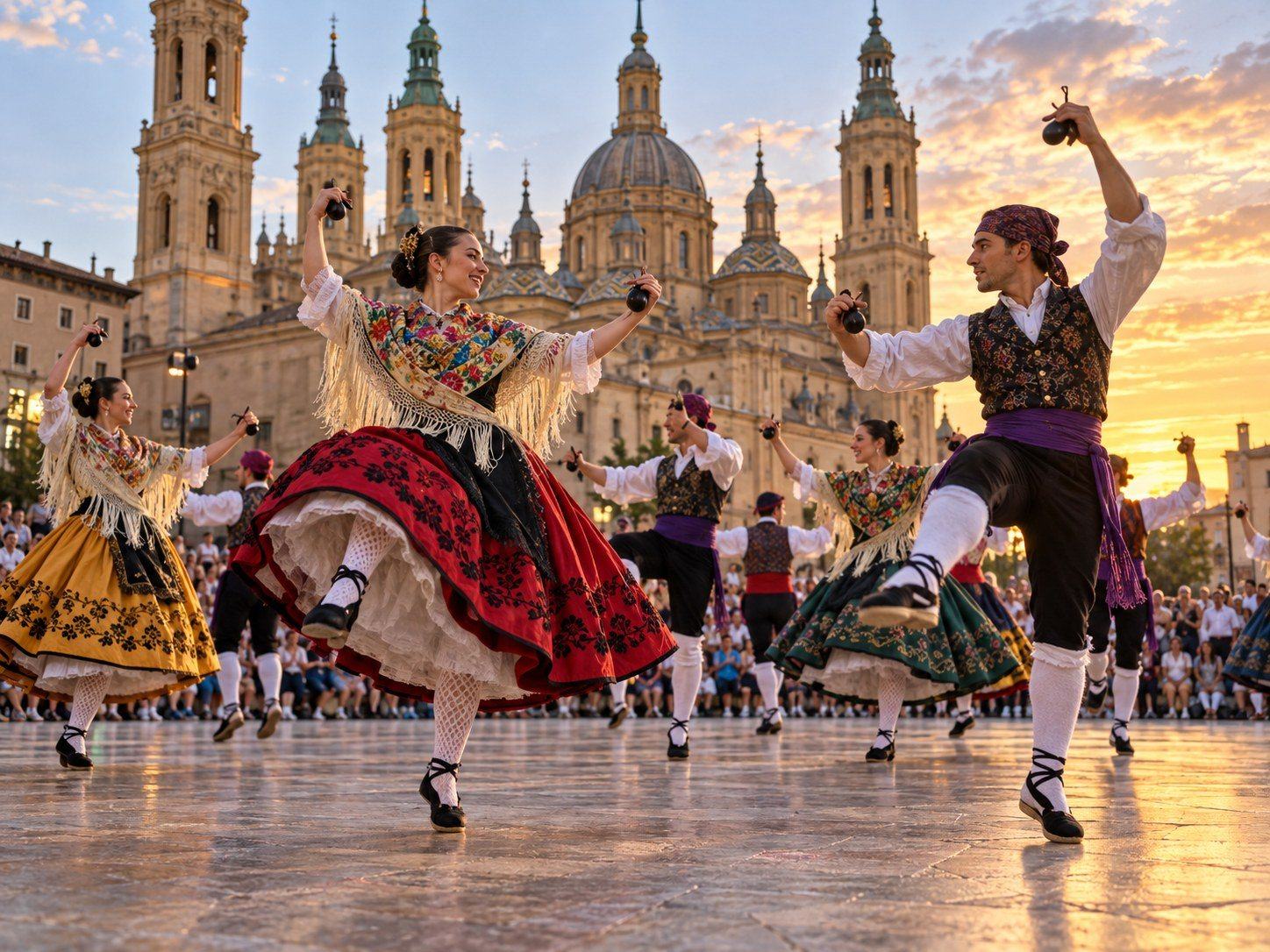
The jota is danced by couples facing each other, with high jumps, quick crossing steps and raised arms playing castanets. It alternates instrumental passages for dancing with sung coplas — four-line verses delivered by a singer in a strong, ornamented voice. A rondalla of bandurrias, lutes and guitars drives the music in a lively triple metre.
Why it matters
Jotas are danced across much of Spain — in Navarre, Valencia, Castile, Galicia and beyond — but the jota aragonesa is the most famous. It became a symbol of Aragon in the 19th century and inspired composers far beyond Spain, from Glinka’s ‘Jota aragonesa’ (1845) to Liszt. Today hundreds of folk groups keep the jota alive in Aragon, and it is the soul of Zaragoza’s Fiestas del Pilar in October, when groups dance and sing in the streets and the Ofrenda de Flores fills the square before the basilica. Great voices such as José Oto made the sung jota famous on records and radio.
Key facts
- Type: Couple folk dance with sung coplas
- Since: Documented from the 18th century
- Rhythm: Fast triple time (3/4)
- Music: Rondalla: bandurrias, lutes, guitars; castanets
- Where: Aragon (Zaragoza, Huesca, Teruel)
- Level: Demanding
History timeline
- 1700s — The jota appears in written sources and spreads across Spain.
- 1845 — Glinka writes his ‘Jota aragonesa’ after visiting Spain.
- 20th century — Recordings and radio make the sung jota famous.
- Today — Folk groups and the Fiestas del Pilar keep it at the heart of Aragon.
Did you know?
- In a ‘jota de picadillo’, two singers trade improvised, teasing verses.
- Many Spanish regions have their own jota: the Valencian, Navarrese and Castilian jotas each sound different.
Performances to watch
- The jota aragonesa explained — Grupo D’Aragón
- Jotas at the Pilar 2021 — Semblante Aragonés
- Jotas at the Pilar 2018 — Grupo El Pilar
Related dances
Why this dance?
How it's danced
Schools
Promote
Promote your classes on this page
Dancers