
History
Rumba catalana
The ‘ventilador’ guitar, clapping hands and a street that dances
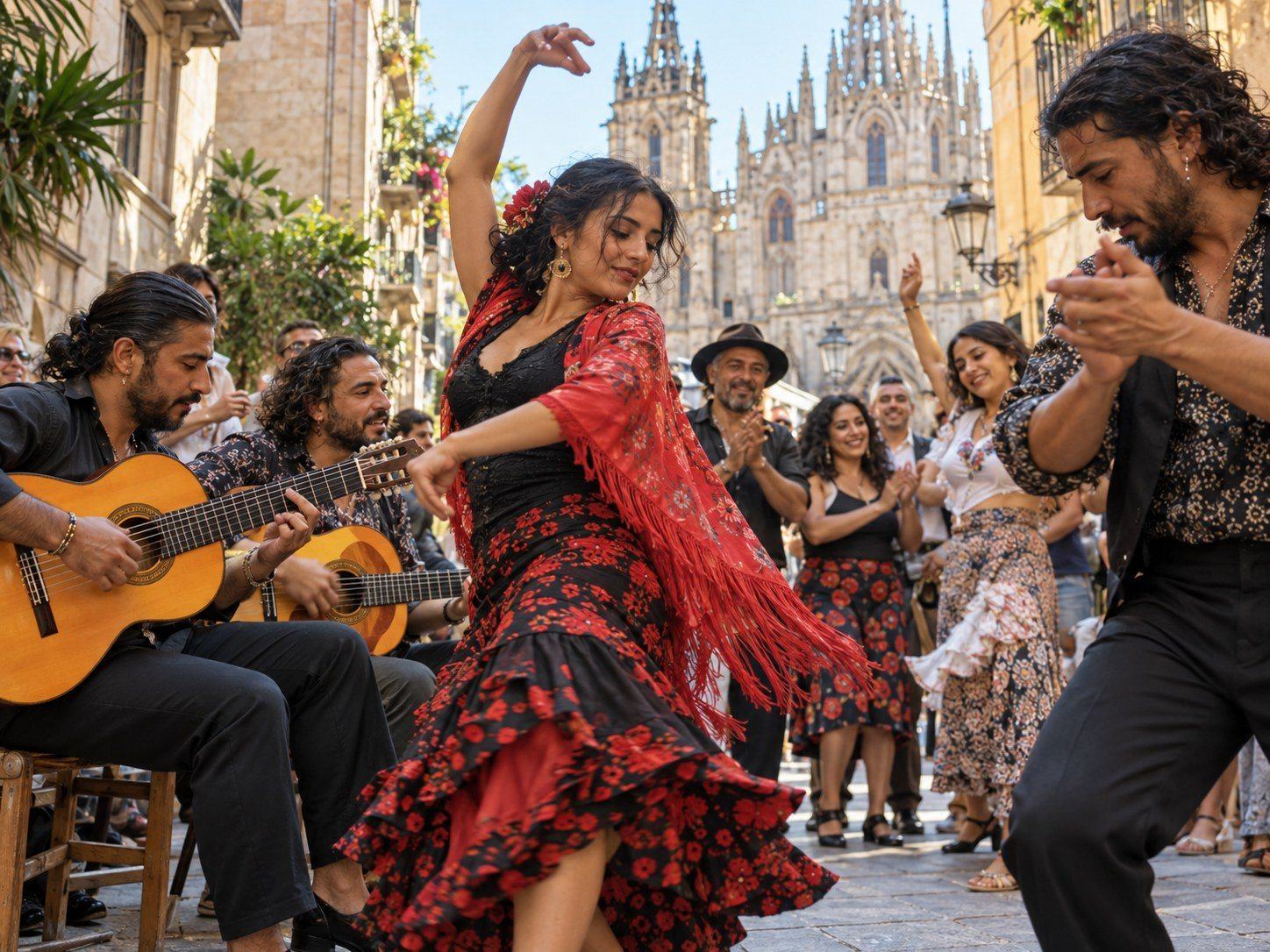
Rumba catalana is a lively music and social dance from Barcelona. Its signature is the ‘ventilador’ — a percussive guitar strum that also hits the strings like a drum — combined with palmas, bongos and joyful singing. People dance it freely, alone or in pairs, with swinging hips, clapping and flamenco-flavoured arm and foot movements, at weddings, neighbourhood fiestas and concerts.
Why it matters
The rumba catalana grew in the 1950s among Gitano communities in Barcelona neighbourhoods such as Gràcia, Hostafrancs and the Raval, where flamenco met Cuban rhythms such as the son and mambo, and later rock and pop. Antonio González ‘El Pescaílla’ is often called its father; Peret made it famous across Spain from the 1960s, and the Argentine-born Gato Pérez celebrated it in songs such as ‘Rumba de Barcelona’. In 1992 Peret sang at the closing ceremony of the Barcelona Olympic Games, introducing the rumba to a worldwide audience. Today a new generation of rumberos, festivals and neighbourhood ‘rumbas’ keeps it alive as one of the city’s most recognisable sounds.
Key facts
- Type: Social party dance, solo or couples
- Since: 1950s, Barcelona
- Rhythm: Upbeat 4/4 rumba groove
- Music: Guitar (ventilador), palmas, bongos, voice
- Where: Barcelona and Catalonia; also southern France
- Level: Beginner-friendly
History timeline
- 1950s — Rumba catalana is born in Barcelona’s Gitano neighbourhoods.
- 1960s–70s — Peret and El Pescaílla take it to the whole of Spain.
- 1970s–80s — Gato Pérez celebrates it in songs such as ‘Rumba de Barcelona’.
- 1992 — Peret sings at the closing ceremony of the Barcelona Olympics.
Did you know?
- The ‘ventilador’ (fan) strum is named for the way the hand whirls over the strings.
- Gipsy Kings, the French group from Arles and Montpellier, play a close cousin of the rumba catalana.
Performances to watch
- Gato Pérez — ‘Rumba de Barcelona’
- Rumba catalana — Rumba Catalana Week
- Los Manolos and Peret remember Barcelona 92
Related dances
Why this dance?
How it's danced
Schools
Promote
Promote your classes on this page
Dancers