
History
Aurresku
A bow, a kick to the sky, a greeting of respect
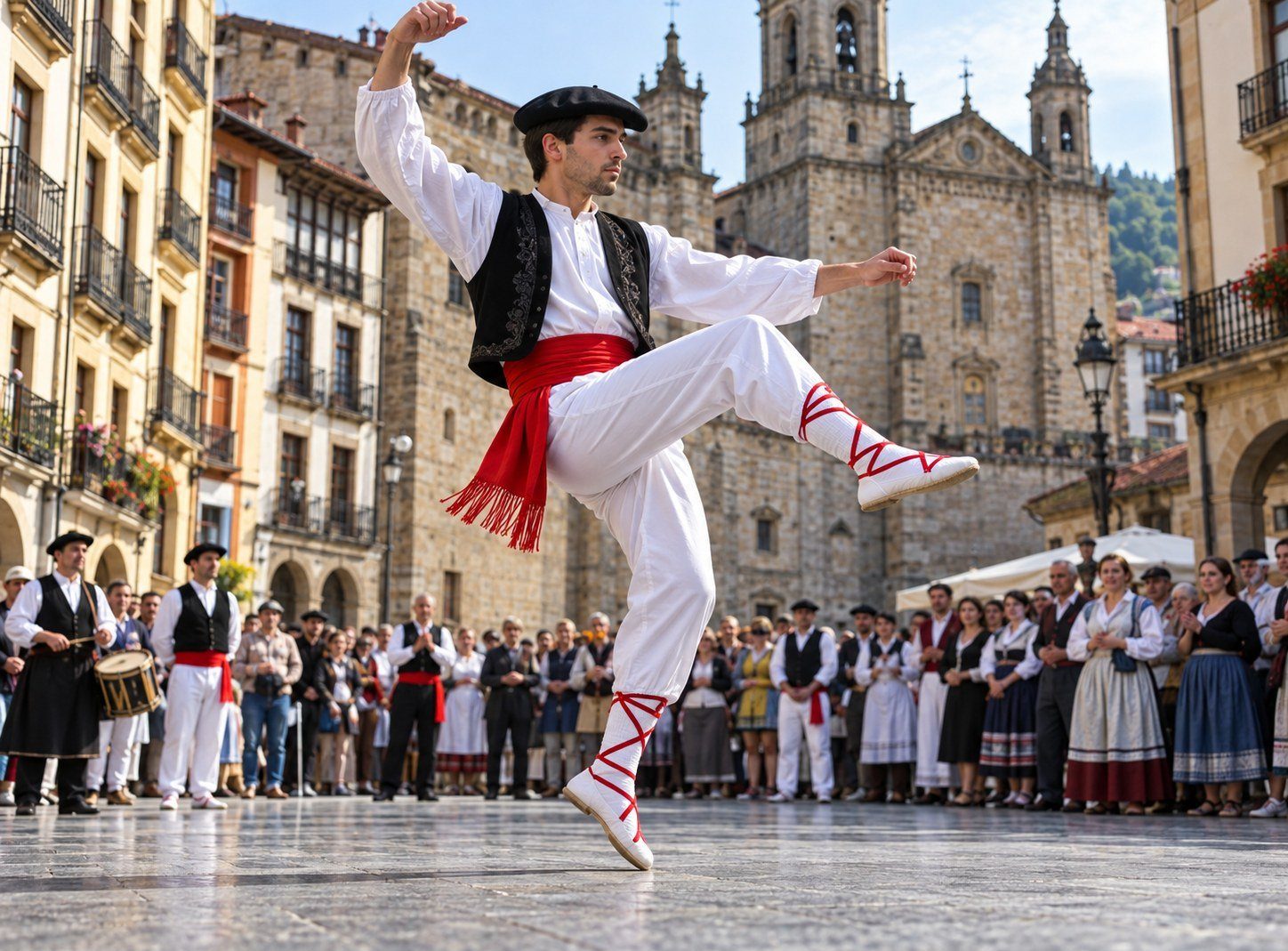
The aurresku is a solemn Basque dance performed as a sign of respect. A solo dancer (the aurreskulari), in white with a red or black txapela and sash, dances before the person being honoured — a bride and groom, an authority or a guest — with precise steps, high kicks (‘hankaz’) that rise above head height and a bow (the ‘agurra’). It is accompanied by the txistu, a three-holed flute played with one hand, and the drum (tamboril).
Why it matters
‘Aurresku’ means ‘front hand’: the name comes from the leader of the old Basque chain dance (soka-dantza), in which the first dancer (aurresku) and the last (atzesku) led a line of dancers holding hands or handkerchiefs. Over time the leader’s solo became an independent dance of honour. Today the ‘aurresku de honor’ is danced at weddings, the opening of festivals, institutional ceremonies and funerals across the Basque Country and Navarre. Each town has its own version — Begoña’s aurresku in Bilbao is a famous one — and local dance groups (dantza taldeak) teach it from childhood.
Key facts
- Type: Solo ceremonial dance of honour
- Since: From the old soka-dantza chain dances
- Rhythm: Slow, measured opening, then lively passages
- Music: Txistu and tamboril
- Where: Basque Country and Navarre
- Level: Demanding
History timeline
- Middle Ages–1700s — Soka-dantza chain dances led by the aurresku and atzesku.
- 1800s — The leader’s solo grows into a dance of its own.
- 20th century — Dance groups spread the aurresku de honor across the Basque Country.
- Today — Danced at weddings, festivals and ceremonies.
Did you know?
- The txistu has only three holes and is played with one hand, leaving the other free for the drum.
- At Basque weddings the couple often stands still while the aurreskulari dances just for them.
Performances to watch
- Aurresku dantza
- Agurra — the aurresku greeting
- Aurresku at a wedding, Pamplona Citadel
Related dances
Why this dance?
How it's danced
Schools
Promote
Promote your classes on this page
Dancers