
History
Fandango
Castanets, a rising tempo and Huelva’s proud voices
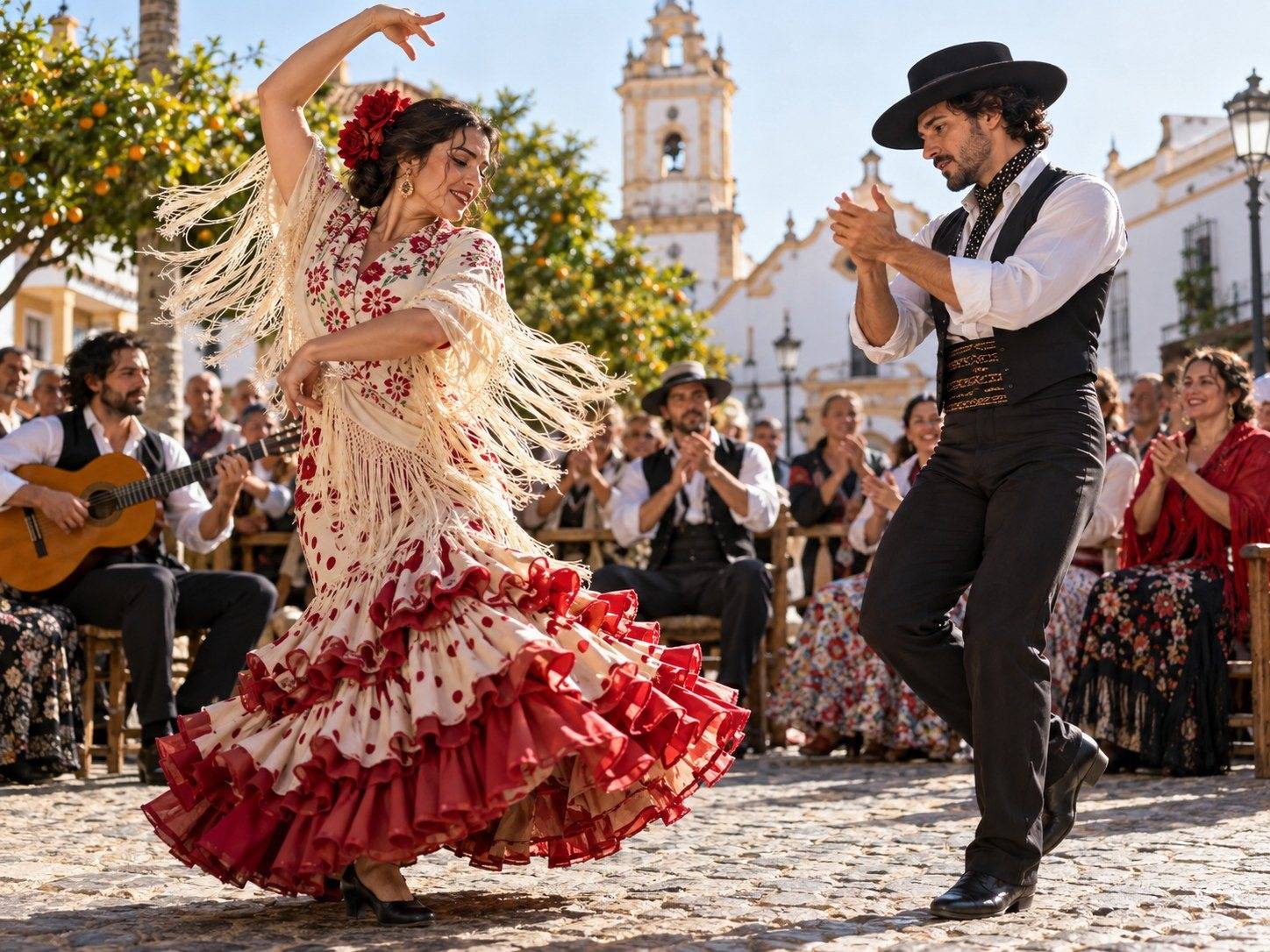
The fandango is not a single dance but a large family of songs and dances in triple time, found all over Spain and Portugal. Couples face each other with castanets, the tempo often accelerating, alternating dancing with sung verses. In Andalusia the fandango became one of flamenco’s main ‘palos’, and Huelva province is famous for its many local fandangos — Alosno, Huelva capital, Almonaster, Encinasola — sung and danced at fiestas and romerías.
Why it matters
In the 18th century the fandango was the rage of Spain and soon of Europe: the Venetian Giacomo Casanova described the passionate fandango he saw in Madrid in the 1760s, and composers wrote fandangos into operas and ballets — Gluck in ‘Don Juan’ (1761) and Mozart in ‘The Marriage of Figaro’ (1786). Its triple-time ‘coplas’ and guitar falsetas spread to the Americas too. In Andalusia the fandango grew into a whole world of flamenco song: fandangos de Huelva, the verdiales of Málaga, the malagueñas and the free ‘fandangos naturales’. In Alosno the ‘fandango parao’ is still danced at the June fiestas of San Juan, and singers such as Paco Toronjo made Huelva’s fandango known across Spain.
Key facts
- Type: Couple dance and song family; also a flamenco palo
- Since: Popular from the early 1700s
- Rhythm: Triple time (3/4 or 3/8), often accelerating
- Music: Guitar, voice, castanets; violins and tambourines in rural forms
- Where: All Spain; especially Huelva and Andalusia
- Level: Some practice needed
History timeline
- Early 1700s — The fandango becomes Spain’s fashionable dance.
- 1761 — Gluck includes a fandango in the ballet ‘Don Juan’.
- 1786 — Mozart quotes it in ‘The Marriage of Figaro’.
- 1800s–1900s — Andalusian fandangos become a core flamenco palo.
Did you know?
- The word ‘fandango’ came to mean ‘a lively party’ in English and Portuguese.
- Huelva claims more distinct fandango styles than any other province.
Performances to watch
- The ‘fandango parao’ of Alosno
- The fandango in Alosno (Huelva)
- Paco Toronjo and the fandango de Huelva
Related dances
Why this dance?
How it's danced
Schools
Promote
Promote your classes on this page
Dancers