
History
Muiñeira
Gaita, pandeireta and feet that never stop
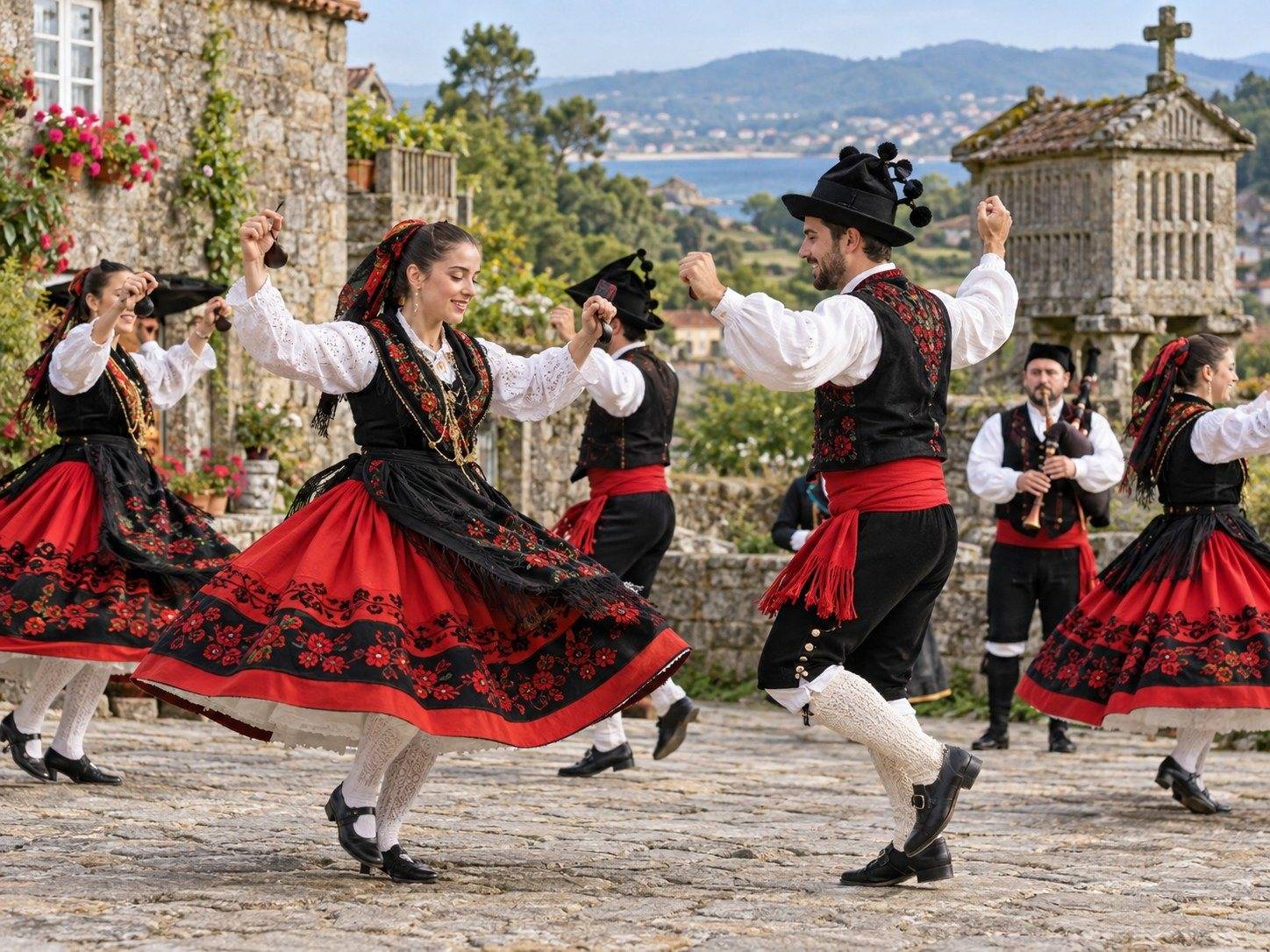
The muiñeira is Galicia’s best-known dance: a quick, bouncing dance in 6/8 for couples or groups, with precise footwork (‘punteo’), turns and arms held high, often with fingers snapping or castanets. It is played by the gaita (Galician bagpipe), with snare drum, bass drum and the pandeireta (square tambourine), and sung muiñeiras are accompanied by women playing the pandeireta.
Why it matters
Its name is often linked to ‘muíño’, the mill, where neighbours gathered while waiting for their grain to be ground and passed the time with music and dance. The muiñeira belongs to Galicia’s rich Atlantic culture, shared in part with Asturias and northern Portugal. Village romerías, weddings and patron-saint fiestas were its natural home; in the 20th century folk groups (agrupacións) staged it, and since the 1970s the Galician folk revival — and gaiteiros such as Carlos Núñez — has carried it to festivals like the Festival Internacional do Mundo Celta in Ortigueira.
Key facts
- Type: Couple or group folk dance
- Since: Traditional; documented from the 18th–19th centuries
- Rhythm: Lively 6/8
- Music: Gaita, snare and bass drum, pandeireta
- Where: Galicia; also western Asturias
- Level: Some practice needed
History timeline
- 1700s–1800s — Muiñeiras are danced at mills, romerías and weddings.
- 20th century — Folk groups stage Galician dances.
- 1978 — The folk festival of Ortigueira begins, later the Festival do Mundo Celta.
- Today — Schools of gaita and dance teach thousands of young Galicians.
Did you know?
- The basic Galician gaita has a chanter and one large drone (the roncón), and its bag was traditionally made of goatskin.
- Women singers (pandeireteiras) once carried whole fiestas with only voices and tambourines.
Performances to watch
- ‘Muiñeira de Santo Amaro’ — Treixadura
- ‘Lévame, lévame’ — sea and tavern muiñeira
- Birloque Gaiteiros — Muiñeira de Santo Amaro
Related dances
Why this dance?
How it's danced
Schools
Promote
Promote your classes on this page
Dancers