
History
Sevillanas
Four coplas, one partner, the whole fair dancing
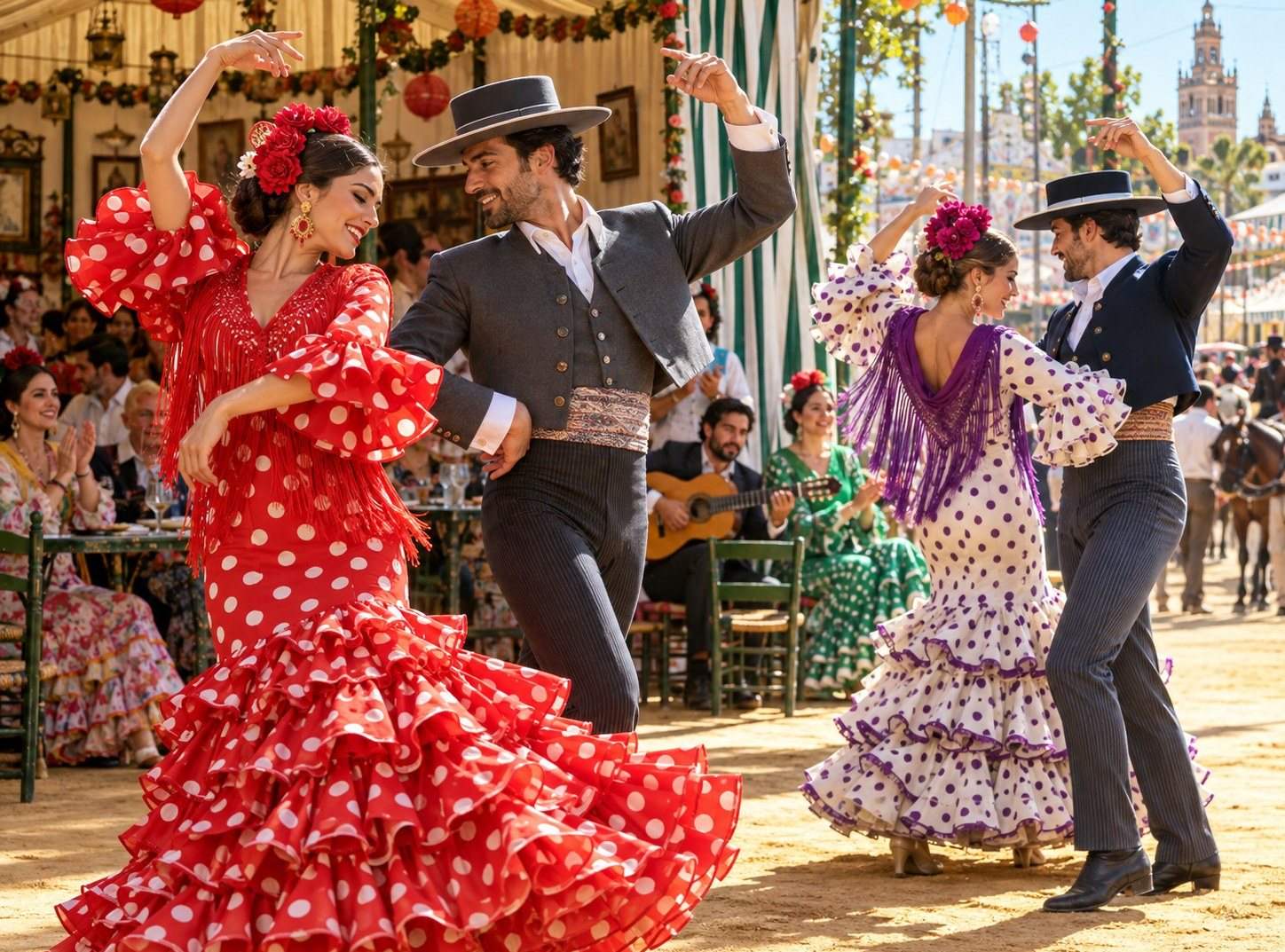
Sevillanas are danced in pairs, face to face, in a sequence of four short coplas, each with three verses and a clear ending (the ‘remate’). Partners advance, pass each other (pasadas), turn and finish close together, with flowing arms and light castanet or palmas accompaniment. Everyone in Andalusia seems to know them: they fill the casetas of Seville’s April Fair, the Rocío pilgrimage and family celebrations.
Why it matters
Sevillanas descend from the old Castilian seguidillas, which became ‘seguidillas sevillanas’ in Seville and absorbed flamenco flavour in the 19th and 20th centuries. They are a folk dance rather than a flamenco palo, which is why grandparents, children and visitors can all join in. The music ranges from guitar-and-voice sevillanas to the ‘rocieras’ sung on the road to El Rocío with flute and drum, and the popular hits of groups such as Los Romeros de la Puebla. Carlos Saura’s film ‘Sevillanas’ (1992) captured great performers, from Lola Flores to Paco de Lucía. Each April the Feria de Abril turns Seville’s Real de la Feria into a city of casetas where sevillanas are danced day and night.
Key facts
- Type: Folk partner dance (also in fours)
- Since: From 18th–19th-century seguidillas
- Rhythm: Triple time; four coplas with three parts each
- Music: Guitar, voice, palmas, castanets; flute and drum for rocieras
- Where: Seville and all Andalusia
- Level: Beginner-friendly
History timeline
- 1700s — Seguidillas are danced across Castile and Andalusia.
- 1847 — Seville holds its first April Fair, then a livestock fair.
- 20th century — Sevillanas become the signature dance of the fair and the Rocío.
- 1992 — Carlos Saura releases the film ‘Sevillanas’.
Did you know?
- A complete sevillana lasts only about 3–4 minutes — four coplas of under a minute each.
- The April Fair has over a thousand casetas, many private, where families dance until dawn.
Performances to watch
- Sevillanas danced in pairs
- Sevillanas at the Seville Fair
- Lola Flores in Saura’s ‘Sevillanas’
Related dances
Why this dance?
How it's danced
Schools
Promote
Promote your classes on this page
Dancers