
History
Danza prima
A slow circle, one voice calling and a whole village answering
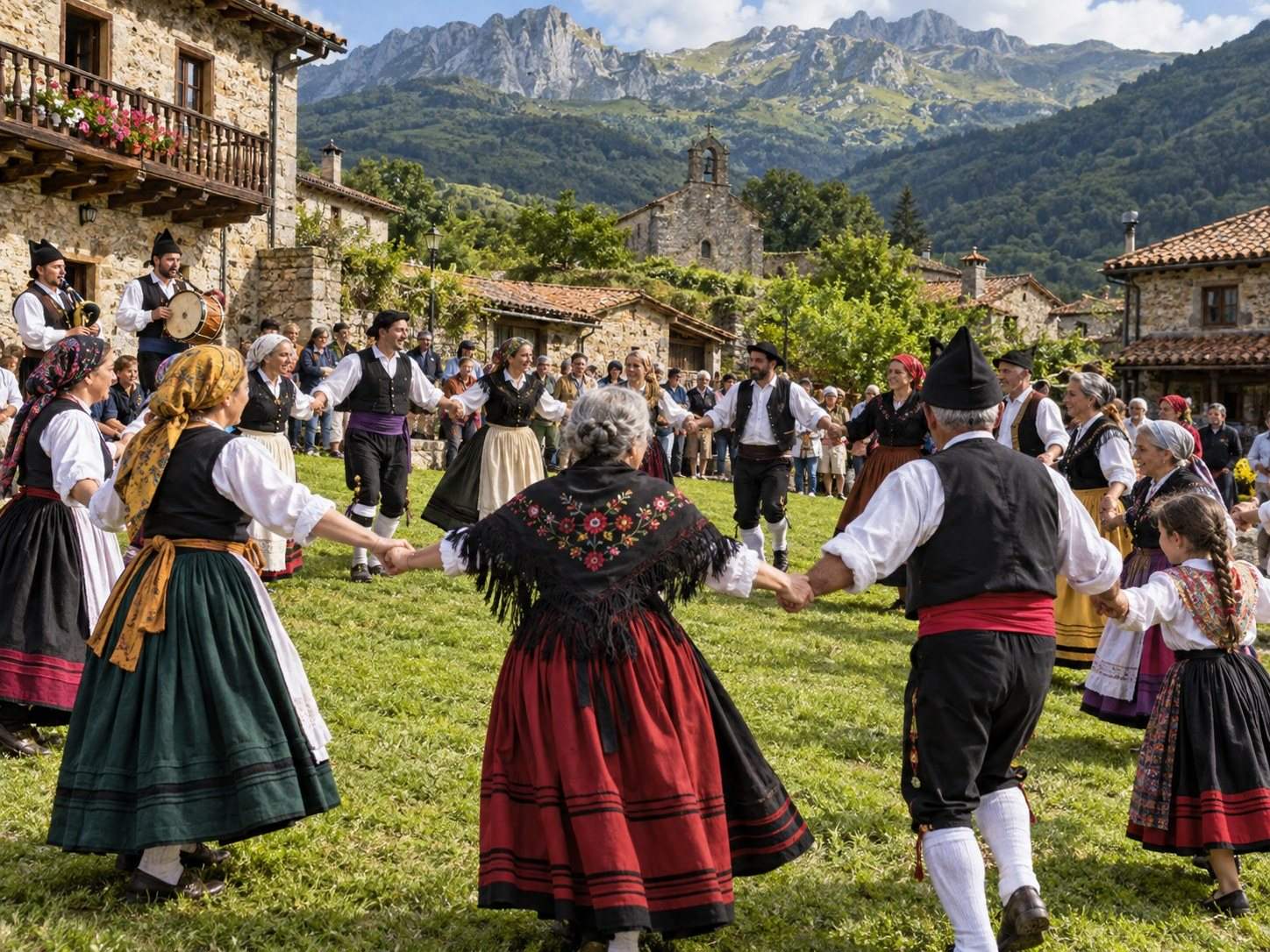
In the danza prima, men and women link arms or little fingers to form a long chain or circle that moves slowly sideways, swinging joined hands forwards and back. A soloist sings a verse of an old ballad (romance) and the dancers answer with the refrain, the most famous being ‘¡Ay, un galán d’esta villa!’. Traditionally there are no instruments, though a drum may accompany it in some villages.
Why it matters
The danza prima is often called the oldest dance of Asturias, and its slow chain recalls the ancient circle dances of Atlantic Europe. The writer Gaspar Melchor de Jovellanos described it with admiration in the late 18th century as the most characteristic dance of his homeland. It was danced at night around bonfires and at the great summer fiestas, especially on Saint John’s Eve. Today it lives on in eastern Asturias — Llanes’ fiestas of San Roque, Santa Ana and La Guía keep famous versions — and in folk groups and gatherings across the region, where anyone may join the chain.
Key facts
- Type: Sung chain or circle dance, open to all
- Since: Very old; described by Jovellanos in the 1790s
- Rhythm: Slow, steady sideways step
- Music: Voices: solo verse and choral refrain; sometimes a drum
- Where: Asturias, especially the east (Llanes)
- Level: Beginner-friendly
History timeline
- Medieval roots — Sung chain dances spread along Atlantic Europe.
- 1790s — Jovellanos describes the danza prima in his writings.
- Today — Danced at the fiestas of Llanes and across Asturias.
Did you know?
- ‘Prima’ may mean ‘first’ — the dance that opened the evening’s celebrations.
- Some ballads sung in the danza prima date back to medieval Spanish romances.
Performances to watch
- Danza prima at San Roque 2017
- Danza prima
Related dances
Why this dance?
How it's danced
Schools
Promote
Promote your classes on this page
Dancers