
History
Paloteado
Eight dancers, sixteen sticks and a rhythm you can hear
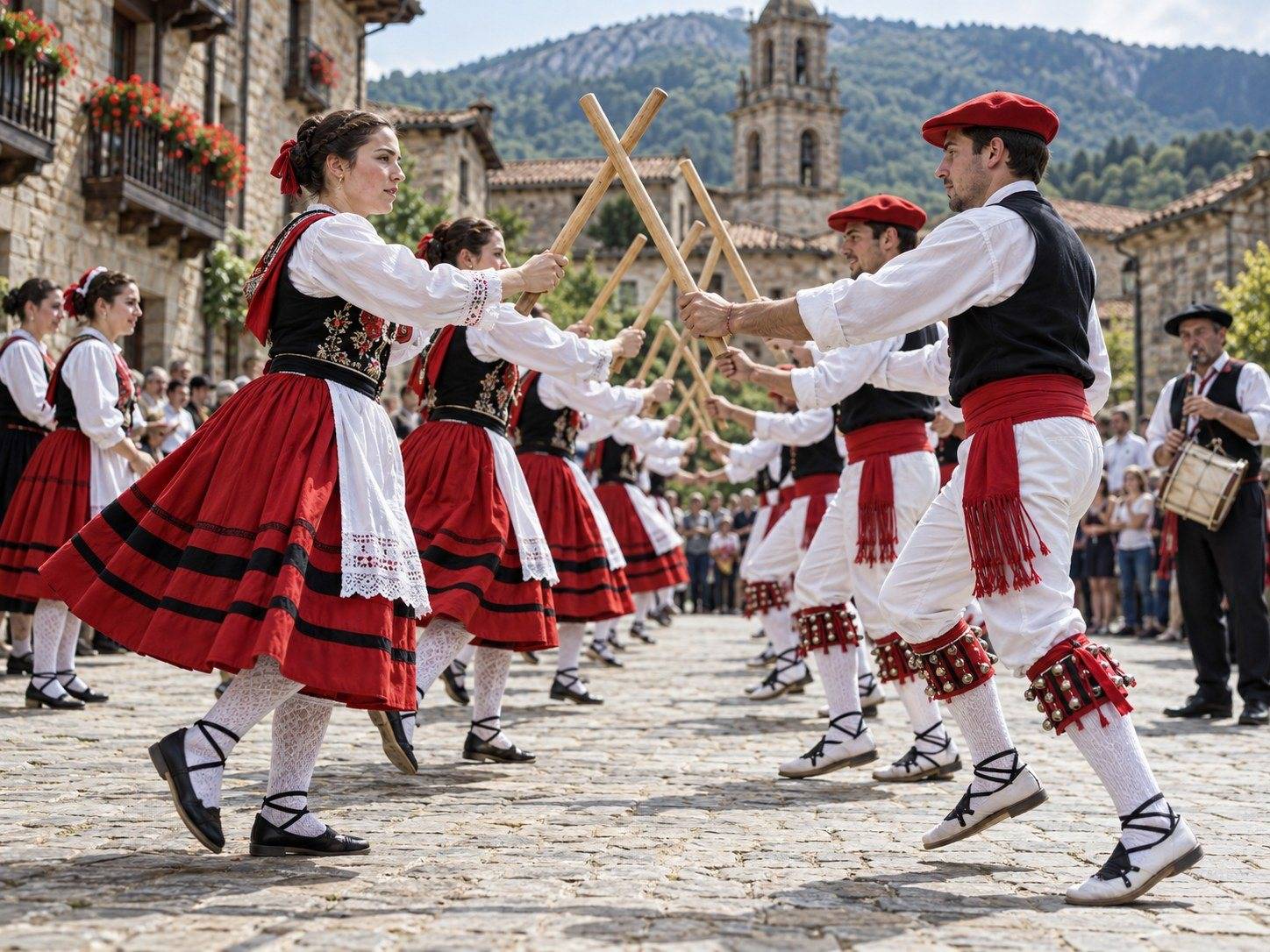
In a paloteado, a group of dancers — often eight — each holding two short wooden sticks, strike them against their own and their neighbours’ sticks in intricate rhythmic patterns while moving through lines, crosses and circles. In Aragon and Navarre the paloteado is part of the ‘dance’: a whole festive performance for the patron saint with stick, sword and ribbon dances and spoken verses by characters such as the ‘mayoral’ and the comic shepherd ‘rabadán’. It is accompanied by the gaita (shawm) or dulzaina, flute and drum.
Why it matters
Stick and sword dances are found all over Europe, and in Spain they survive in hundreds of towns, from Aragon and Navarre to Castile, León and Extremadura, usually tied to the local patron saint. They were passed down within the community, often by groups of young men, and today many towns also have mixed and women’s groups. Famous examples include the danzantes of Huesca, who dance with sticks for Saint Lawrence every 10 August, the ‘dances’ of Aragonese villages such as Lanaja and Borja, and the paloteado of Cortes in Navarre, performed with its spoken representation each September.
Key facts
- Type: Group stick dance (often 8 dancers)
- Since: Centuries-old patron-saint tradition
- Rhythm: Rhythms marked by striking sticks
- Music: Gaita or dulzaina, flute and drum
- Where: Aragon, Navarre, Castile and León, Extremadura
- Level: Some practice needed
History timeline
- Middle Ages–1600s — Stick and sword dances accompany religious feasts.
- 1700s–1800s — Aragonese ‘dances’ add spoken pastoral scenes.
- Today — Hundreds of towns keep their own paloteados alive.
Did you know?
- Some groups also perform sword dances and maypole-style ribbon dances on the same day.
- The rabadán’s comic verses often tease local people about the past year’s events.
Performances to watch
- Dance de Lanaja (Huesca) — paloteado
- The paloteado of Cortes (Navarre) 2025
- Paloteo dances of Cespedosa de Tormes
Related dances
Why this dance?
How it's danced
Schools
Promote
Promote your classes on this page
Dancers