
History
Zambra del Sacromonte
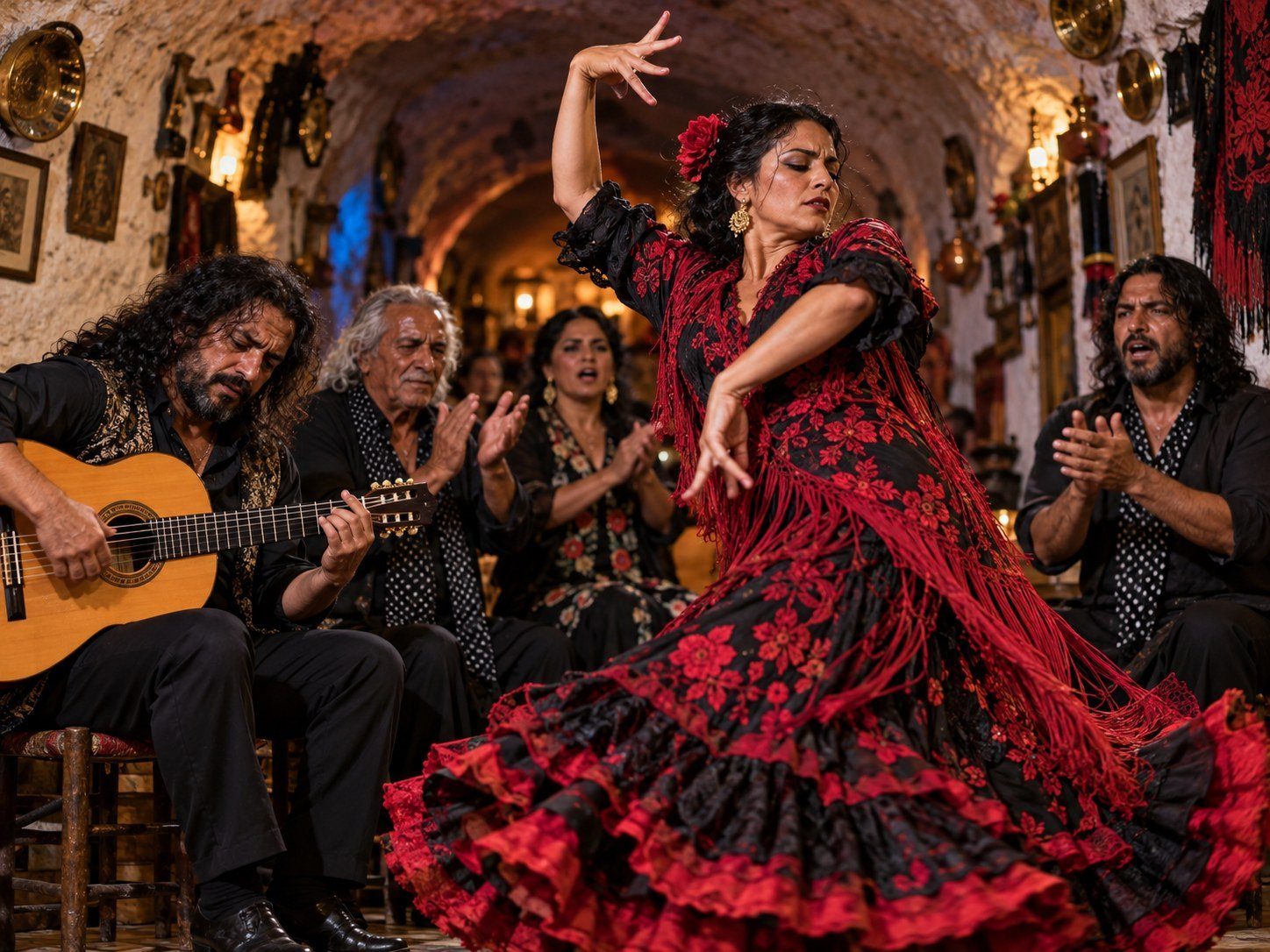
Copper pans on whitewashed walls and dancing an arm’s length away
The zambra is a form of flamenco danced inside the cave-houses of Granada’s Sacromonte hill. Performers dance barefoot or in low shoes in the narrow, whitewashed cave, a few steps from the audience, to guitar, song, palmas and castanets. The traditional zambra recreates a Gitano wedding in three parts — la alboreá, la cachucha and la mosca — with energetic, earthy movement and plenty of hip and arm work.
Why it matters
Gitano families lived in the caves of Sacromonte, facing the Alhambra, for centuries, and their celebrations gave rise to a distinctive local flamenco. The word ‘zambra’ comes from the music-and-dance gatherings of Granada’s Moorish past, and the Gitano zambra kept the name. From the 19th century visitors came to the caves to see the zambras, and families such as that of the dancer María ‘la Canastera’ (born 1913) turned them into famous venues. After the floods of 1962–63 forced many residents to leave, the tradition survived in a handful of caves that still host zambras every night, and the Museo Cuevas del Sacromonte tells the story of cave life.
Key facts
- Type: Gitano flamenco performance in caves
- Since: 19th century onwards in Sacromonte
- Rhythm: Driving flamenco rhythms (tangos-based)
- Music: Guitar, cante, palmas, castanets
- Where: Sacromonte, Granada
- Level: Learn by watching and asking first
History timeline
- 1500s onwards — Families settle in the caves of Sacromonte.
- 1800s — Travellers come to see zambras in the caves.
- 1962–63 — Floods force many cave dwellers to leave.
- Today — Nightly zambras continue in a few historic caves.
Did you know?
- Copper pots, plates and photographs on the cave walls are part of the zambra’s famous look.
- Caves stay cool in summer and warm in winter, which is why people lived in them for centuries.
Performances to watch
- Flamenco zambra in Granada’s caves
- Gitano wedding dances — the zambra of Sacromonte
- Zambra in the Sacromonte caves
Related dances
Why this dance?
How it's danced
Schools
Promote
Promote your classes on this page
Dancers