
History
Pasodoble
A march you can dance — proud, bright and festive
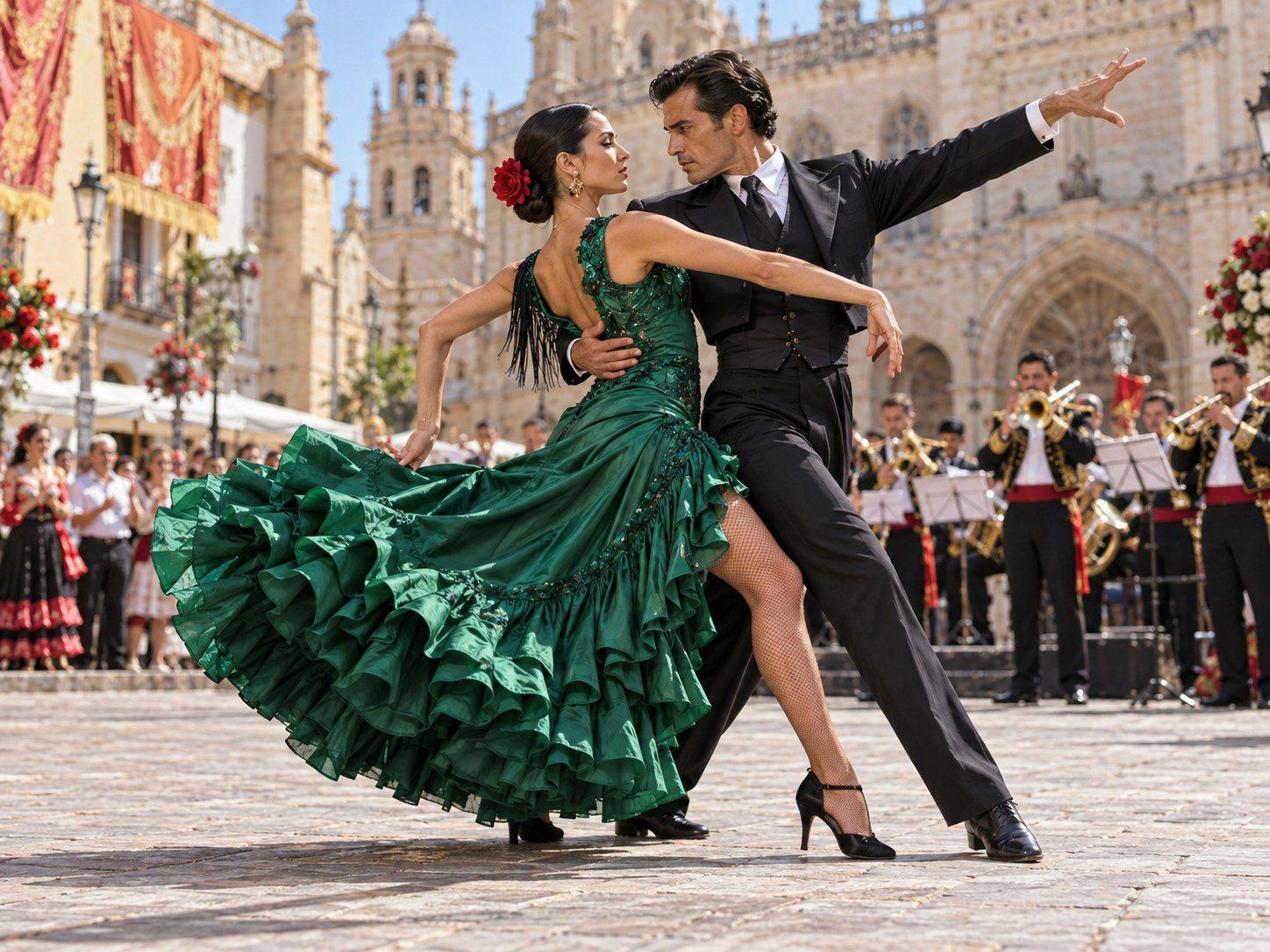
The pasodoble is a lively Spanish march in 2/4, played by brass bands at bullfights, processions, town fiestas and weddings. Socially, couples dance it in a simple, walking ballroom hold, two steps per bar, around the floor. In international ballroom competition, the ‘Paso Doble’ became a dramatic Latin dance in which the man evokes the matador and the woman his cape — usually danced to the famous ‘España cañí’.
Why it matters
The name means ‘double step’, a quick march pace used by Spanish infantry. In the late 19th and early 20th centuries the pasodoble became the voice of Spanish popular music: every town band had dozens, many dedicated to bullfighters, and zarzuelas and coplas spread their melodies. Pascual Marquina’s ‘España cañí’ (1923) is the best known worldwide. In Valencia and Alicante, ‘pasodobles festeros’ and marches are the heartbeat of the Moros y Cristianos festivals, and in villages across Spain older couples still open the dance with a pasodoble at verbenas and weddings.
Key facts
- Type: Social couple dance; ballroom Latin dance
- Since: Late 19th – early 20th century
- Rhythm: Brisk 2/4 march
- Music: Brass and wind bands
- Where: All Spain; strong in Valencia and Andalusia
- Level: Beginner-friendly
History timeline
- 1800s — Military ‘paso doble’ marches enter popular band music.
- 1923 — Pascual Marquina composes ‘España cañí’.
- 20th century — Ballroom teachers in France and Britain turn it into the competition Paso Doble.
- Today — Danced at verbenas, weddings and DanceSport championships.
Did you know?
- Many pasodobles are named after famous bullfighters, such as ‘Manolete’ or ‘El Gato Montés’.
- In competition, the dancers’ choreography follows the musical ‘highlights’ of España cañí.
Performances to watch
- ‘España cañí’ played by a Valencian band
- Paso Doble to ‘España cañí’
- España cañí — pasodoble class
Related dances
Why this dance?
How it's danced
Schools
Promote
Promote your classes on this page
Dancers