
History
Ball pagès
Castanets, flute and drum under the island sun
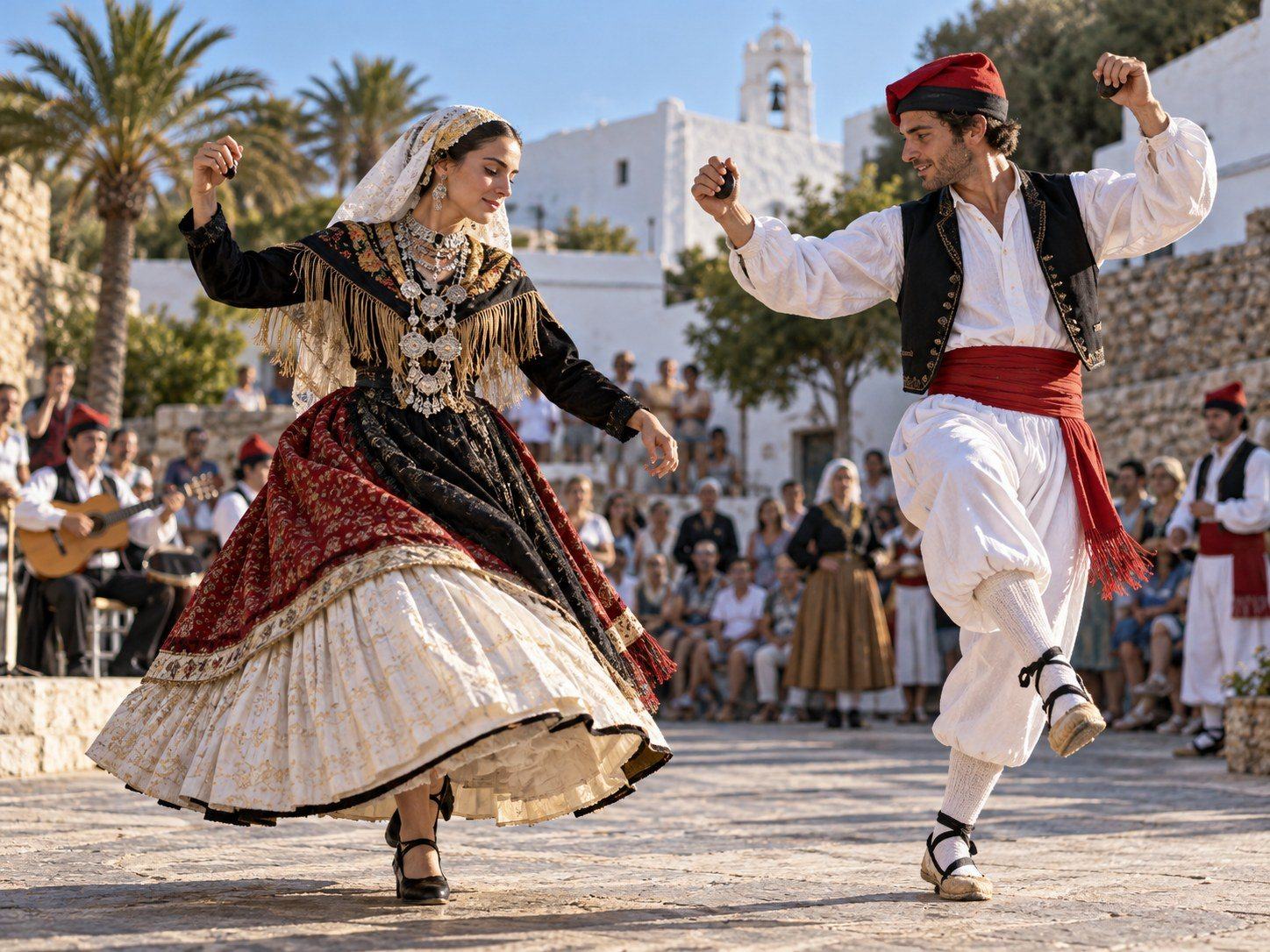
In the ball pagès (‘peasant dance’) of Ibiza and Formentera, the woman moves with small, quick, gliding steps, eyes lowered, tracing circles, while the man leaps high around her playing huge wooden castanets. The music comes from a flute and a small drum played together by one musician, with the castanets and the ‘espasí’, a metal percussion instrument. The dance has a slow, short opening (‘sa curta’) and a long, lively part (‘sa llarga’).
Why it matters
The ball pagès is the traditional dance of the Pityusic Islands — Ibiza and Formentera — and very different from Mallorca’s boleros or mainland dances. Its archaic flute-and-drum music, its castanets carved from juniper wood and the contrast between the woman’s restraint and the man’s acrobatic display have led many to see it as a very old courtship dance. Women wear the ‘gonella’ dress, layered skirts and the ‘emprendada’ — gold chains and crosses across the chest — and men wear white shirts, red sashes and caps. Local ‘colles’ (dance groups) perform at village fiestas and in summer shows for visitors, such as those in Dalt Vila, Ibiza’s old town, and in the church square of Sant Miquel.
Key facts
- Type: Couple courtship dance (sometimes one man, two women)
- Since: Ancient island tradition
- Rhythm: Slow ‘curta’, then fast ‘llarga’
- Music: Flute and drum, giant castanets, espasí
- Where: Ibiza and Formentera
- Level: Demanding
History timeline
- Centuries ago — The ball pagès is danced at island weddings and fiestas.
- 20th century — Colles (dance groups) form to preserve music and costume.
- Today — Village fiestas and weekly summer shows in Dalt Vila and Sant Miquel.
Did you know?
- Ibiza’s castanets are much larger than flamenco ones and are often carved from juniper (sabina).
- A single musician plays the flute with one hand and beats the drum with the other.
Performances to watch
- Ball pagès in Dalt Vila — Colla Sa Bodega
- Ibiza castanets in the ball pagès
- Ball pagès, Ibiza
Related dances
Why this dance?
How it's danced
Schools
Promote
Promote your classes on this page
Dancers