History
Rapper Sword Dance
A ceremony of listening, remembrance and devotion
UNESCO-listed Mevlevi ceremony; a spiritual practice, not a casual dance lesson.
Why it matters
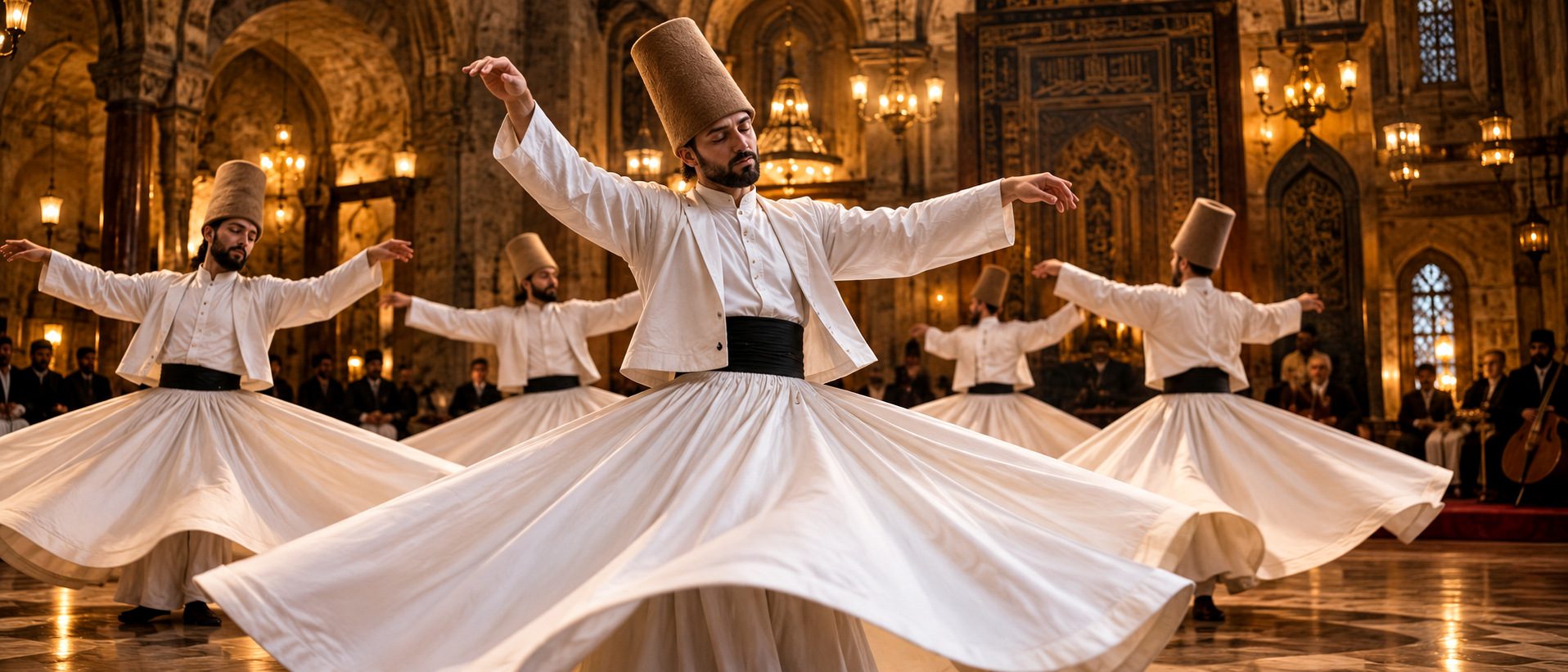
In Konya, where Jalal al-Din Rumi spent much of his life, Sema belongs to the Mevlevi spiritual tradition. Its turning is only one part of a carefully structured ceremony involving music, prayer, symbolism and disciplined training. The reed flute (ney), vocal passages and instrumental music create an atmosphere of reflection. Public presentations can help people discover the heritage, but they must not be confused with the depth of the community’s devotional practice. DANZO presents Sema with respect for its practitioners and UNESCO documentation.
Key facts
- Type: Sufi ceremony, not a dance show
- Origin: Konya · Mevlevi order, followers of Rumi
- Music: Ney flute, kudüm drums, voices
- Level: Observe respectfully
- Where: Sema halls, Şeb-i Arûs in Konya
History timeline
- 1273 — Mevlânâ Jalāl al-Dīn Rūmī dies in Konya on 17 December.
- Mevlevi order — His followers shape the sema ceremony with music, poetry and the turning prayer.
- 2008 — UNESCO inscribes the Mevlevi Sema Ceremony as Intangible Cultural Heritage.
- Today — Konya marks Rumi's anniversary each year with Şeb-i Arûs, 7–17 December.
Did you know?
- The semazen turns with the right palm facing up to receive and the left palm facing down to give.
- Şeb-i Arûs means “wedding night”: Rumi called his death a reunion with God.
Performances to watch
- Mevlevi Sema Ceremony – Performances
Related dances
Why this dance?
How it's danced
Schools
Promote
Promote your classes on this page
Dancers