History
Rapper Sword Dance
Dignity, balance and the open-armed silhouette
Measured solo or group figures associated with Aegean efe culture.
Why it matters
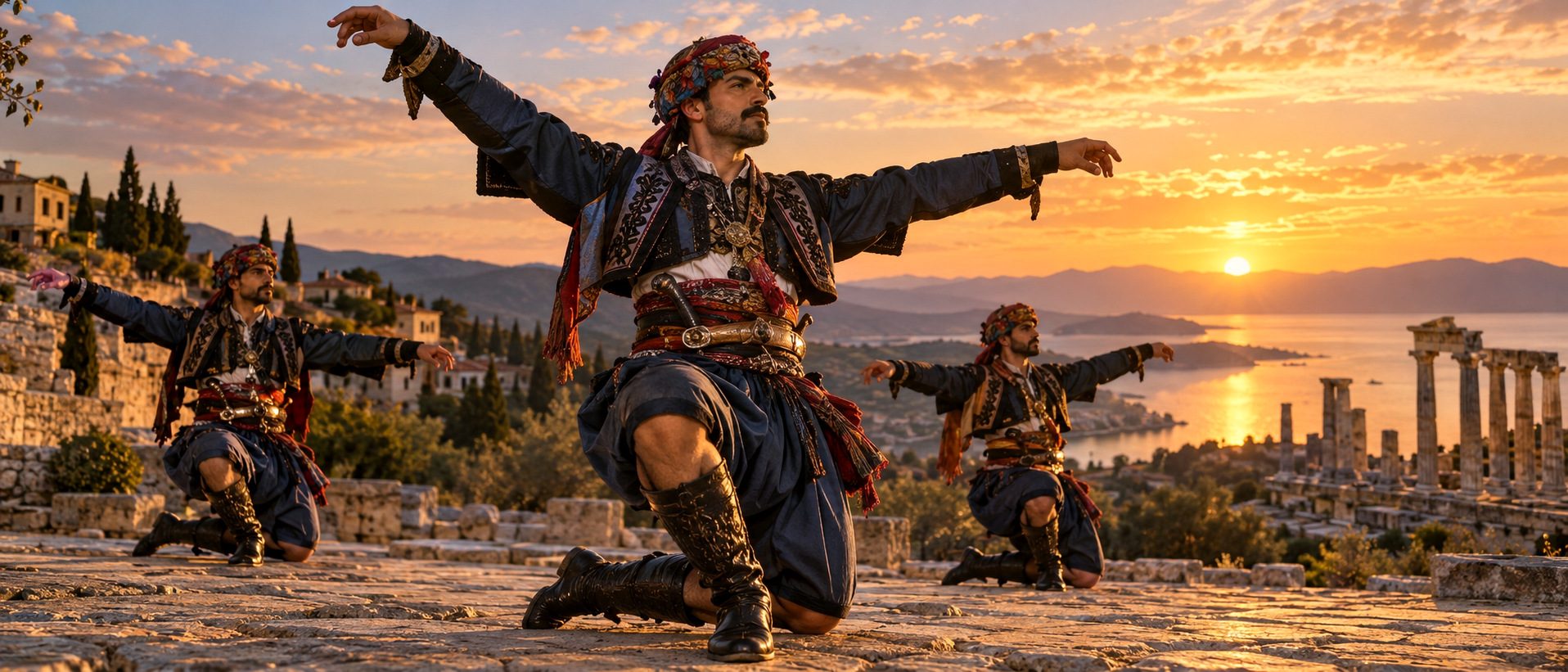
When a Zeybek performer opens both arms and holds a confident, grounded stance, the movement has room to breathe. These Aegean dances are linked to the memory of efe and zeybek communities; the choreography often emphasizes dignity, courage and individual expression. Some pieces are slow and spacious, while others are lively. Drums, zurna and other local instruments shape the atmosphere. Rather than copying a single heroic pose, observe the rhythm, the pauses and the relationship between dancer and musicians.
Key facts
- Type: Solo or group dance
- Origin: Aegean region: İzmir, Aydın, Muğla
- Rhythm: Slow 9/8 (heavy zeybek)
- Music: Davul and zurna, or bağlama
- Level: Moderate · strong, controlled movement
- Where: Aegean festivals, national days, weddings
History timeline
- Ottoman era — Named after the zeybeks and efes, armed rural fighters of the Aegean countryside.
- 1919–1922 — Efes take part in the Turkish War of Independence, and the dance becomes a symbol of courage.
- Today — Performed at national celebrations and Aegean weddings.
Did you know?
- Dancers often kneel and strike the ground, and their raised arms are often compared to an eagle's wings.
- The Greek zeibekiko shares the same roots and name.
Performances to watch
- Zeybek – Performances
Related dances
Why this dance?
How it's danced
Schools
Promote
Promote your classes on this page
Dancers