
History
Rapper Sword Dance
Fast feet, linked hands and the Black Sea
Compact formations and quick steps carried by kemençe or tulum.
Why it matters
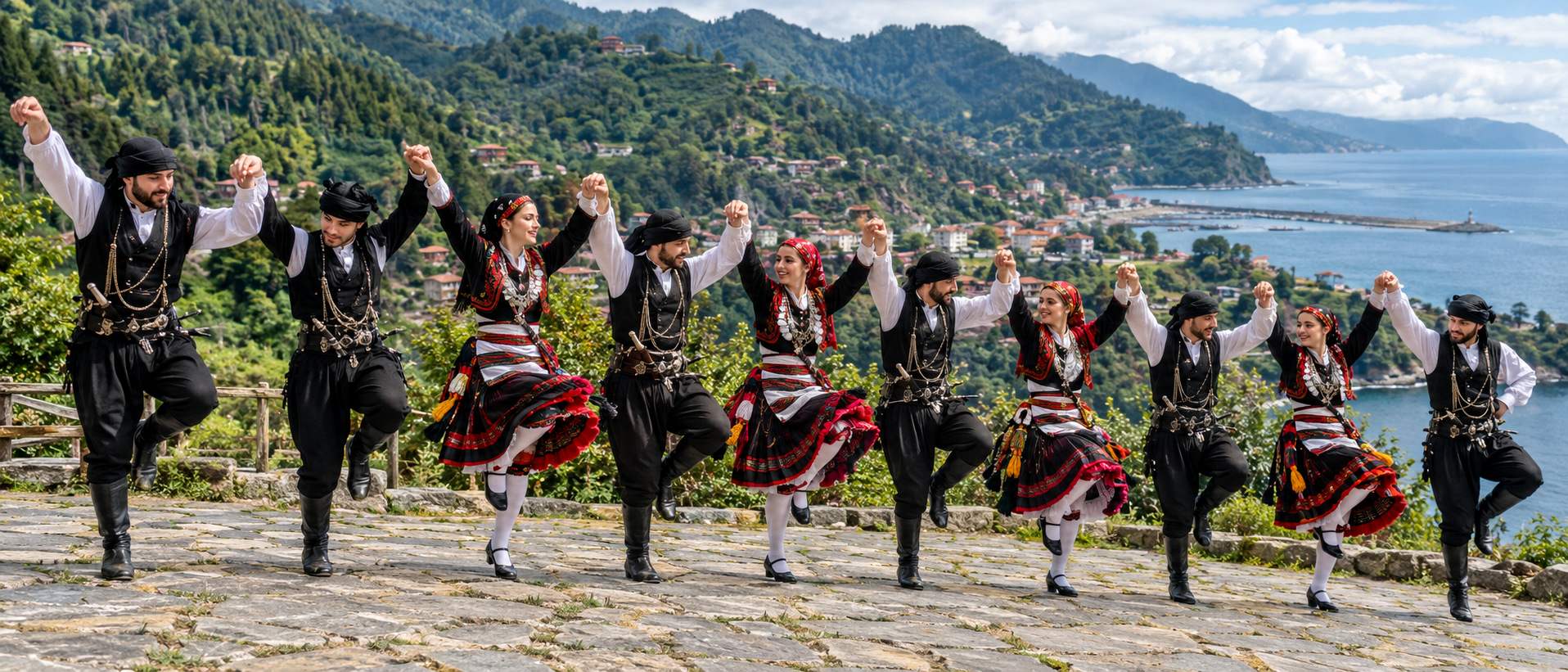
In the steep villages and summer highlands of the eastern Black Sea, Horon is part of gathering as much as performance. Dancers link arms or fingers in a line or circle, moving with a tightly held energy that can surge into quick stamping, shoulders vibrating to the music and sudden collective shifts. A sharp kemençe melody or the drone of the tulum often drives the steps. Traditions vary among Black Sea communities, including Laz and Hemşin performers; no single costume or video should be treated as universal.
Key facts
- Type: Fast line dance
- Origin: Eastern Black Sea: Trabzon, Rize, Artvin
- Rhythm: Fast odd meters such as 7/16
- Music: Black Sea kemençe, tulum bagpipe
- Level: Advanced · fast and precise
- Where: Highland (yayla) festivals, weddings
History timeline
- Black Sea villages — Danced by the many communities of the Black Sea coast and mountains.
- Summer — Highland festivals bring villages together to dance in the open air.
- Today — A symbol of the Black Sea, danced at weddings and on festival stages.
Did you know?
- The rapid shoulder and body shiver is one of horon's signature moves.
- The Black Sea kemençe is a small three-string fiddle played upright on the knee.
Performances to watch
- Horon – Performances
Related dances
Why this dance?
How it's danced
Schools
Promote
Promote your classes on this page
Dancers