
History
Rapper Sword Dance
A line becomes a community
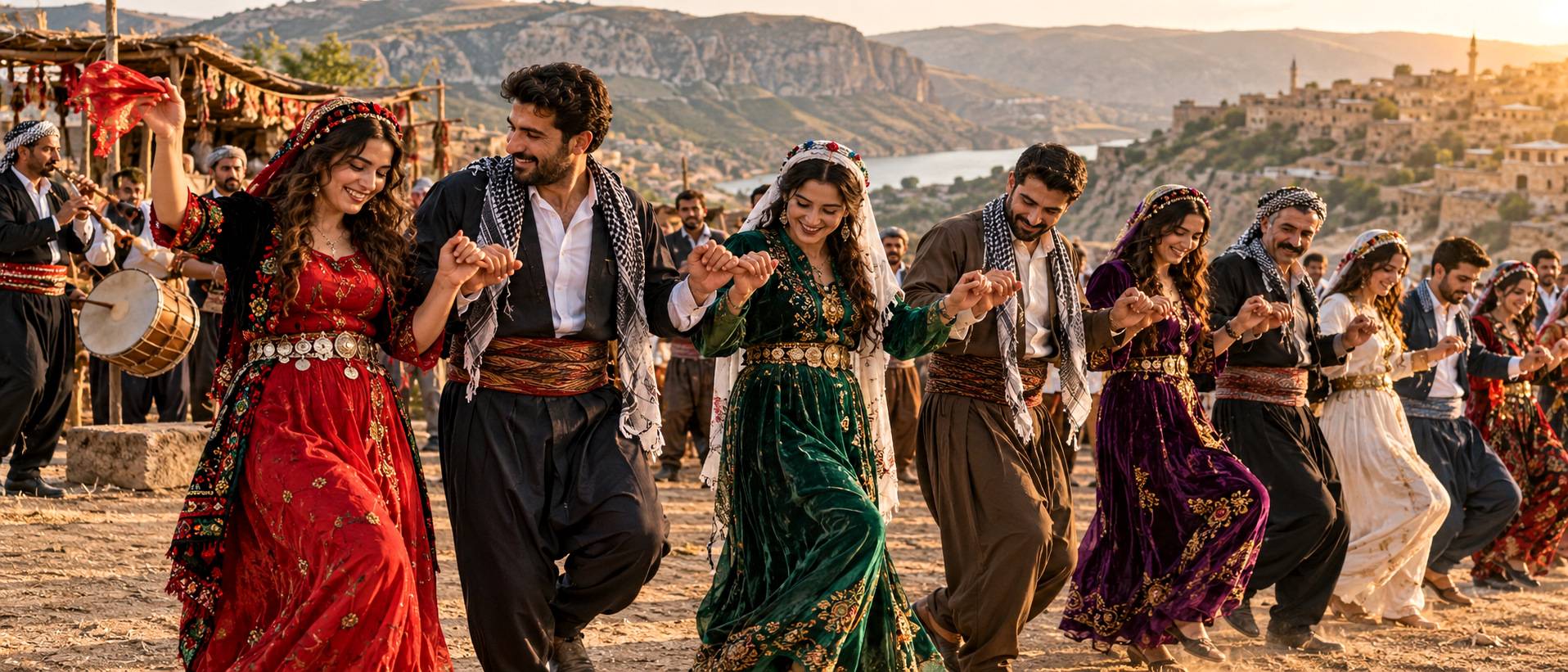
Shoulder-to-shoulder steps, a leader’s handkerchief and the heartbeat of davul and zurna.
Why it matters
At weddings and village celebrations across eastern and southeastern Türkiye, a single dancer often invites others into a growing line. Hands or little fingers link; the leader may lift a handkerchief as the drum and zurna settle into a rhythm everyone recognizes. Halay is a family of regional dances, not one fixed routine: movements can be grounded and measured or develop into energetic stamps, quick changes and sudden turns. Listen to the musicians and watch the people beside you; the spirit of the dance lives in the shared timing.
Key facts
- Type: Line and circle dance
- Origin: Eastern, Southeastern and Central Anatolia
- Music: Davul drum and zurna
- Level: Easy to join · the leader sets the steps
- Where: Weddings, festivals, celebrations
History timeline
- Village roots — Grows from Anatolian village line dances held at weddings and harvests.
- 20th century — Folk ensembles collect regional halays and bring them to the stage.
- Today — The dance of almost every wedding in Türkiye and in the diaspora.
Did you know?
- The leader at the head of the line, the halaybaşı, waves a handkerchief and sets the changes.
- Dancers link little fingers, hold hands or stand shoulder to shoulder, depending on the region.
Performances to watch
- Halay – Performances
Related dances
Why this dance?
How it's danced
Schools
Promote
Promote your classes on this page
Dancers