
History
Rapper Sword Dance
When wooden spoons become percussion
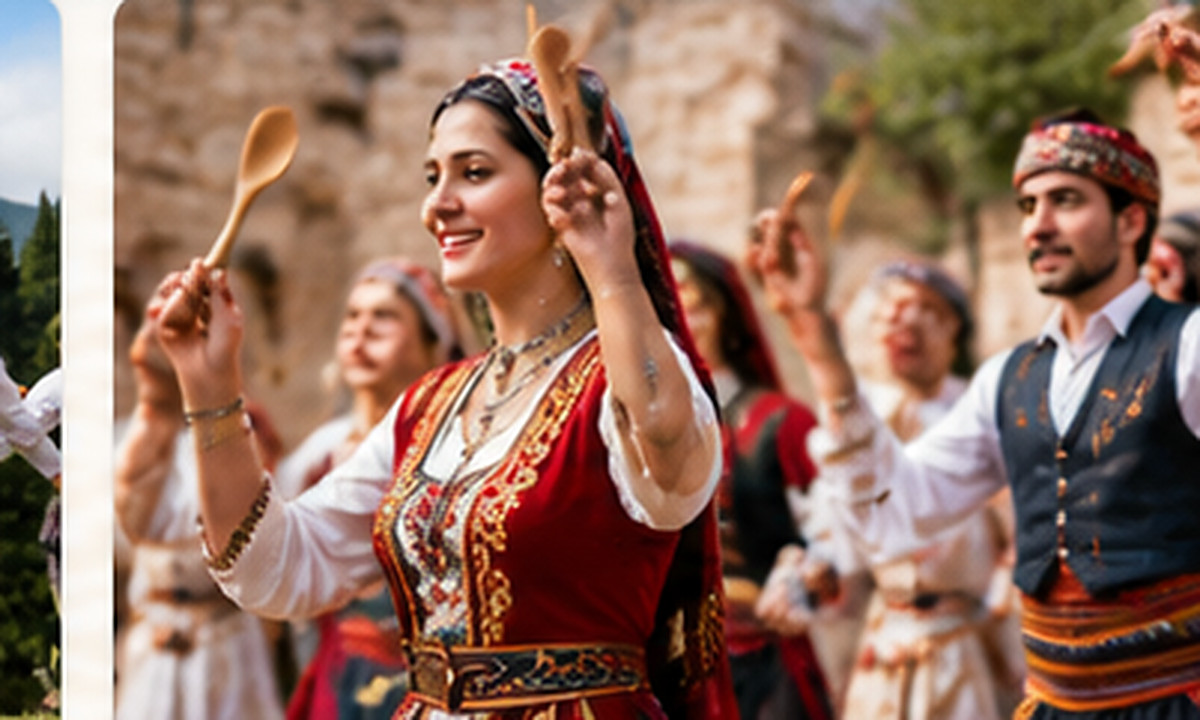
Wooden-spoon rhythms accompany agile communal dancing.
Why it matters
In and around Konya and parts of central and southern Anatolia, wooden spoons can become bright, portable percussion instruments. Dancers click pairs of spoons while stepping, turning and changing formation; the sound belongs to the choreography rather than being an added trick. Regional repertories differ, and performers learn how to balance the music, their hands and their feet. In a small village hall, a few crisp spoon clicks can fill the whole room.
Key facts
- Type: Group dance with wooden spoons
- Origin: Central and Southern Anatolia: Konya, Silifke
- Music: Bağlama, violin, the dancers' spoons
- Level: Easy to moderate
- Where: Festivals, stage, school performances
History timeline
- The spoons — Pairs of wooden spoons are held in each hand and clicked like castanets.
- Regions — Konya and Silifke are best known, each with its own style.
- Today — A favourite of folk ensembles and school performances.
Did you know?
- The spoons let the dancers play the rhythm themselves.
- Spoon dances are lively and joyful, often with quick turns.
Performances to watch
- Kaşık Oyunları · Spoon Dances – Performances
Related dances
Why this dance?
How it's danced
Schools
Promote
Promote your classes on this page
Dancers