History
Rapper Sword Dance
Meeting one another through rhythm
Expressive facing dances and playful interaction in Thrace.
Why it matters
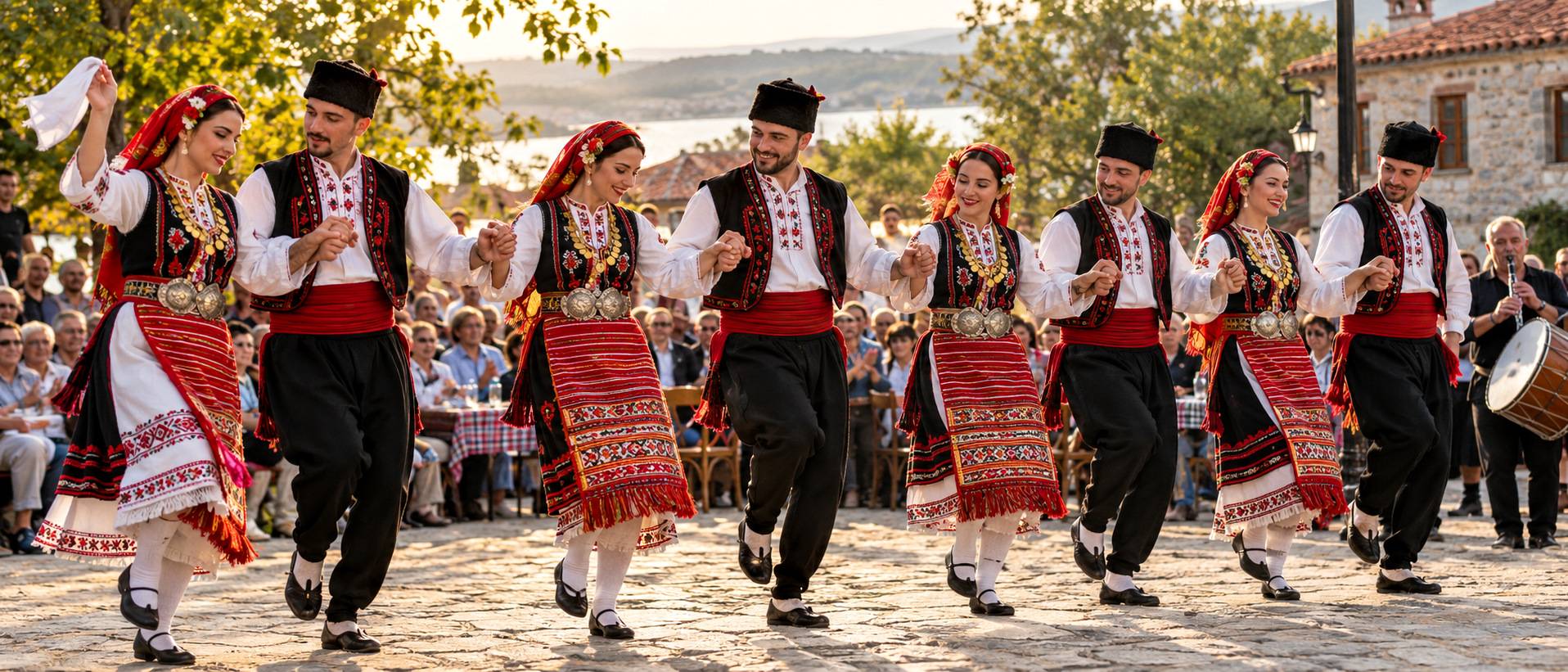
Karşılama literally suggests an encounter or greeting, and dancers often face one another, exchanging small patterns, gestures and inviting turns. In Thrace and nearby regions, a tune in an asymmetrical rhythm may give the conversation a distinctive lift. This is a social dance family rather than a strict theatrical duet: the delight is in reacting to the person across from you without losing the pulse of the music.
Key facts
- Type: Facing couple and group dance
- Origin: Thrace: Edirne, Kırklareli, Tekirdağ
- Rhythm: 9/8
- Music: Clarinet, violin, darbuka
- Level: Easy to moderate
- Where: Weddings, festivals, celebrations
History timeline
- The name — Karşılama means “greeting” or “facing”: dancers face each other in pairs.
- Thrace — A favourite of Thracian weddings, shared with neighbouring Balkan traditions.
- Today — Danced at weddings and festivals in Edirne and across Türkiye.
Did you know?
- Its 9-beat rhythm, counted 2+2+2+3, gives the dance its lilting feel.
- The clarinet is the star instrument of Thracian dance music.
Performances to watch
- Karşılama – Performances
Related dances
Why this dance?
How it's danced
Schools
Promote
Promote your classes on this page
Dancers