History
Sirtaki
Modern Greece · stage and social settings
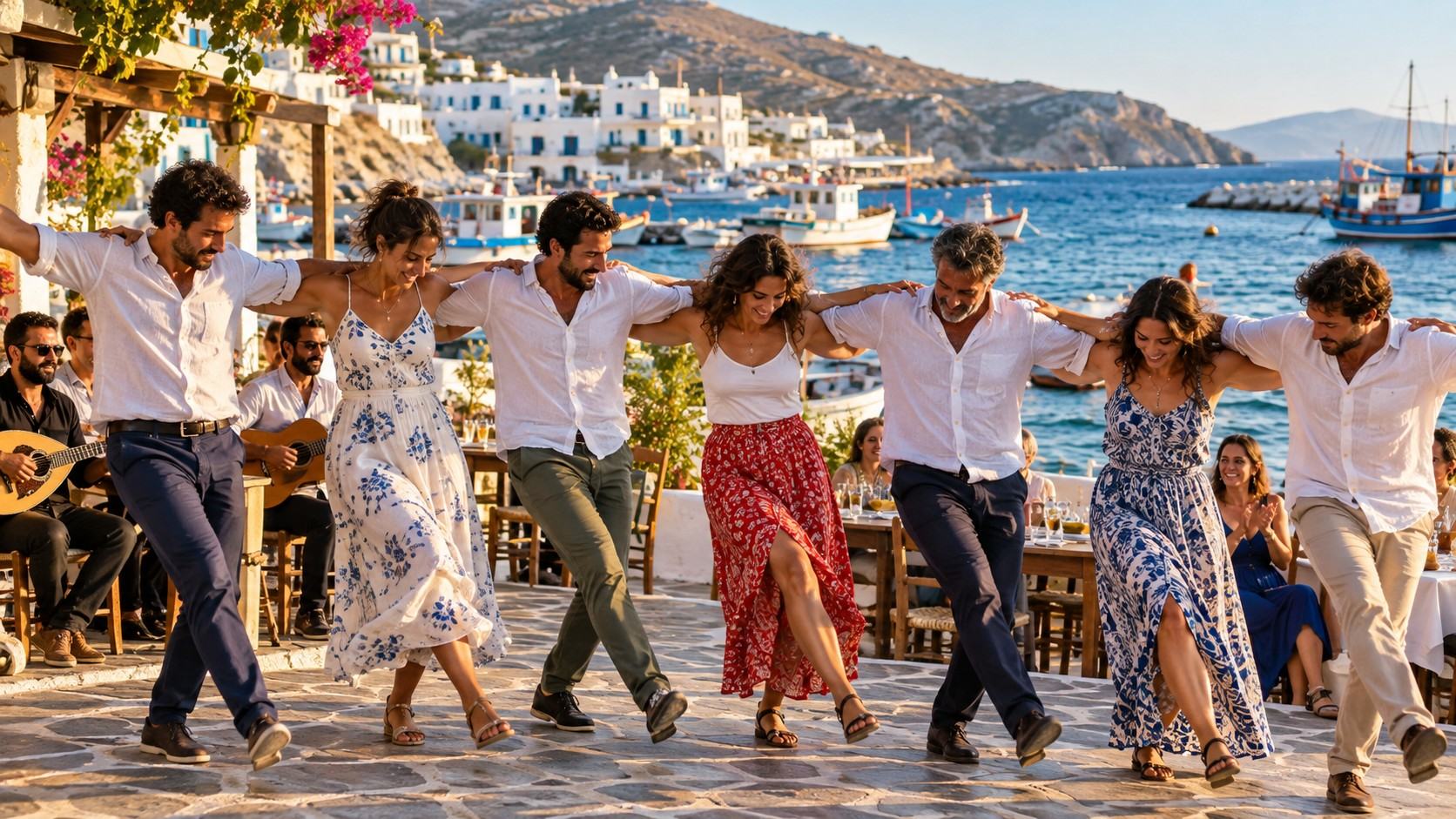
A modern dance made famous by the 1964 film Zorba the Greek. Sirtaki is world famous, but it is a modern choreographic creation associated with the 1964 film Zorba the Greek. It draws on Greek dance elements, particularly slow Hasapiko and faster related steps, yet it should not be presented as an unchanged ritual of ancient Greece. After the film, communities and tourist venues made the line dance a new, widely recognized symbol.
Why it matters
Sirtaki illustrates how cinema can create a living social symbol without replacing older local dance families. It can be enjoyed enthusiastically while giving proper attention to Kalamatianos, Tsamiko, island Syrtos and the communities whose dances long preceded the film. Its popularity can be celebrated while clearly crediting cinematic choreography and keeping older Hasapiko traditions distinct.
Key facts
- Type: Choreographed line dance
- Since: 1964
- Rhythm: Starts slow, speeds up (4/4 to 2/4)
- Music: “Zorba’s Dance” by Mikis Theodorakis
- Level: Easy to learn
- Where: Worldwide: parties, tourist venues
History timeline
- 1964 — Created for the film Zorba the Greek, directed by Michael Cacoyannis.
- Choreography — Giorgos Provias combines slow and fast hasapiko steps for Anthony Quinn and Alan Bates.
- 1960s — Theodorakis’s “Zorba’s Dance” becomes an international hit.
- Today — Danced around the world as a symbol of Greece, alongside much older traditional dances.
Did you know?
- The name means “little syrtos”, even though its steps come mainly from hasapiko.
- It starts slowly and speeds up until the dancers can barely keep pace.
Performances to watch
- Sirtaki – Live performances
Related dances
Why this dance?
How it's danced
Schools
Promote
Promote your classes on this page
Dancers