
History
Zonaradikos
Thrace · northern Greece
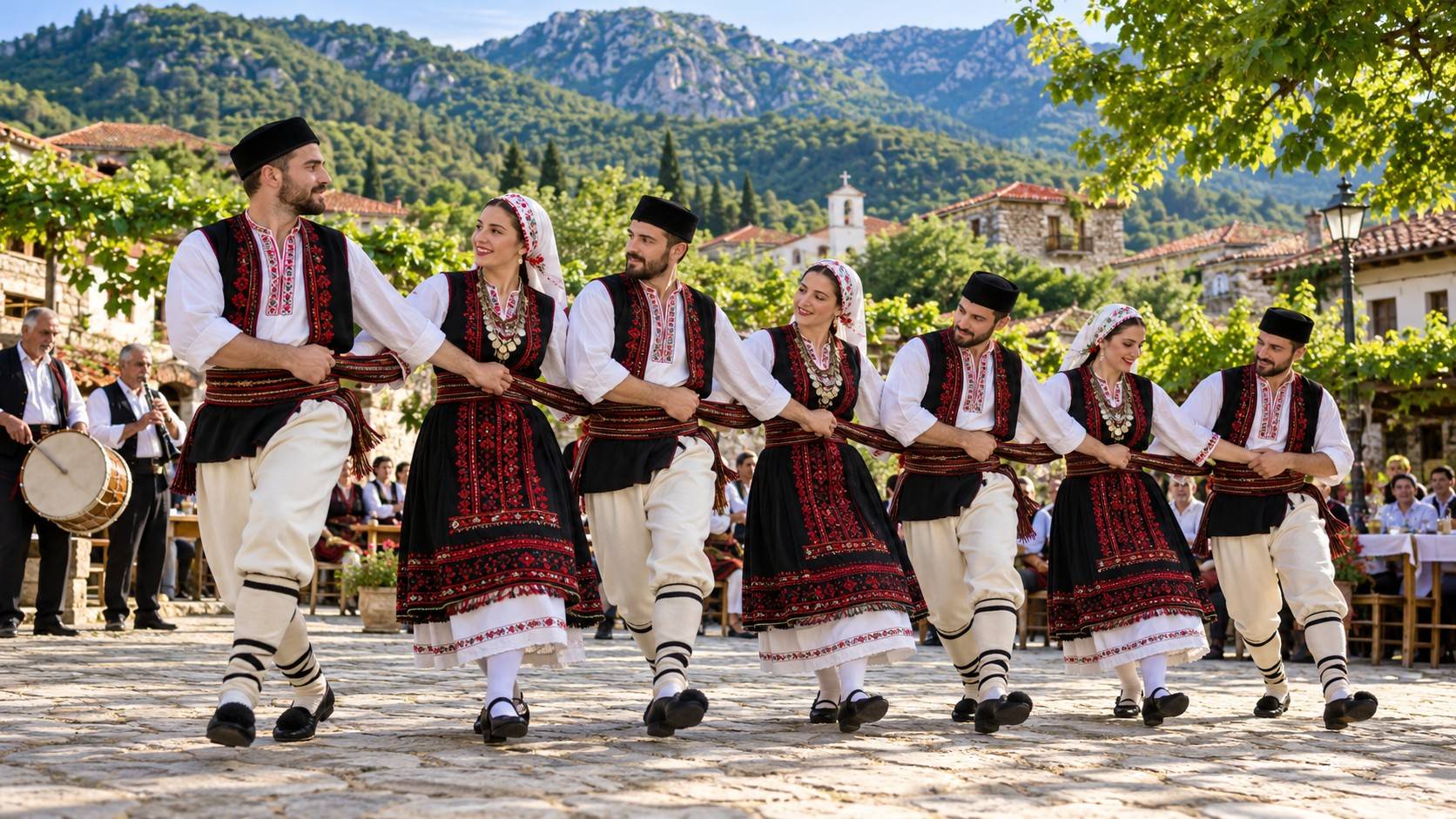
Thracian dancers link by their belts to form a resilient moving chain. Zonaradikos is strongly associated with Greek Thrace, where a dancer can connect with neighbors by holding their waist belt or sash. Village celebrations have local variants in tempo and pattern, and the term refers to a manner of group connection as well as a dance family. Its northern regional character should be recognized rather than presenting all Greek lines as identical.
Why it matters
By literally linking neighboring bodies, the dance makes social trust visible. It is best experienced through local hosts and teachers, with credit given to the community rather than an anonymous national costume catalogue. Holding a neighbour’s belt requires coordinated trust; the shared chain shows how a group can move without losing its distinct members.
Key facts
- Type: Chain dance holding belts
- Origin: Thrace, northeastern Greece
- Rhythm: 6/8
- Music: Gaida bagpipe, kaval flute, clarinet, drum
- Level: Easy to moderate
- Where: Thracian village festivals
History timeline
- The name — From zonari, “belt”: dancers hold one another by the belt.
- Thrace — A core dance of Thracian villages, with variants from one village to the next.
- 1920s — Refugees from Eastern Thrace bring their own versions into Greece.
- Today — Taught by Thracian cultural associations and danced at festivals across Greece.
Did you know?
- Holding the belt instead of the hand keeps the chain close, so it moves as one body.
- The Thracian gaida, a bagpipe made from goatskin, often plays for it.
Performances to watch
- Zonaradikos – Live performances
Related dances
Why this dance?
How it's danced
Schools
Promote
Promote your classes on this page
Dancers