
History
Tsamiko
Epirus & central mainland
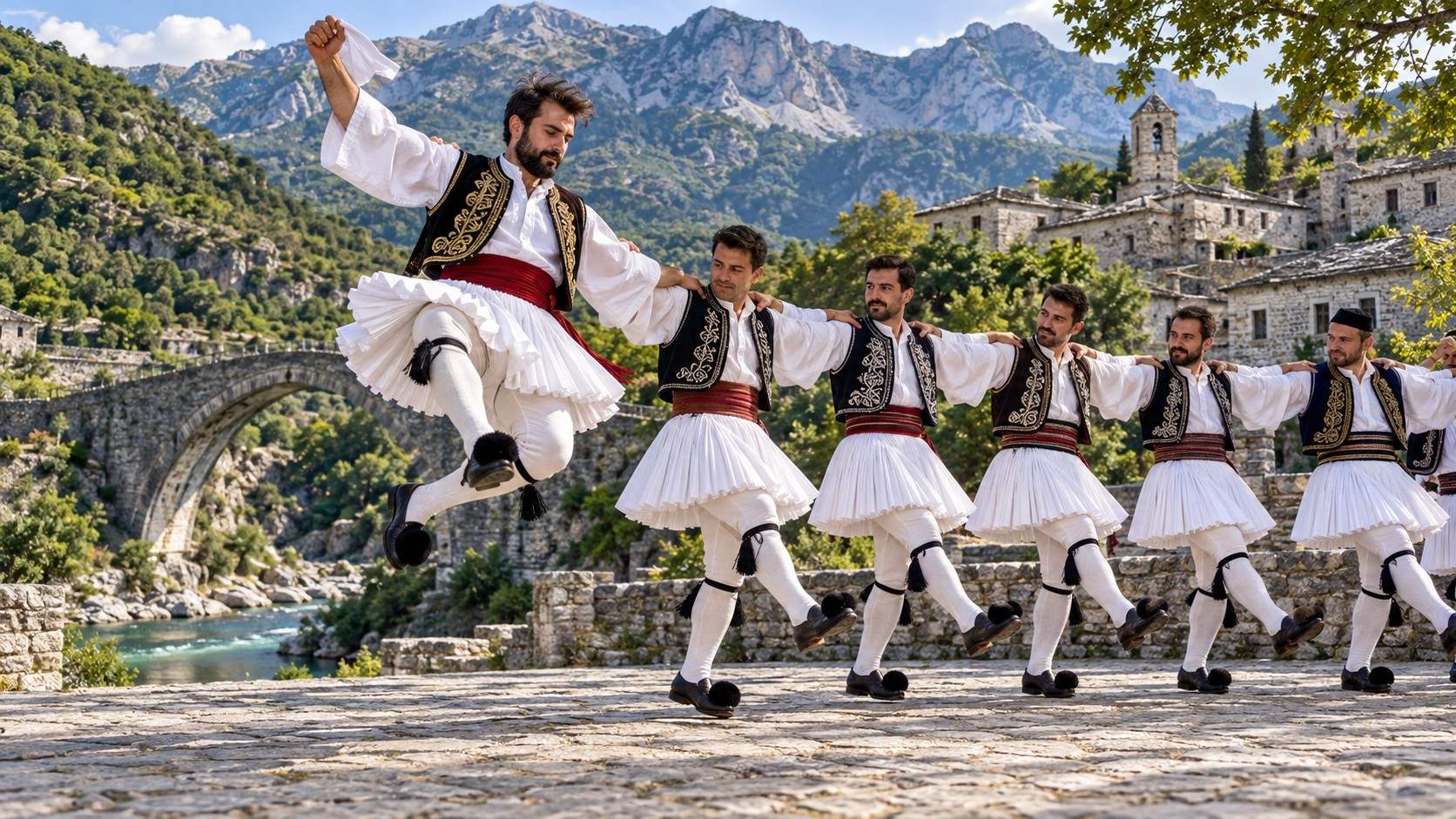
Measured mainland dance with a poised leader and strong group support. Tsamiko is a stately dance associated with parts of the Greek mainland, including Epirus and central Greece. The performance is shaped by village histories and the public roles of lead dancers rather than simply by spectacular leaps. Festival ensembles may use formal dress such as the foustanella, but ordinary village participation and stage presentations need to be distinguished.
Why it matters
In the shared line, individual virtuosity is held within collective support. The dance can honor resilience and memory, but meaning is shaped by the occasion and the people present, not by a single modern nationalist narrative. The expressiveness of the leading dancer depends on attentive partners, not an isolated athletic exhibition.
Key facts
- Type: Line dance with a lead dancer
- Origin: Epirus and central Greece
- Rhythm: Slow 3/4
- Music: Clarinet, violin, laouto
- Level: Moderate · the lead part is demanding
- Where: Mainland festivals, national days
History timeline
- The name — Named after Chameria (Tsamouria), a region of Epirus.
- 18th–19th century — Associated with the klephts, mountain fighters celebrated in Greek folk songs.
- 1821 — Linked in popular memory with the Greek War of Independence.
- Today — A favorite of folk ensembles dressed in the pleated foustanella.
Did you know?
- The leader often holds a handkerchief joined to the second dancer and uses it for support during leaps and spins.
- Its slow 3/4 rhythm gives the leader time for high leaps and heel slaps.
Performances to watch
- Tsamiko – Live performances
Related dances
Why this dance?
How it's danced
Schools
Promote
Promote your classes on this page
Dancers