
History
Hasapiko
Urban ports · Athens and Piraeus
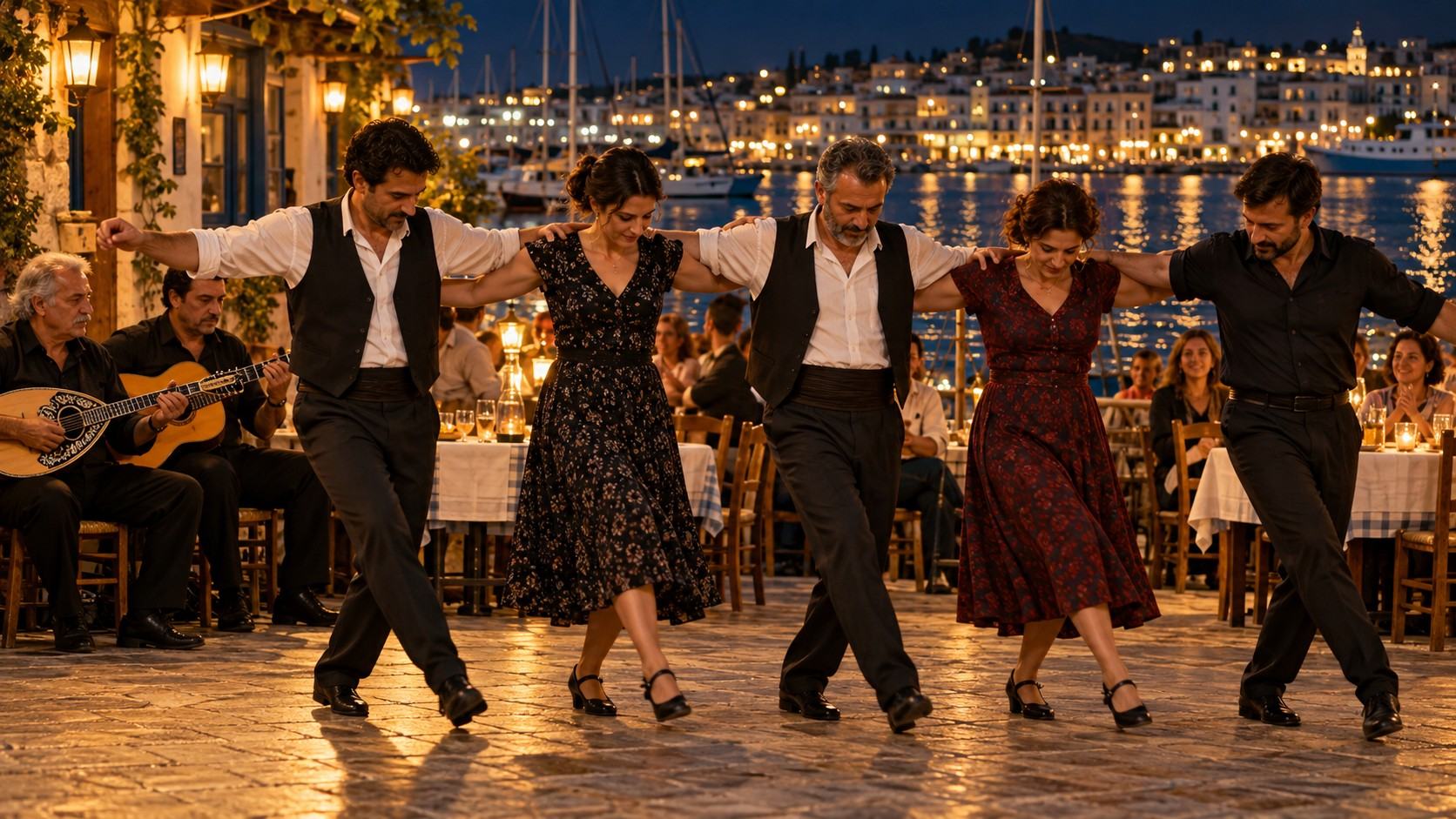
Urban shoulder-linked dance with precise shared timing, linked to rebetiko. Hasapiko is part of the social dance history of the Greek urban world and the musical environment later associated with rebetiko. It is remembered in small groups of friends and tavern performance rather than as a single rural harvest dance. Its layered history reaches through changing port cultures and urban identities; it should not be confused with the later film choreography called Sirtaki.
Why it matters
The close line can convey trust, friendship and collective listening. Linking it to named rebetiko songs and performers gives more depth than treating it as generic music for tourists; its twentieth-century urban history deserves to stand on its own. The group succeeds by attentive weight shifts and shared timing; a simplified demonstration should never replace its urban music history.
Key facts
- Type: Line dance, arms on shoulders
- Origin: Constantinople’s butchers’ guild, by tradition
- Rhythm: 2/4 (slow form often 4/4)
- Music: Bouzouki, rebetiko ensembles
- Level: Moderate · steps must match exactly
- Where: Tavernas, parties, celebrations
History timeline
- Constantinople — Its name comes from hasapis, “butcher”; tradition traces it to the city’s butchers’ guild.
- 1922–1923 — Refugees from Asia Minor and Constantinople bring urban music to Piraeus and Athens.
- 1930s–1950s — Hasapiko becomes a core rhythm of rebetiko recordings.
- 1964 — Its slow and fast forms inspire the Sirtaki in the film Zorba the Greek.
Did you know?
- Dancers usually form short lines of two to four people, arms on each other’s shoulders.
- The fast version is called hasaposerviko.
Performances to watch
- Hasapiko – Live performances
Related dances
Why this dance?
How it's danced
Schools
Promote
Promote your classes on this page
Dancers