
History
Zeibekiko
Urban rebetiko culture
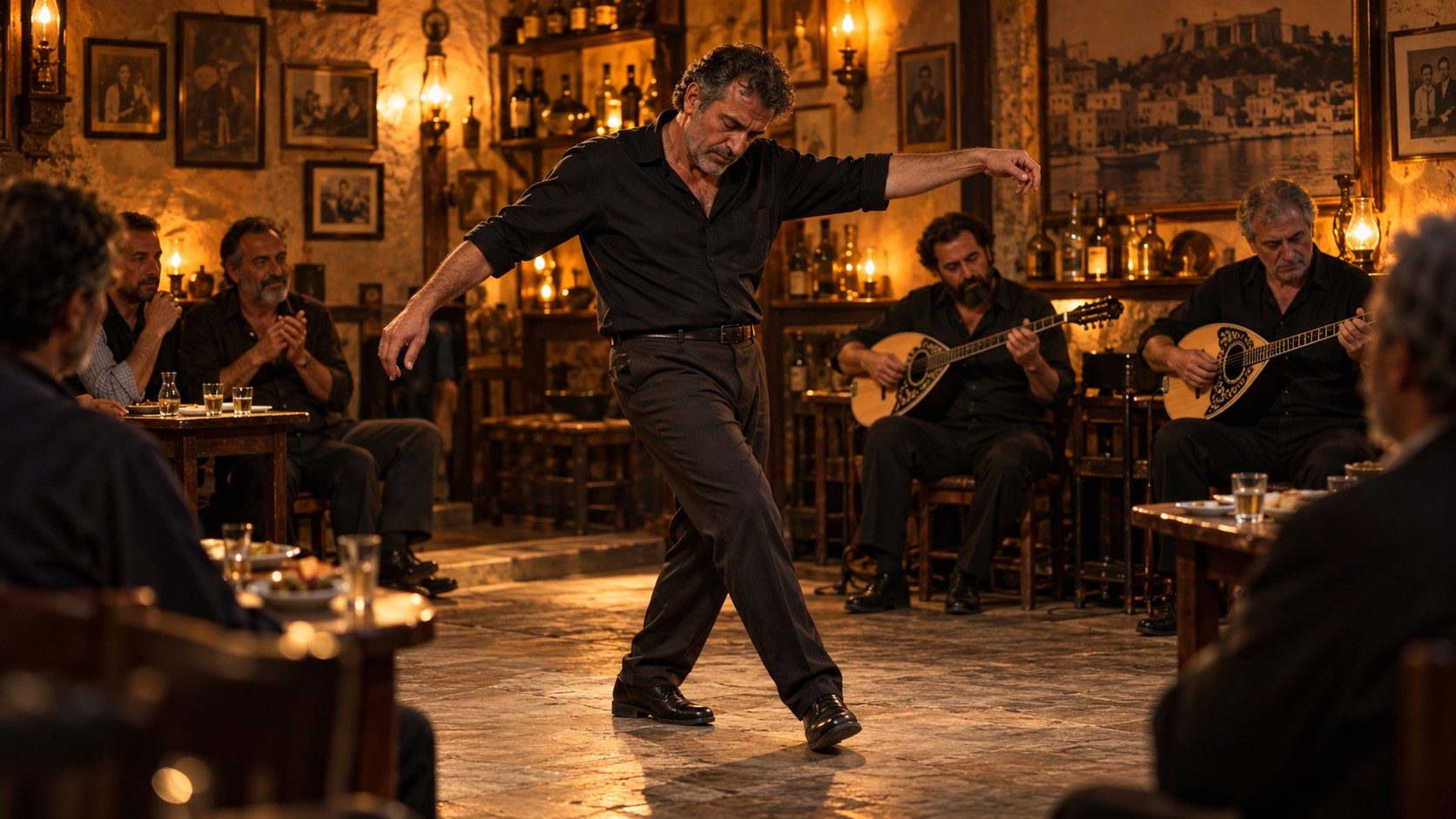
An expressive solo improvisation shaped by urban rebetiko music. Zeibekiko belongs to the layered histories of Greek urban song, rebetiko and cultural exchange around the eastern Mediterranean. Rather than a formal couple or chain dance, it is commonly approached as an intense personal solo. Its circulation across cities and communities should be described with care, acknowledging historical exchange rather than inventing a pure, isolated origin.
Why it matters
A solo zeibekiko is a relationship with music and the room around the dancer. Observers should avoid treating it as an invitation to join without being asked, and credit the singer and musicians whose song gives the movement meaning. In some social contexts surrounding dancers grant space and attention; imposing choreographed formations would change its character.
Key facts
- Type: Improvised solo dance
- Origin: Named after the Zeybeks of western Anatolia
- Rhythm: 9/8 (or 9/4)
- Music: Bouzouki, rebetiko and laïko
- Level: Personal · no fixed steps
- Where: Tavernas, celebrations
History timeline
- Ottoman era — Named after the Zeybeks, irregular fighters of the Aegean region of Anatolia.
- 1922–1923 — Refugees from Asia Minor bring the dance to Greek cities.
- 1930s–1960s — Becomes the emotional heart of rebetiko and later laïko music.
- Today — Still danced in tavernas and at celebrations, usually by one dancer at a time.
Did you know?
- Friends often kneel around the dancer and clap the rhythm, supporting without joining in.
- Its nine-beat rhythm makes it a dance to feel rather than to count.
Performances to watch
- Zeibekiko – Live performances
Related dances
Why this dance?
How it's danced
Schools
Promote
Promote your classes on this page
Dancers