
History
Pontic Serra
Pontic Greek communities
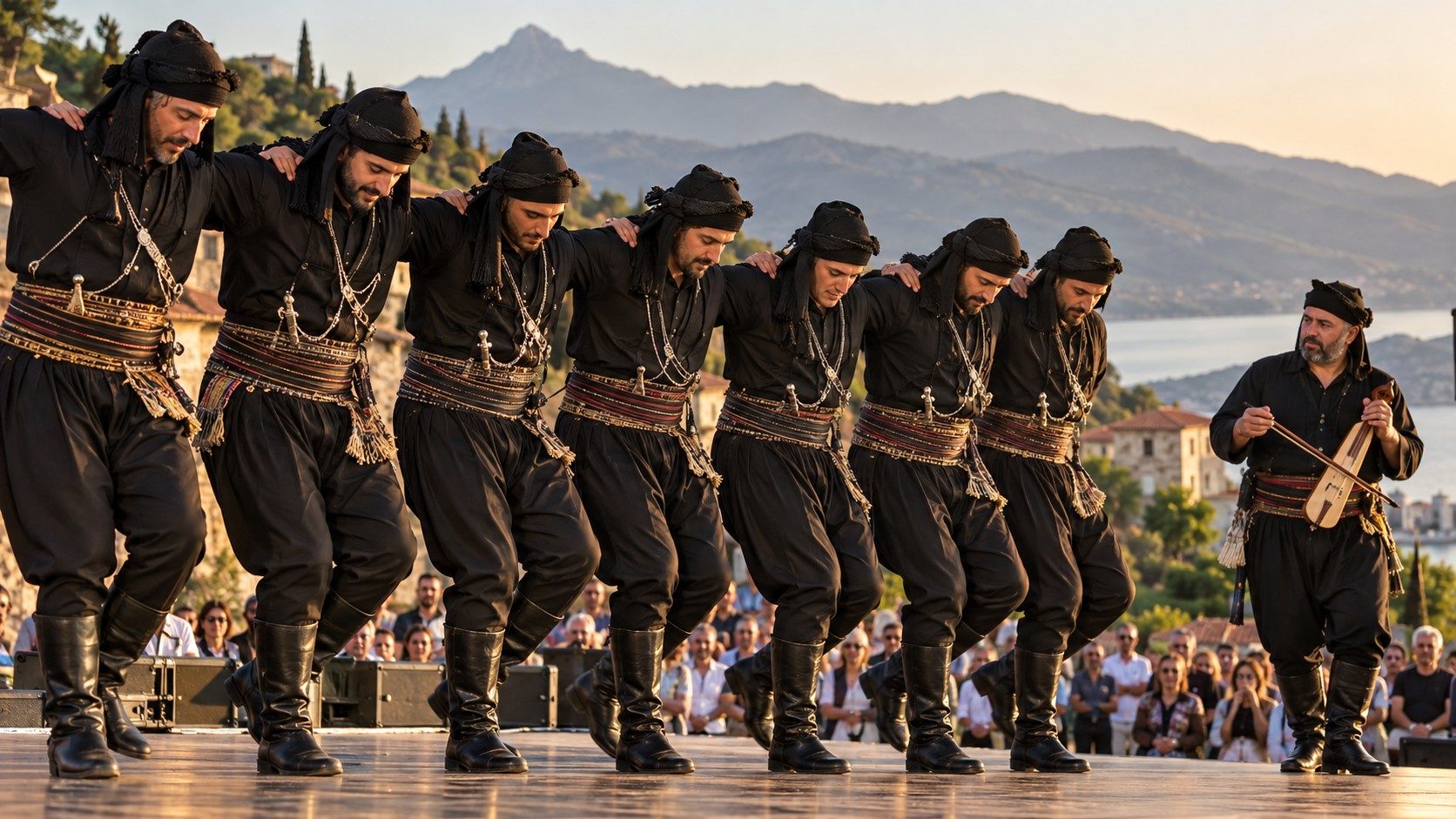
A powerful tight-line dance preserved by Pontic Greek communities. Serra is a forceful dance within the heritage of Pontic Greek communities whose historical roots lie around the Black Sea. Experiences of migration and displacement have made dance and the Pontic lyra important vehicles of memory in Greece and the diaspora. It has its own repertoire and movement vocabulary; it should not be visually confused with Cretan Pentozali or other vigorous group dances.
Why it matters
For Pontic Greeks, performing Serra may express cultural survival, community pride and continuity across generations. Responsible presentation avoids generic military stereotypes and identifies the musicians, group and location of a specific performance. For Pontic descendants this dance may carry memories of displacement, family transmission and collective perseverance, not only spectacular steps.
Key facts
- Type: Line dance, shoulder to shoulder
- Origin: Pontus, Black Sea coast of Anatolia
- Rhythm: Fast 7/16
- Music: Pontic lyra (kemenche), daouli drum
- Level: Advanced
- Where: Pontic associations and festivals
History timeline
- Pontus — Danced by Greek communities along the Black Sea coast of Anatolia.
- 1922–1923 — Pontic Greeks are uprooted and resettled in Greece in the population exchange.
- 1994 — Greece establishes 19 May as a day of remembrance for the Pontic Greeks.
- Today — Pontic associations keep Serra alive in Greece and the diaspora.
Did you know?
- The quick shoulder shimmy called tremoulo is one of Serra’s signature moves.
- Serra is also called Pyrrichios, after the war dance of ancient Greece — a link made by tradition.
Performances to watch
- Pontic Serra – Live performances
Related dances
Why this dance?
How it's danced
Schools
Promote
Promote your classes on this page
Dancers