
History
Yorkshire Longsword Dance
Yorkshire · northern England
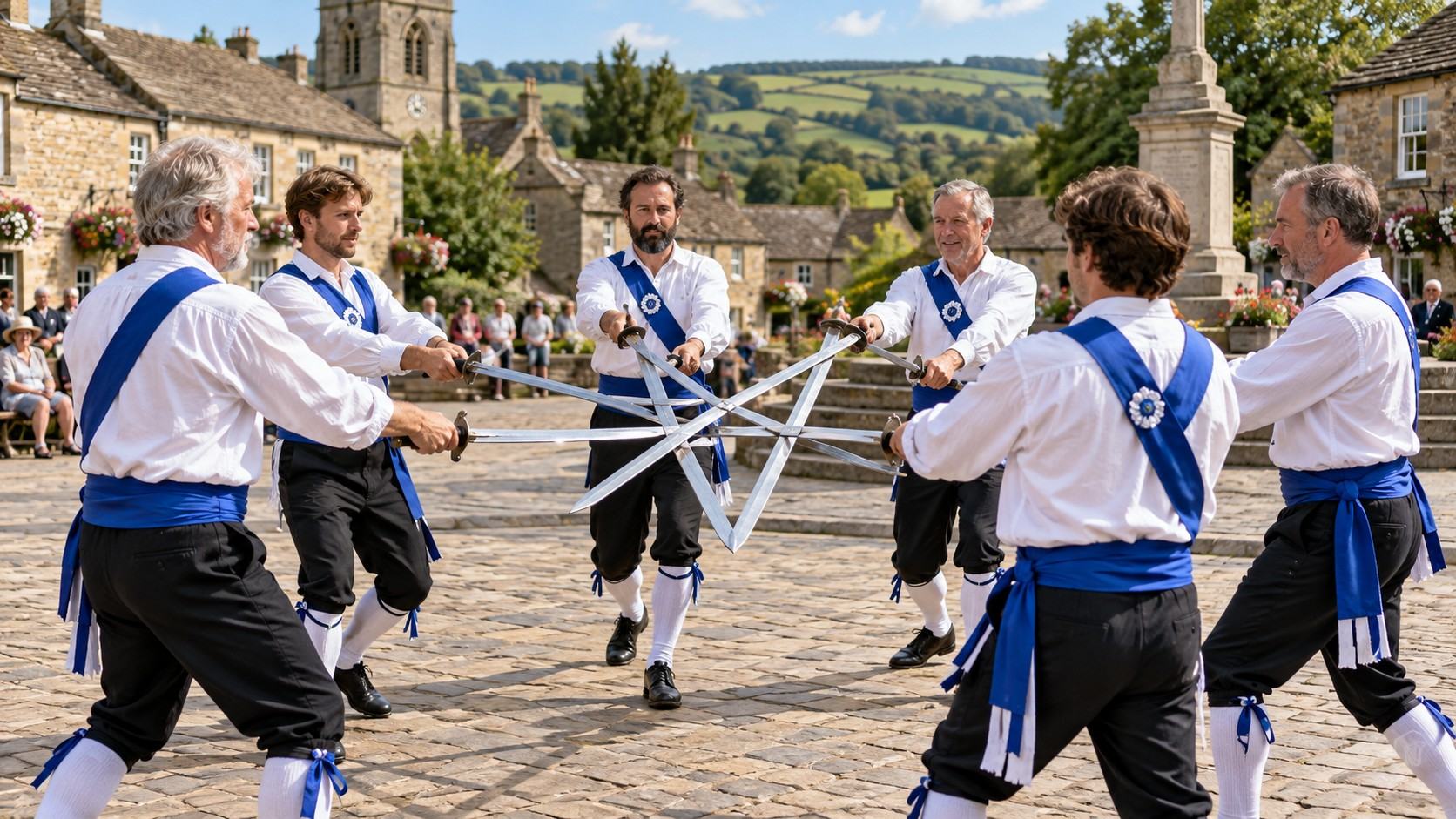
A Yorkshire team weaves shared figures with rigid dance swords. Explore the people and music behind this English tradition in the chapters below.
Why it matters
The striking moment when a whole team lifts a shared sword figure comes only after patient rehearsal. The dance carries stories of cooperation and locality rather than combat. Local groups and documented collections offer the most trustworthy way to discover its living variations. Watch how experienced dancers respond to one another. The sound, the gathering and the local story are as important as any individual step.
Key facts
- Type: Team dance with rigid swords
- Origin: Yorkshire villages
- Rhythm: Mostly 6/8 jigs
- Music: Fiddle, melodeon
- Level: Moderate · team precision
- Where: Christmas and Boxing Day performances
History timeline
- 18th–19th century — Village teams dance around Christmas, often collecting money.
- Grenoside — The Grenoside sword dancers, near Sheffield, perform every Boxing Day.
- Handsworth — Handsworth's traditional team, also near Sheffield, keeps its own dance alive.
- Today — Revival teams dance longsword at festivals across England.
Did you know?
- The swords are linked into a star-shaped “lock” that is raised at the climax.
- Each village team has its own figures, passed down within the team.
Performances to watch
- Yorkshire Longsword Dance – Performances
Related dances
Why this dance?
How it's danced
Schools
Promote
Promote your classes on this page
Dancers