
History
English Barn Dance & Ceilidh
England · community halls, festivals and barn dances
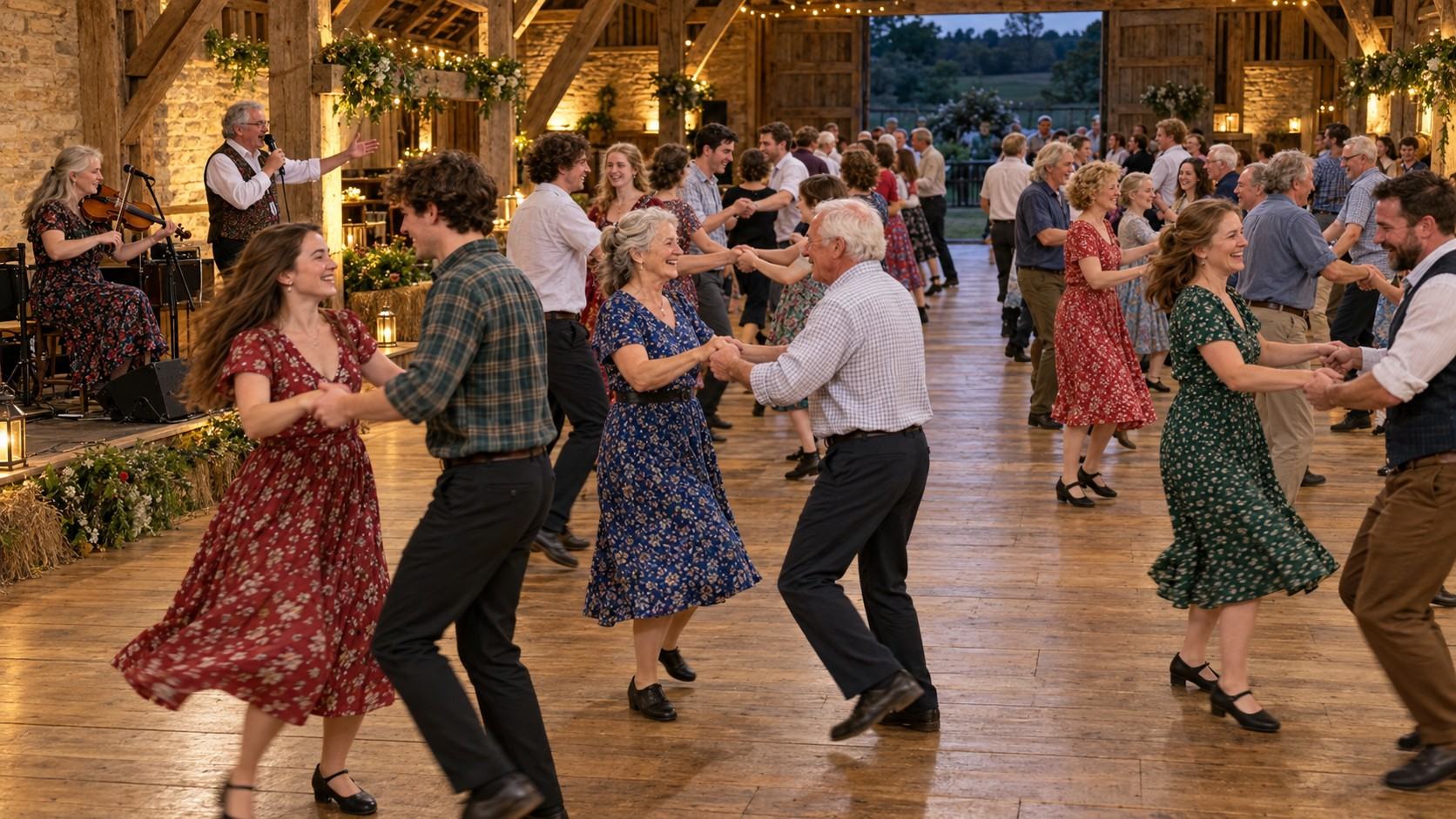
A caller invites everyone into a welcoming English barn dance. Explore the people and music behind this English tradition in the chapters below.
Why it matters
The heart of an English barn dance is hospitality. Friends, grandparents, children and guests share the same floor and help newcomers feel at ease. The choreography matters, but the larger achievement is a room in which everybody finds a place to belong. Watch how experienced dancers respond to one another. The sound, the gathering and the local story are as important as any individual step.
Key facts
- Type: Called social dance
- Origin: Rural England and village halls
- Rhythm: Jigs (6/8), reels and polkas (2/4, 4/4)
- Music: Live band: fiddle, melodeon, guitar
- Level: Beginners welcome · the caller teaches
- Where: Weddings, village halls, fundraisers
History timeline
- 17th century — Country dances are printed and shared across England, the roots of today's barn dance figures.
- 20th century — The called barn dance becomes a favourite party in village halls and barns.
- 1960s–70s — The folk revival brings new bands and callers to towns and universities.
- Today — A popular choice for weddings, birthdays and community fundraisers.
Did you know?
- The caller walks everyone through each dance before the music starts, so no experience is needed.
- In England, “barn dance” and “ceilidh” are often used for the same kind of party.
Performances to watch
- English Barn Dance & Ceilidh – Performances
Related dances
Why this dance?
How it's danced
Schools
Promote
Promote your classes on this page
Dancers