
History
Morris Dancing
England · Cotswolds and many other regions
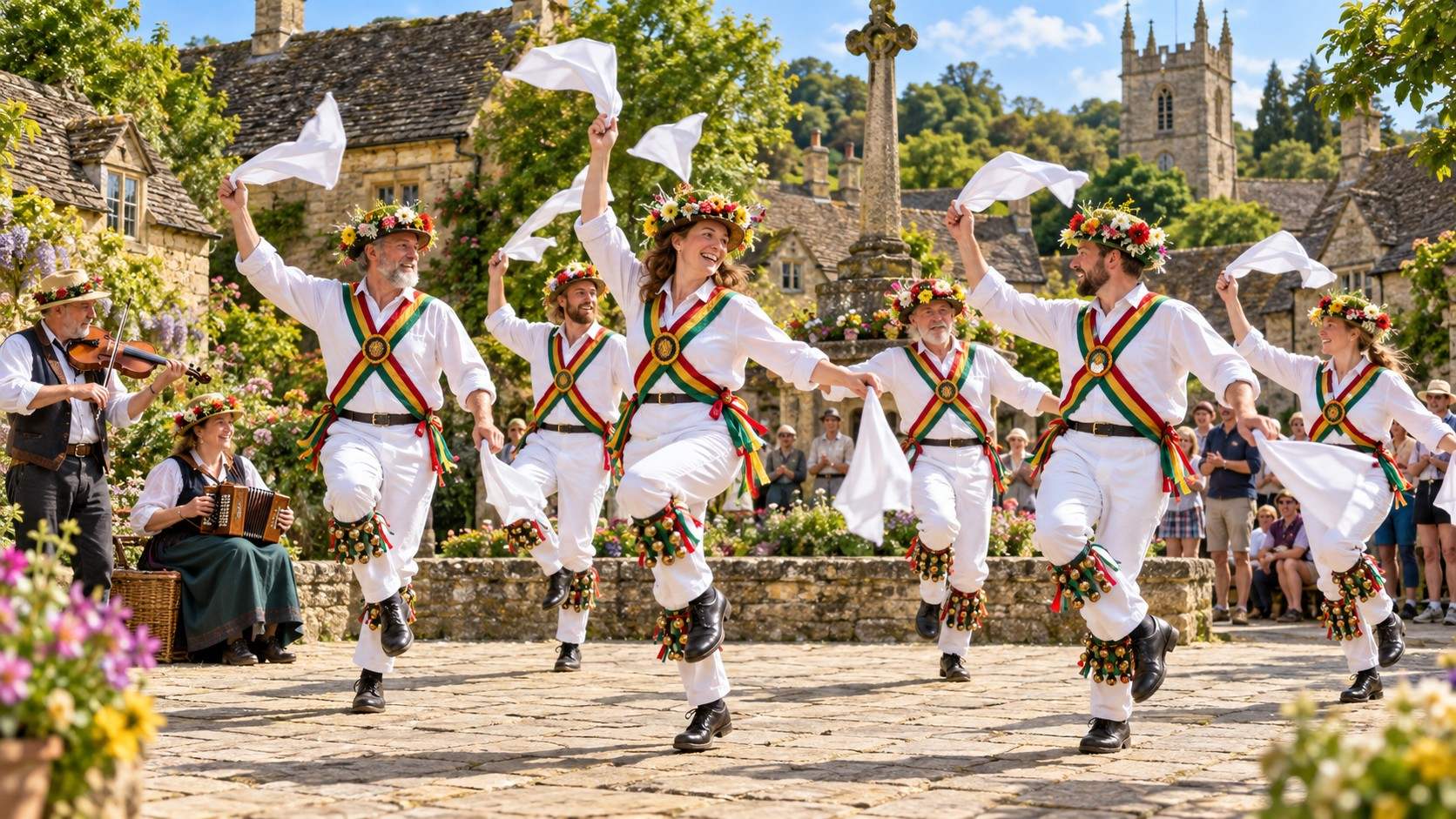
The bell-bright English tradition with many distinct regional styles. Explore the people and music behind this English tradition in the chapters below.
Why it matters
For many communities, Morris belongs to the calendar of local gatherings, seasonal celebrations and friendly meetings between dance teams. It brings people into public spaces to watch, learn, talk and laugh. Its meaning comes from that continuing relationship with place and people, not a single speculative story about ancient origins. Watch how experienced dancers respond to one another. The sound, the gathering and the local story are as important as any individual step.
Key facts
- Type: Team dance by a “side”
- Since: 15th century (first records 1448)
- Rhythm: Varies by tradition
- Music: Melodeon, concertina, fiddle, pipe and tabor
- Level: Learned in a team
- Where: May Day, village fêtes, pubs, festivals
History timeline
- 1448 — The earliest known English record of morris dancers, in London.
- 1899 — Cecil Sharp sees the Headington Quarry side on Boxing Day and starts collecting the dances.
- 1934 — The Morris Ring is founded to link men's sides across England.
- Today — Hundreds of sides, for men, women and mixed teams, dance across England.
Did you know?
- A morris team is called a “side”.
- Many sides dance at sunrise on May Day morning.
Performances to watch
- Morris Dancing – Performances
Related dances
Why this dance?
How it's danced
Schools
Promote
Promote your classes on this page
Dancers