
History
Border Morris
Shropshire, Herefordshire and Worcestershire
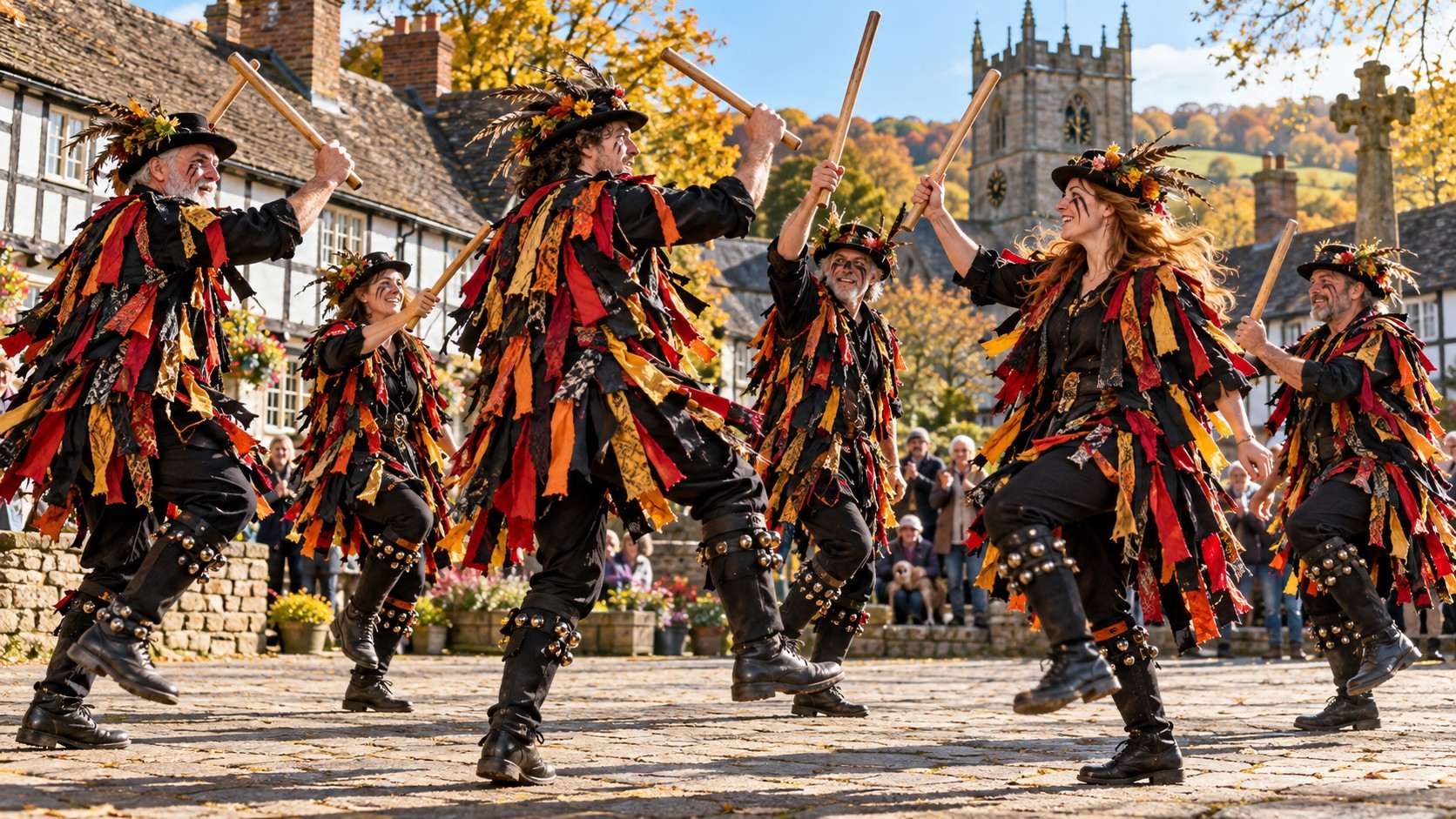
Stick rhythms and dramatic steps from counties beside Wales. Explore the people and music behind this English tradition in the chapters below.
Why it matters
For many Border Morris groups, the shared effort is as rewarding as the show itself. Friends spend evenings rehearsing and weekends traveling to meet other teams. The tradition connects people through music, humor and movement while leaving room for new artistic ideas. Watch how experienced dancers respond to one another. The sound, the gathering and the local story are as important as any individual step.
Key facts
- Type: Energetic team dance with sticks
- Origin: Welsh border counties: Herefordshire, Worcestershire, Shropshire
- Rhythm: Strong, simple tunes
- Music: Melodeon, concertina, drums
- Level: Accessible and energetic
- Where: Winter festivals, Twelfth Night, fêtes
History timeline
- 19th century — Recorded in border villages, often danced in winter when farm work was scarce.
- 1970s — Revival teams bring the style back with ragged tatter jackets and big sticks.
- 2020 — The main morris organisations ask sides to stop using black face paint.
- Today — Many sides now use bright colours or masks, keeping the wild spirit of the dance.
Did you know?
- Tatter jackets made of strips of cloth swirl as the dancers turn.
- Border morris was often danced in winter, when farm work was scarce.
Performances to watch
- Border Morris – Performances
Related dances
Why this dance?
How it's danced
Schools
Promote
Promote your classes on this page
Dancers