
History
Molly Dance
East Anglia · Cambridgeshire Fens
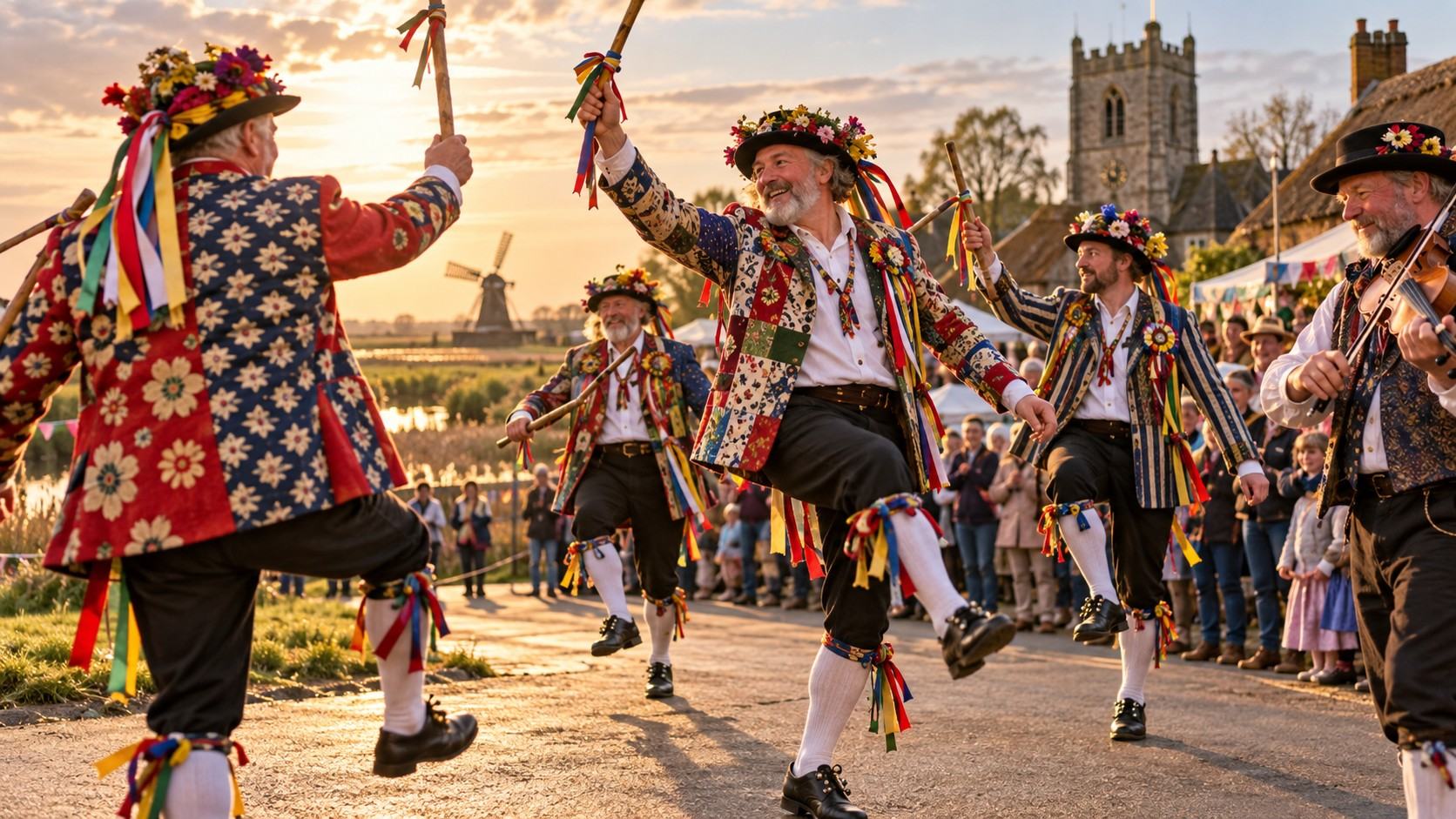
Playful social figures rooted in East Anglian communities. Explore the people and music behind this English tradition in the chapters below.
Why it matters
Molly dance reminds us that folklore is not only solemn preservation. Communities can remember, laugh and make something new together. Respectful study includes the complicated history of performance and disguise as well as the ways current dancers choose to represent their tradition. Watch how experienced dancers respond to one another. The sound, the gathering and the local story are as important as any individual step.
Key facts
- Type: Team dance for Plough Monday
- Origin: East Anglia: Cambridgeshire and Norfolk
- Rhythm: Simple, steady tunes
- Music: Melodeon, fiddle, drum
- Level: Easy
- Where: Plough Monday, winter festivals
History timeline
- 19th century — Farm workers dance from house to house on Plough Monday to collect money.
- Early 20th century — The custom fades as farming changes.
- Late 1970s — Revival teams bring molly dancing back.
- Today — A highlight of the Whittlesea Straw Bear Festival every January.
Did you know?
- Plough Monday is the first Monday after Twelfth Night, when farm work traditionally restarted.
- Traditionally, one dancer dresses as the “Molly”, a man in women's clothes.
Performances to watch
- Molly Dance – Performances
Related dances
Why this dance?
How it's danced
Schools
Promote
Promote your classes on this page
Dancers