
History
English Clog & Step Dance
Northern England · Lancashire and industrial towns
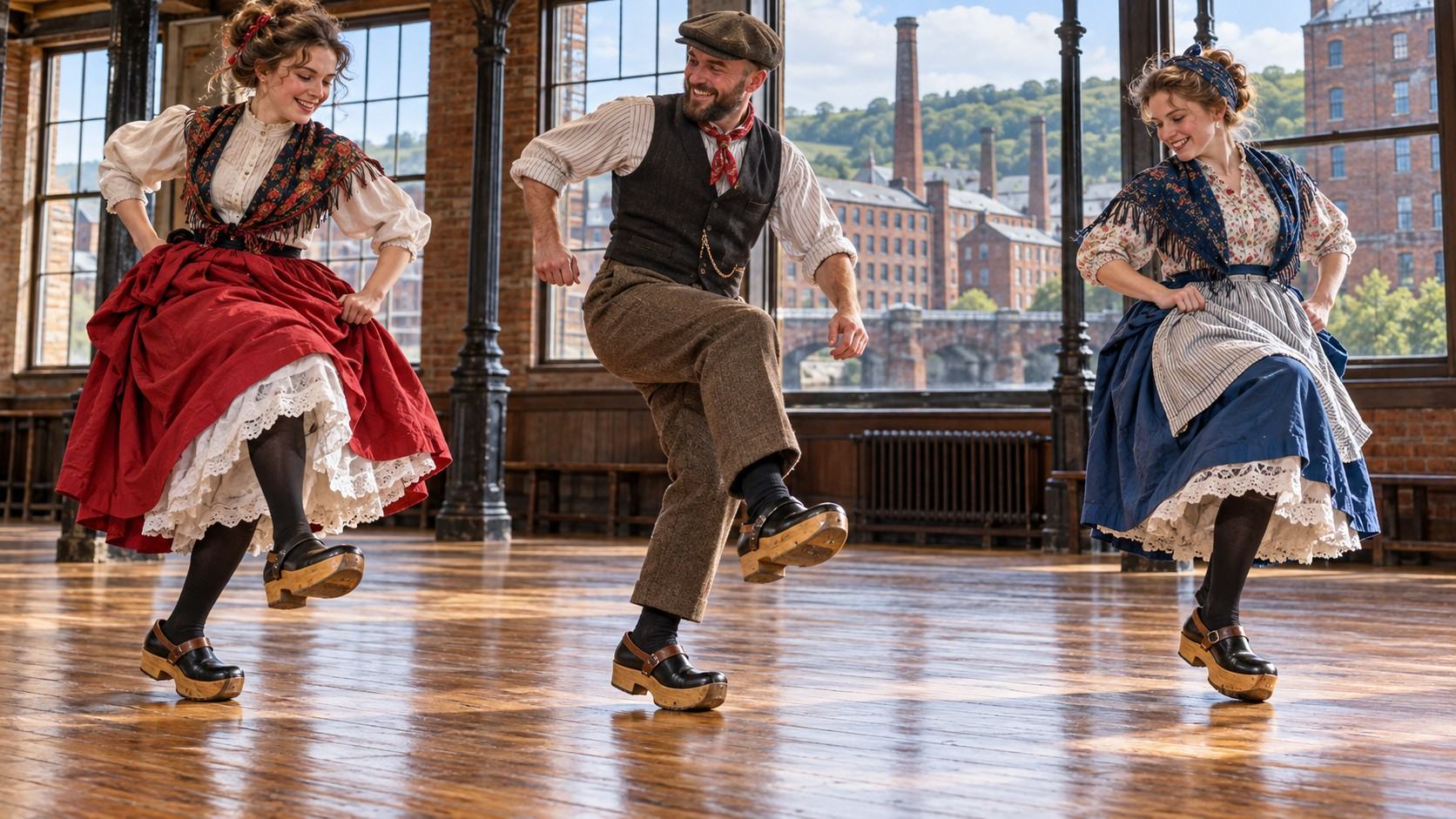
Precise heel-and-toe rhythms of northern English step dance. Explore the people and music behind this English tradition in the chapters below.
Why it matters
Clog dancing celebrates the ingenuity of ordinary people who turned familiar footwear and a wooden floor into an art. It reminds us that dance can begin with the smallest gesture—a foot keeping time beside a friend—and grow into a remarkable performance. Watch how experienced dancers respond to one another. The sound, the gathering and the local story are as important as any individual step.
Key facts
- Type: Percussive step dance, solo or team
- Origin: Lancashire, Yorkshire and the North East
- Rhythm: Hornpipes, reels, waltzes
- Music: Fiddle, melodeon, often just the feet
- Level: Moderate to advanced
- Where: Folk festivals, competitions, workshops
History timeline
- 19th century — Mill and mine workers tap out rhythms in their wooden-soled clogs.
- Late 19th century — Clog competitions and music-hall acts become popular; Dan Leno starts as a champion clog dancer.
- 20th century — The tradition declines, then returns with the folk revival.
- Today — Taught at festival workshops and danced by solo steppers and teams.
Did you know?
- Clogs have wooden soles, sometimes fitted with metal “irons” for a sharper sound.
- The music-hall star Dan Leno began his career as a champion clog dancer.
Performances to watch
- English Clog & Step Dance – Performances
Related dances
Why this dance?
How it's danced
Schools
Promote
Promote your classes on this page
Dancers