
History
Contemporary Dance in England
England · London, Leeds and other creative centers
Creative movement on England’s contemporary stages and in its studios. Explore the people and music behind this English tradition in the chapters below.
Why it matters
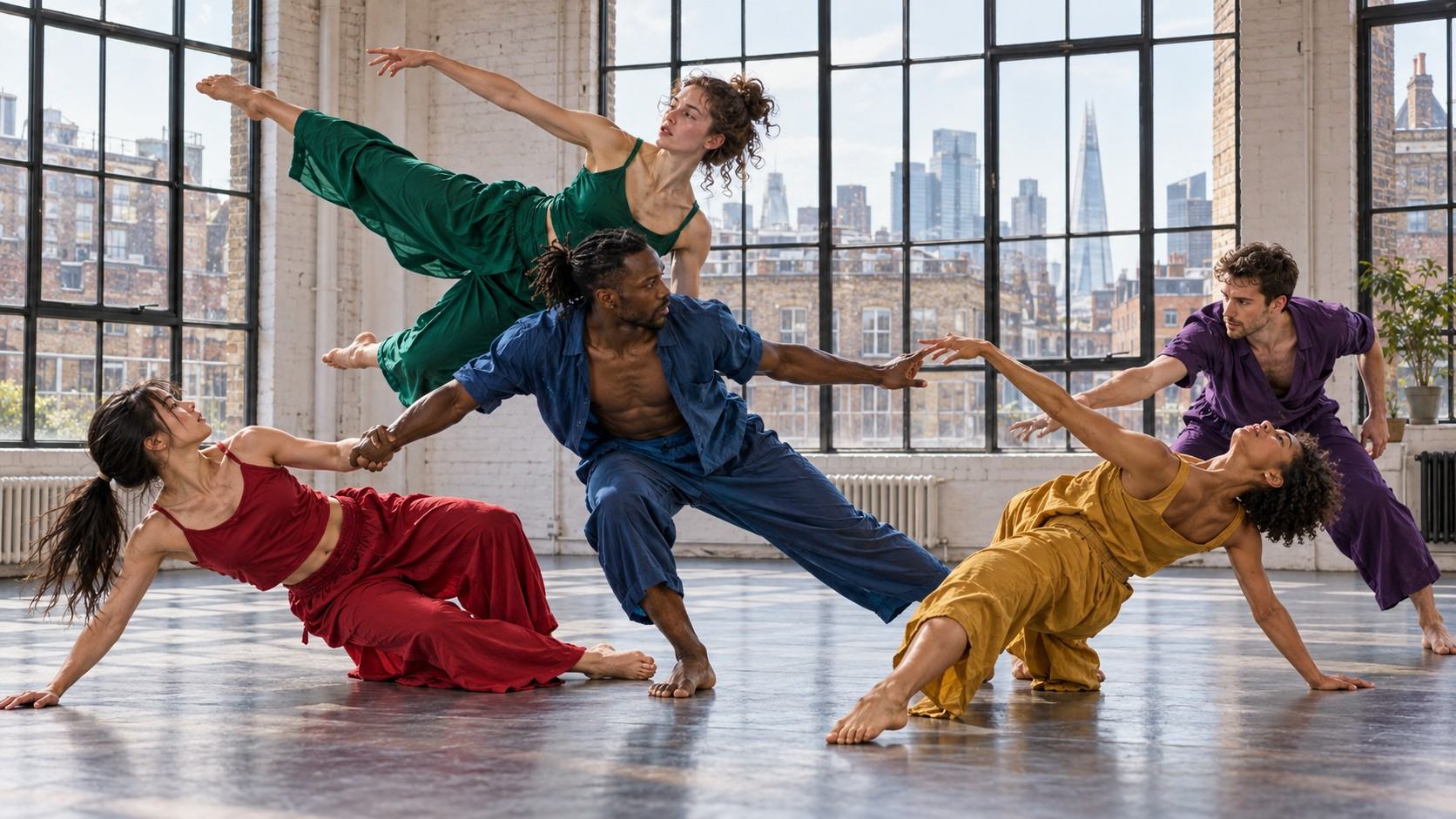
Contemporary dance gives artists space to ask questions that ordinary speech cannot always hold. Audiences may feel surprise, grief, tenderness or joy, even without a conventional plot. Across Britain, theatres and community projects invite new audiences to discover that movement can tell many kinds of stories. Watch how experienced dancers respond to one another. The sound, the gathering and the local story are as important as any individual step.
Key facts
- Type: Theatre and concert dance
- Since: 1960s in London
- Rhythm: Free; often commissioned scores
- Music: Classical, electronic, live and recorded
- Level: Training-intensive
- Where: Sadler's Wells, The Place, regional theatres
History timeline
- 1926 — Marie Rambert founds the company that becomes Rambert, Britain's oldest dance company.
- 1966–67 — Robin Howard founds The Place and London Contemporary Dance Theatre.
- 1995 — Matthew Bourne's Swan Lake replaces the ballerina swans with men.
- 2000s — Akram Khan and Hofesh Shechter build world-famous companies from England.
Did you know?
- Rambert, founded in 1926, is Britain's oldest dance company.
- Sadler's Wells in London has a second theatre for dance, Sadler's Wells East, opened in 2025.
Performances to watch
- Contemporary Dance in England – Performances
Related dances
Why this dance?
How it's danced
Schools
Promote
Promote your classes on this page
Dancers