
History
Cotswold Morris
Cotswolds · Oxfordshire, Gloucestershire and nearby areas
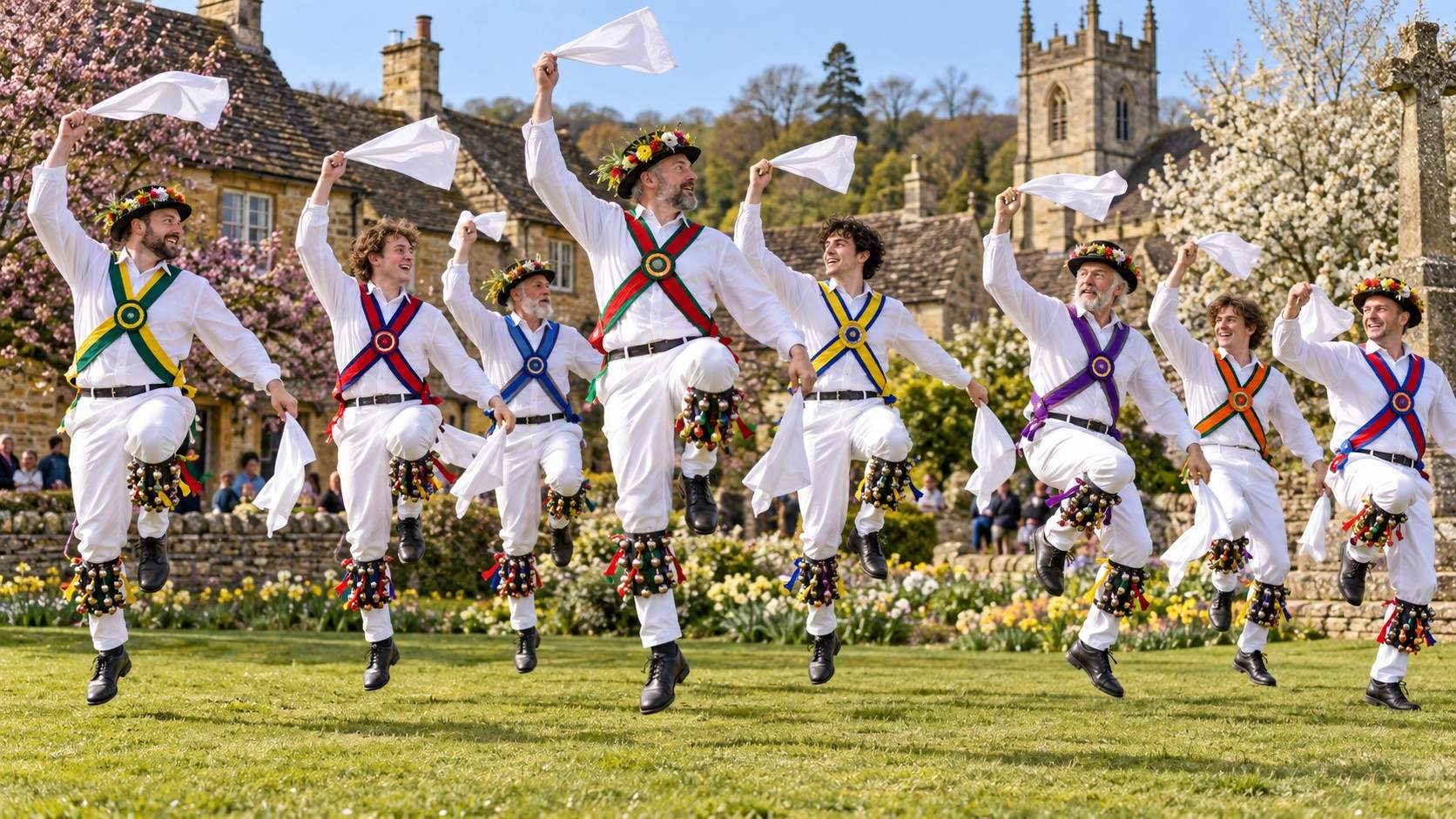
Lively handkerchiefs, bells and leaping figures from the Cotswolds. Explore the people and music behind this English tradition in the chapters below.
Why it matters
Cotswold Morris brings families and neighbors into the open air; it can turn a quiet village green into a meeting place. Teams visit one another, teach newcomers and continue old village names with care. It is best understood through the people who practice it today, not through confident claims about undocumented ancient rites. Watch how experienced dancers respond to one another. The sound, the gathering and the local story are as important as any individual step.
Key facts
- Type: Team dance, usually six in two lines
- Origin: Cotswolds and South Midlands
- Rhythm: Tunes in 2/4, 4/4 and 6/8
- Music: Pipe and tabor, fiddle, melodeon
- Level: Moderate to advanced
- Where: May Day, village fêtes, festivals
History timeline
- Village traditions — Each village, such as Bampton or Headington, keeps its own version of the dances.
- 1899 — The Headington Quarry side inspires Cecil Sharp's collecting.
- 20th century — Revival sides learn the village dances and spread them across England.
- Today — Bampton still dances through the village every Spring Bank Holiday.
Did you know?
- Dancers wear bells strapped to their shins, which ring with every step.
- White handkerchiefs and wooden sticks are the two classic props.
Performances to watch
- Cotswold Morris – Performances
Related dances
Why this dance?
How it's danced
Schools
Promote
Promote your classes on this page
Dancers