
History
English Country Dance
England · social halls and historic assemblies
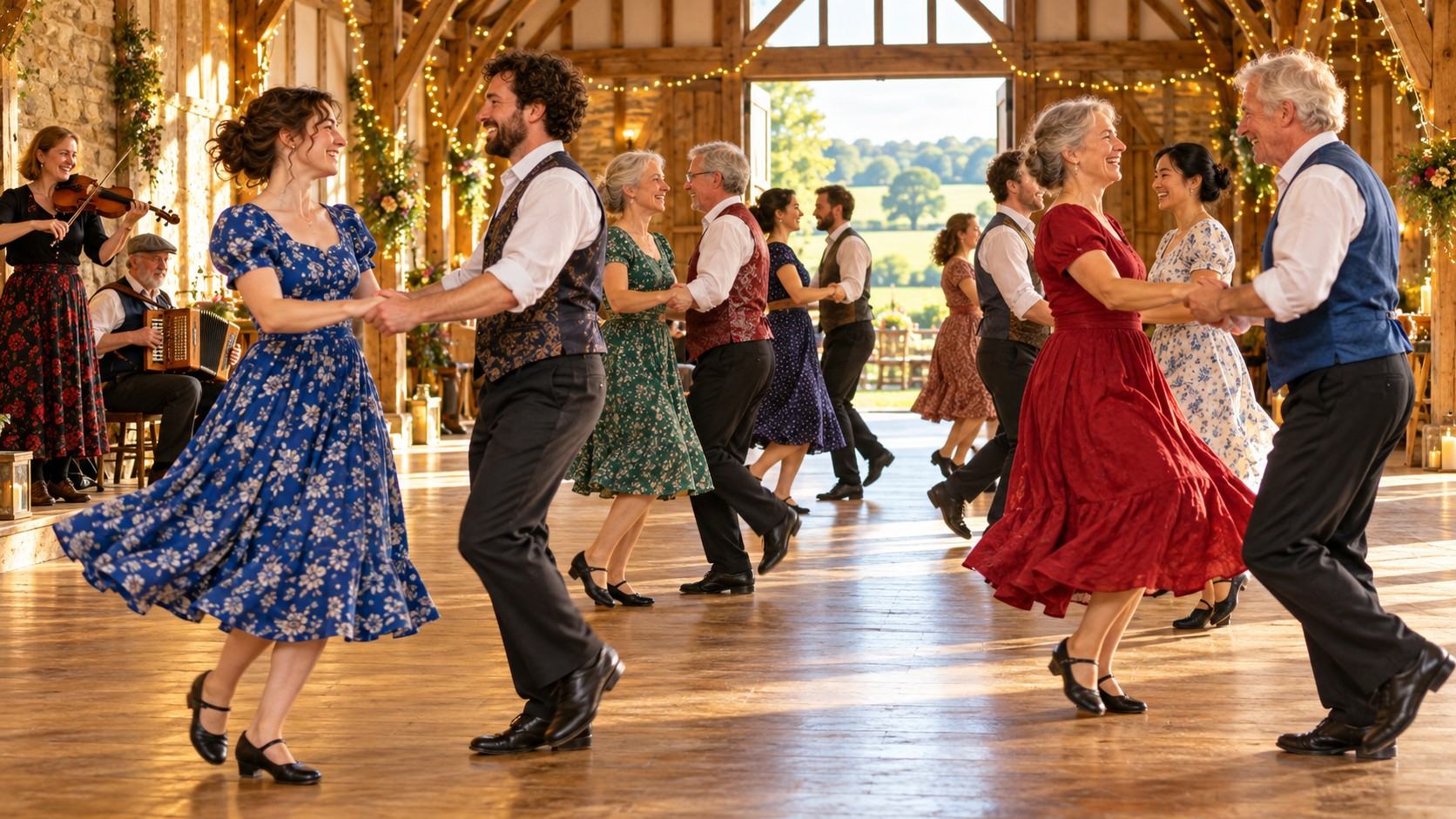
Partners meet, turn and change places in English social sets. Explore the people and music behind this English tradition in the chapters below.
Why it matters
This is a wonderfully sociable art. Beginners can learn from a friendly caller and more experienced neighbours, and the dance creates a conversation without many words. Country dances do not belong only to a museum or costume drama; they can be lively, welcoming gatherings in ordinary community halls today. Watch how experienced dancers respond to one another. The sound, the gathering and the local story are as important as any individual step.
Key facts
- Type: Social dance in sets and circles
- Since: 1651 (first printed collection)
- Rhythm: Jigs, reels, hornpipes, waltzes
- Music: Fiddle, piano, flute, accordion
- Level: Easy to moderate
- Where: Dance clubs, festivals, Regency balls
History timeline
- 1651 — John Playford publishes The English Dancing Master, a book of country dances.
- Early 1800s — Danced at assembly balls in the Regency era, as in Jane Austen's novels.
- 1911 — Cecil Sharp founds the English Folk Dance Society to collect and teach the dances.
- 1932 — It merges with the Folk-Song Society to form today's EFDSS.
Did you know?
- Many dances still danced today were first printed by John Playford in 1651.
- The ballroom scenes in Jane Austen film adaptations show English country dances.
Performances to watch
- English Country Dance – Performances
Related dances
Why this dance?
How it's danced
Schools
Promote
Promote your classes on this page
Dancers