
The people of the wind
In the beliefs of the southern coasts, some physical and mental illnesses are caused by winds (bād) or spirits that enter the body. Someone who has been possessed and then released through the ceremony becomes one of the ahl-e havā, the “people of the wind”: they join a community of former patients, take part in later ceremonies and keep obligations towards their wind. The Iranian writer and psychiatrist Gholamhossein Sa’edi made this world widely known with his book Ahl-e Havā (1966), based on his visits to the region.
Zar on the Persian Gulf coast
In Hormozgan — in Bandar Abbas, on Qeshm and other islands — the zar ceremony is led by a healer called baba (man) or mama (woman). After diagnosing the wind, the healer gathers the people of the wind; large drums and rhythmic chanting build an intense, ecstatic atmosphere while the patient moves and sways until the wind speaks and its demands are known. Sacrifice and shared food are part of the ritual, and the ceremony stresses that God alone holds absolute power.
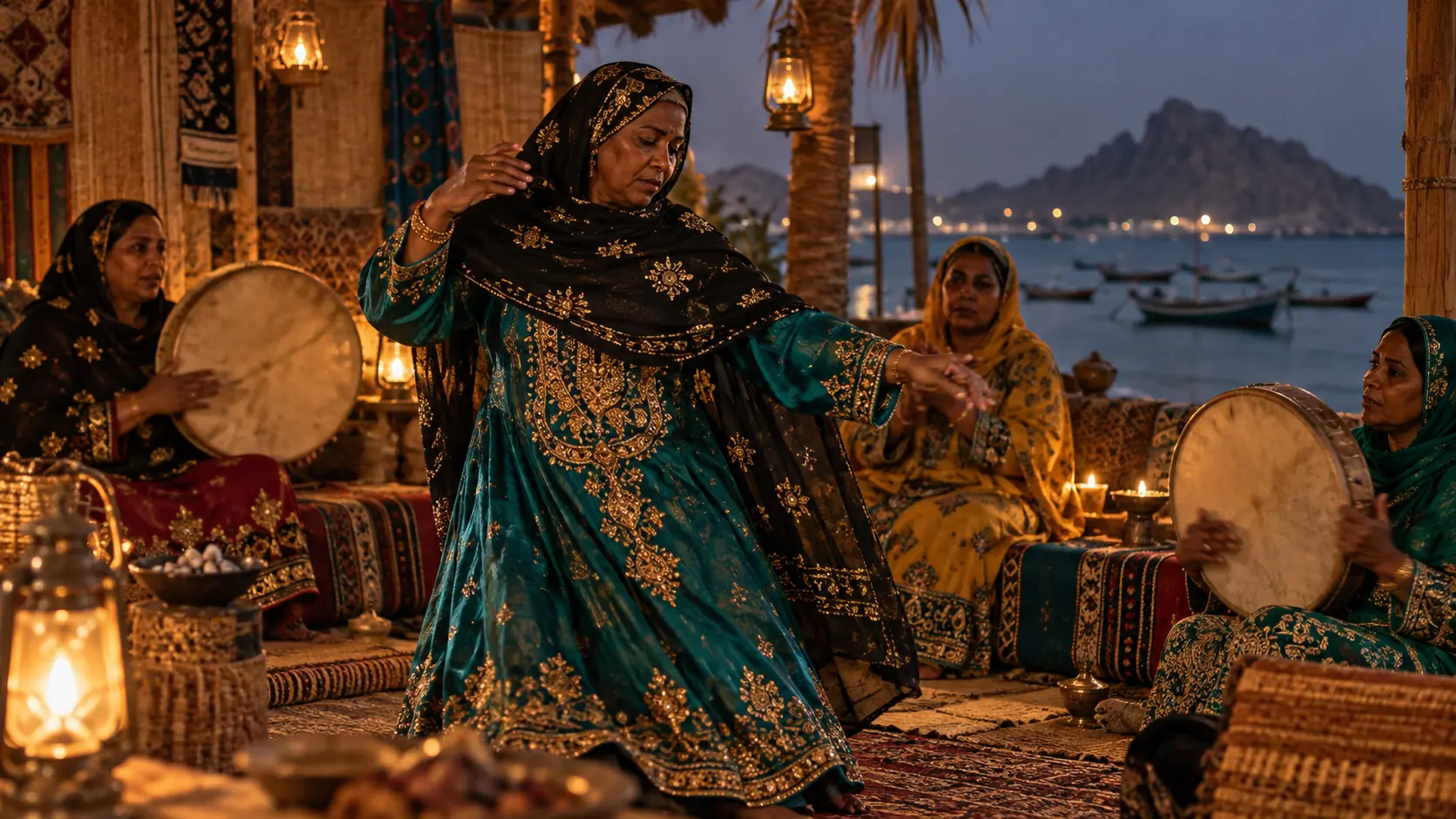
African roots across the sea
Researchers trace zar to East Africa, from where it spread to Egypt, Sudan, Arabia and the Persian Gulf, carried by sailors, traders and enslaved people across the Indian Ocean. In Iran it absorbed local poems, prayers and Islamic elements while keeping its African drums and rhythms. Similar healers are called sheikh and sheikha in Sudan, and the musicologist Jean During has shown how African-origin rites such as zar and lewa became part of Baluchi musical life.
Guati in Baluchistan
In Baluchistan, guati (gwātī, “windy”) is both an illness — often a deep sadness believed to be caused by an evil spirit called gwāt — and the ceremony that cures it. The leader, the gwātī-e māt (“mother of guati”), a man or a woman, diagnoses the spirit, decides the stages of recovery and chooses the music. The ceremony is held night after night, for three, seven or even fourteen nights, and ends with a sacrifice.
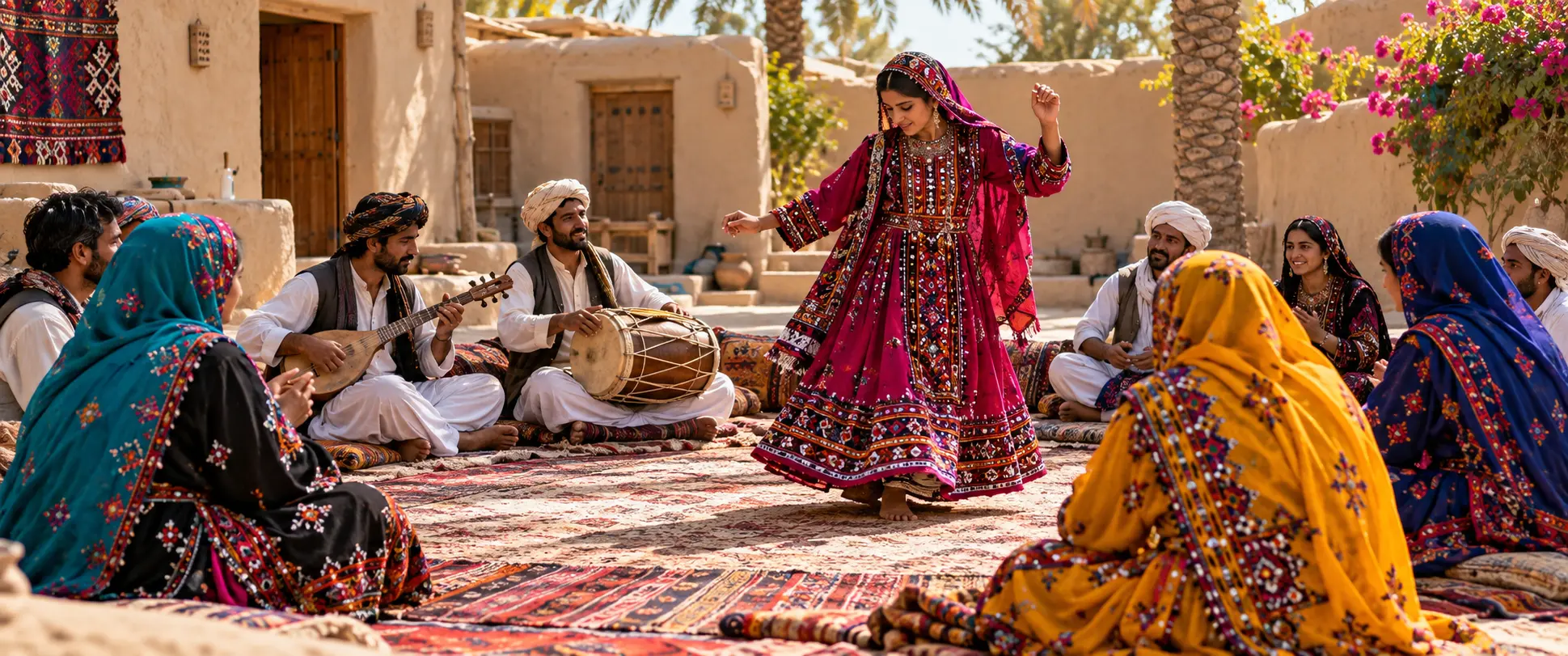
Music and the damāl dance
According to the Encyclopaedia Iranica, only music is believed to be able to free the body from the spirit through trance. Different spirits require different instruments: for a zar, only drums (lēvā) are used, while guati calls on the instruments of Baluchistan, above all the sorud (a bowed fiddle) and the doneli (double flute). A whirling dance, “not unlike that of the dervishes”, is indispensable: in men’s ceremonies it is called damāl and is led by a man called the khalifa.
Zar and Guati today
With modern medicine and social change, these ceremonies are rarer than before, but they are still remembered and sometimes held, and their music is recorded, studied and performed on stage — the drums of the zar and the sorud of guati have become symbols of southern Iran’s musical heritage. They remain private and sensitive rituals for the families involved, and should be approached with respect.
Frequently asked questions
What is the zar ceremony?
A healing ritual of the Persian Gulf coast in which drums, chant, dance and sacrifice are used to calm a “wind” — a spirit believed to cause illness. It is led by a baba or mama.
What does guati mean?
Guati (gwātī) means “windy” in Baluchi; it names both an illness believed to be caused by a gwāt spirit and the music-and-dance ceremony that cures it.
Who are the ahl-e hava?
The “people of the wind”: those who have been possessed by a wind and released through the ceremony, and who then belong to the ritual community.
Explore more on DANZO
Sources
- Encyclopaedia Iranica — Baluchistan iv. Music of Baluchistan
- The Comparative Study of Zār Ceremony in Iran and Sudan (University of Tehran)
- Jean During, African Winds and Muslim Djinns (Yearbook for Traditional Music, 1997)
- People of the Wind: wind possession in southern Iran (Journal of the Royal Asiatic Society)
- Gholamhossein Sa’edi, Ahl-e Havā (Tehran, 1966)