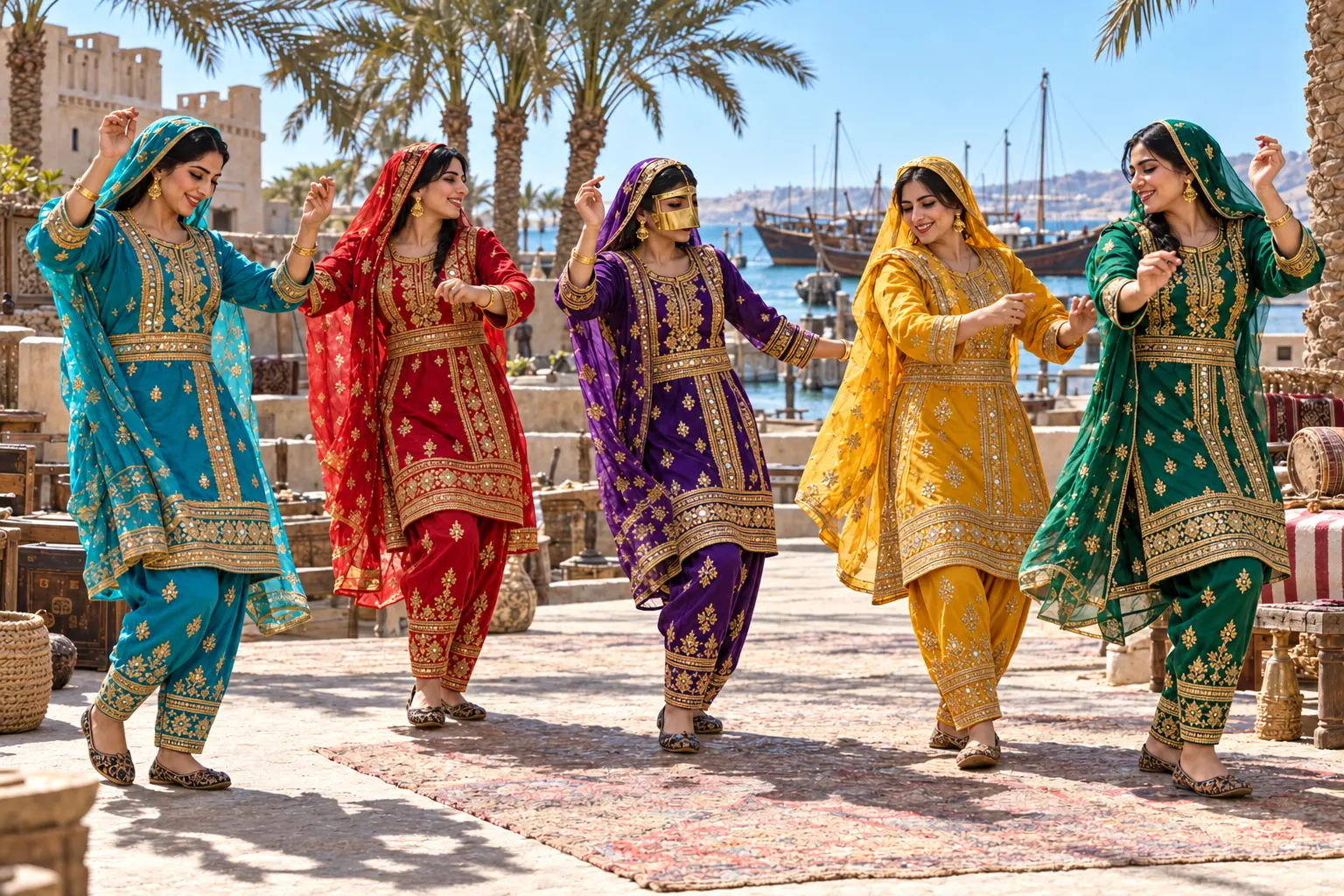
Port communities have long exchanged music and movement with the Arabian Peninsula, East Africa and South Asia. A respectful presentation recognizes this coastal diversity.
Bandari is not a desert stick dance. Its coastal clothing and rhythms reflect Persian Gulf histories and community variation. Bandari is best approached through the ports of Hormozgan and the wider southern coast. Persian Gulf communities have long interacted with Arabia, East Africa and the Indian Ocean; their songs and percussion reflect many histories of trade, travel and migration. Calling one fast stage routine “the Bandari dance” would erase differences between cities, islands, musicians and families. The motion may be lively, but costume accuracy matters equally. Hormozgani women may wear colourful, region-specific long dresses such as kandureh variants, decorated trousers, scarves and particular face coverings in some communities. These garments have local names and contexts; imported fantasy “belly-dance” outfits cannot substitute for them. Zār, practiced in some southern communities, is a separate ritual domain, not a Bandari party dance.