
History
Social & Partner Dances
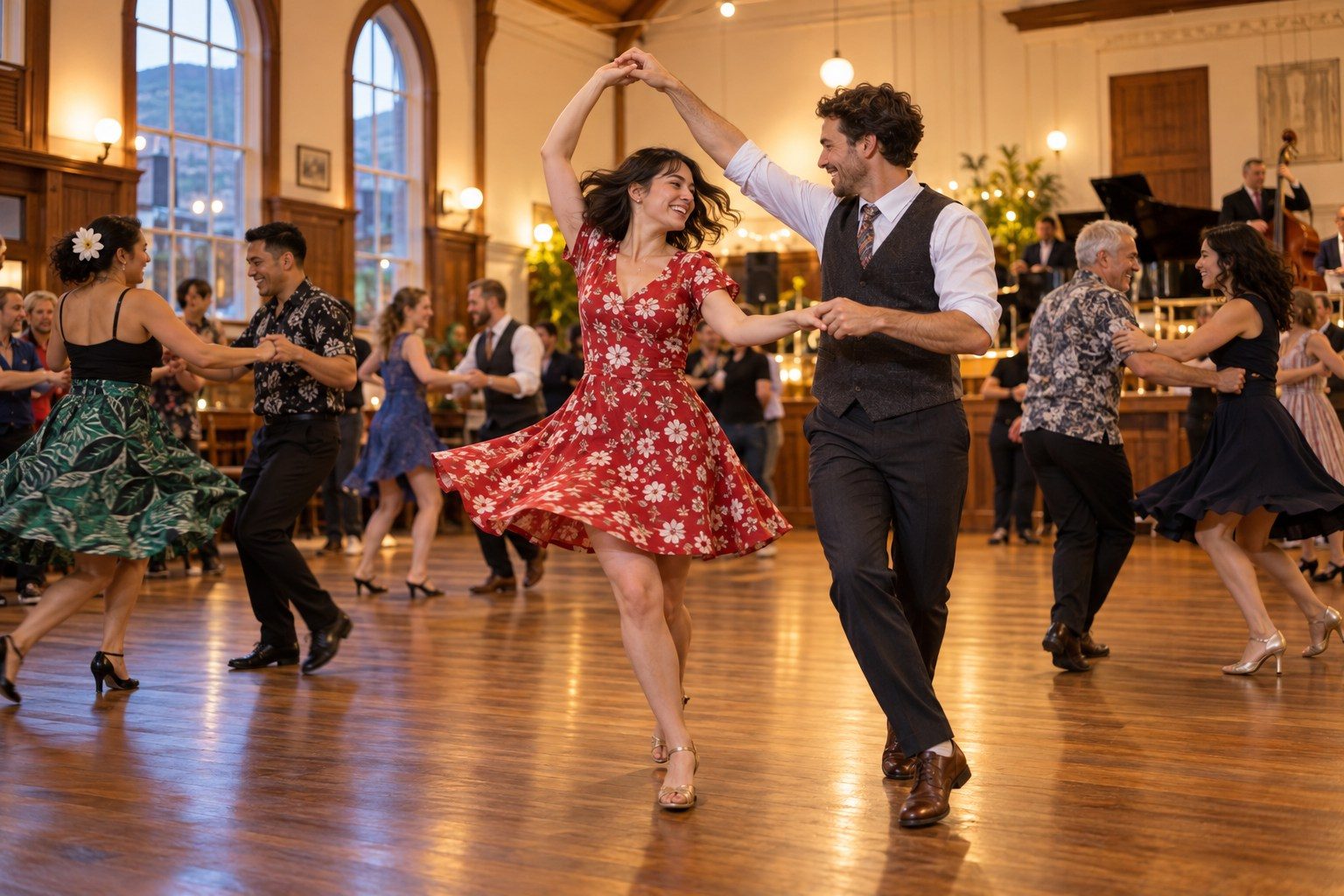
Ballroom, Latin, swing and jive bring people together through clubs and studios across Aotearoa.
Ballroom, Latin, swing and jive bring people together through clubs and studios across Aotearoa.
Why it matters
These widely shared social styles arrived via migration, media and dance clubs, with continuing local adaptations. They form a vibrant part of present-day life without replacing Indigenous traditions.
Key facts
- Tradition: Global social dance
- Context: Social dance evenings, classes and competitions
- Movement: Partner frame, turns, basic steps and musical connection; steps differ by style.
- Music & rhythm: Dance bands, jazz, pop and Latin rhythms
- Where: Community studios and clubs nationwide
- Learning: With respectful, informed teachers
History timeline
- Cultural roots — These widely shared social styles arrived via migration, media and dance clubs, with continuing local adaptations. They form a vibrant part of present-day life without replacing Indigenous traditions.
- Today — Community artists and dancers continue this form with living regional variations.
Did you know?
- Ballroom, Latin, swing and jive bring people together through clubs and studios across Aotearoa.
- For living cultural traditions, credit named performers and ask before filming or reproducing a ceremonial action.
Performances to watch
- Performance in context
- Cultural explanation
- Learning resources
Related dances
Why this dance?
How it's danced
Schools
Promote
Promote your classes on this page
Dancers