
History
Poi performance
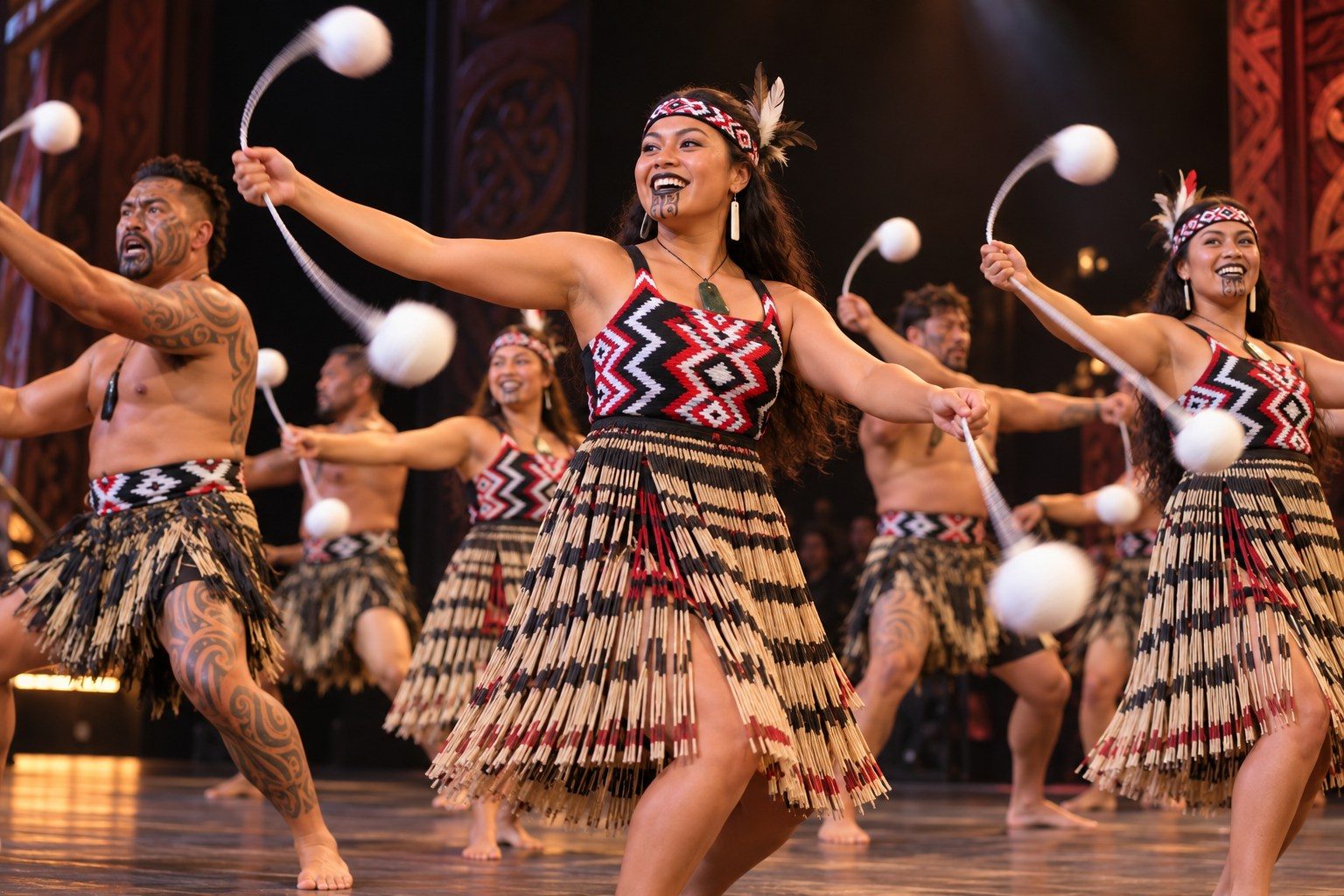
Rhythmic poi movements create circular patterns and percussive sound alongside waiata in kapa haka performance.
Rhythmic poi movements create circular patterns and percussive sound alongside waiata in kapa haka performance.
Why it matters
Poi are taonga with histories beyond today's stage shows. Patterns and stories can carry iwi-specific meaning, and performers of different genders take part.
Key facts
- Tradition: Māori performance
- Context: Kapa haka, cultural gatherings and learning groups
- Movement: Observe soft implements on cords moving in synchronized arcs, spirals and rhythmic taps.
- Music & rhythm: Poi rhythm, waiata and group vocals
- Where: Māori kapa haka groups nationwide
- Learning: With respectful, informed teachers
History timeline
- Cultural roots — Poi are taonga with histories beyond today's stage shows. Patterns and stories can carry iwi-specific meaning, and performers of different genders take part.
- Today — Community artists and dancers continue this form with living regional variations.
Did you know?
- Rhythmic poi movements create circular patterns and percussive sound alongside waiata in kapa haka performance.
- For living cultural traditions, credit named performers and ask before filming or reproducing a ceremonial action.
Performances to watch
- Performance in context
- Cultural explanation
- Learning resources
Related dances
Why this dance?
How it's danced
Schools
Promote
Promote your classes on this page
Dancers