
History
Kapa Haka
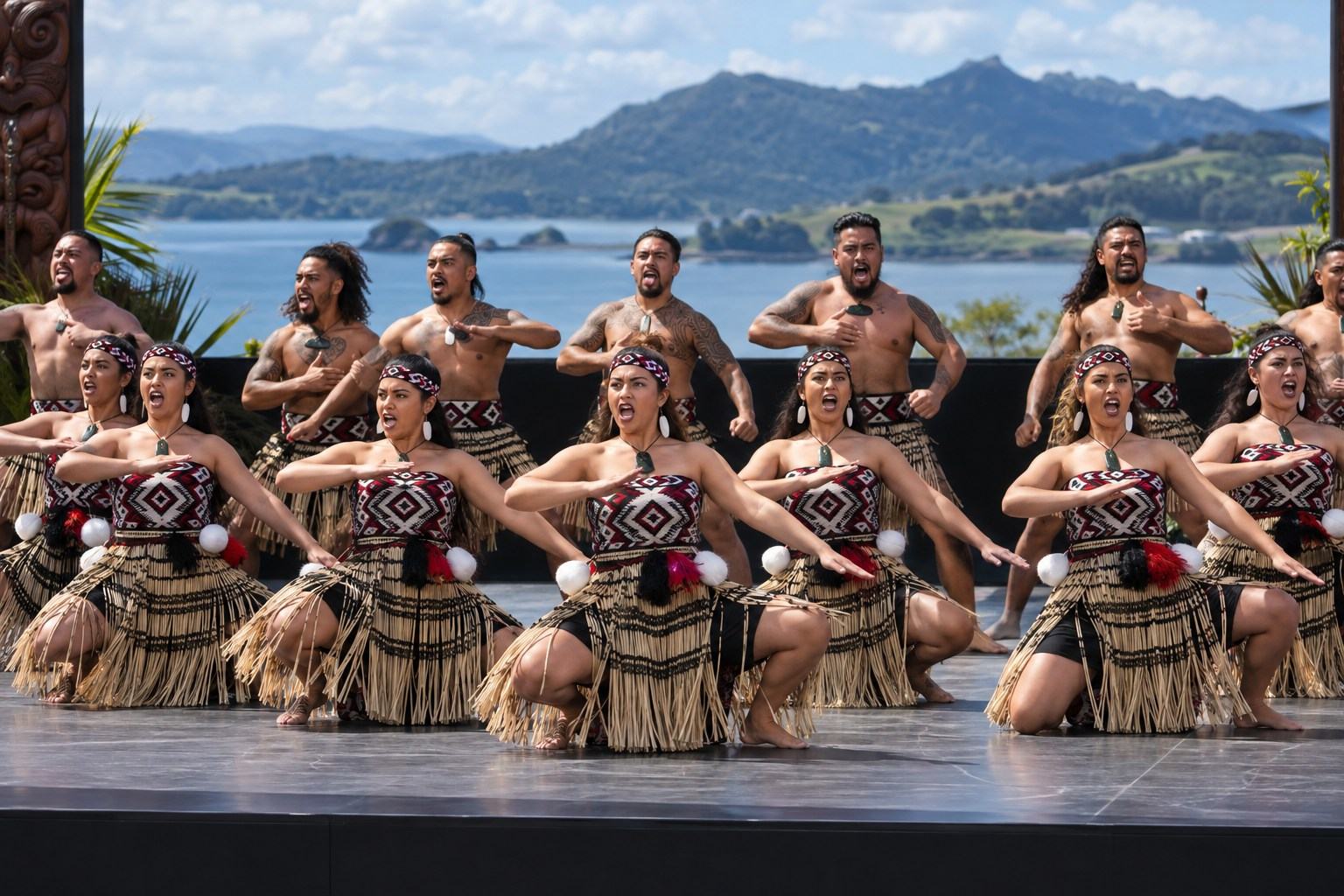
Māori collective performing arts bring together waiata (song), haka, action song and poi, with language and whakapapa at their heart.
Māori collective performing arts bring together waiata (song), haka, action song and poi, with language and whakapapa at their heart.
Why it matters
Kapa haka is not one fixed dance. Teams and communities express identity, ancestry, local stories and collective excellence. Te Matatini celebrates distinct performance disciplines; protocols and meanings vary across iwi and hapū.
Key facts
- Tradition: Māori performing arts
- Context: Community events, marae contexts and cultural competitions
- Movement: Watch coordinated group formations, clear vocal delivery, intentional hand movement, and transitions between performance disciplines.
- Music & rhythm: Voice, chant, collective rhythm and poi where appropriate
- Where: Across Aotearoa; rooted in Māori communities
- Learning: With respectful, informed teachers
History timeline
- Cultural roots — Kapa haka is not one fixed dance. Teams and communities express identity, ancestry, local stories and collective excellence. Te Matatini celebrates distinct performance disciplines; protocols and meanings vary across iwi and hapū.
- Today — Community artists and dancers continue this form with living regional variations.
Did you know?
- Māori collective performing arts bring together waiata (song), haka, action song and poi, with language and whakapapa at their heart.
- For living cultural traditions, credit named performers and ask before filming or reproducing a ceremonial action.
Performances to watch
- Performance in context
- Cultural explanation
- Learning resources
Related dances
Why this dance?
How it's danced
Schools
Promote
Promote your classes on this page
Dancers