
History
Scottish Highland Dance
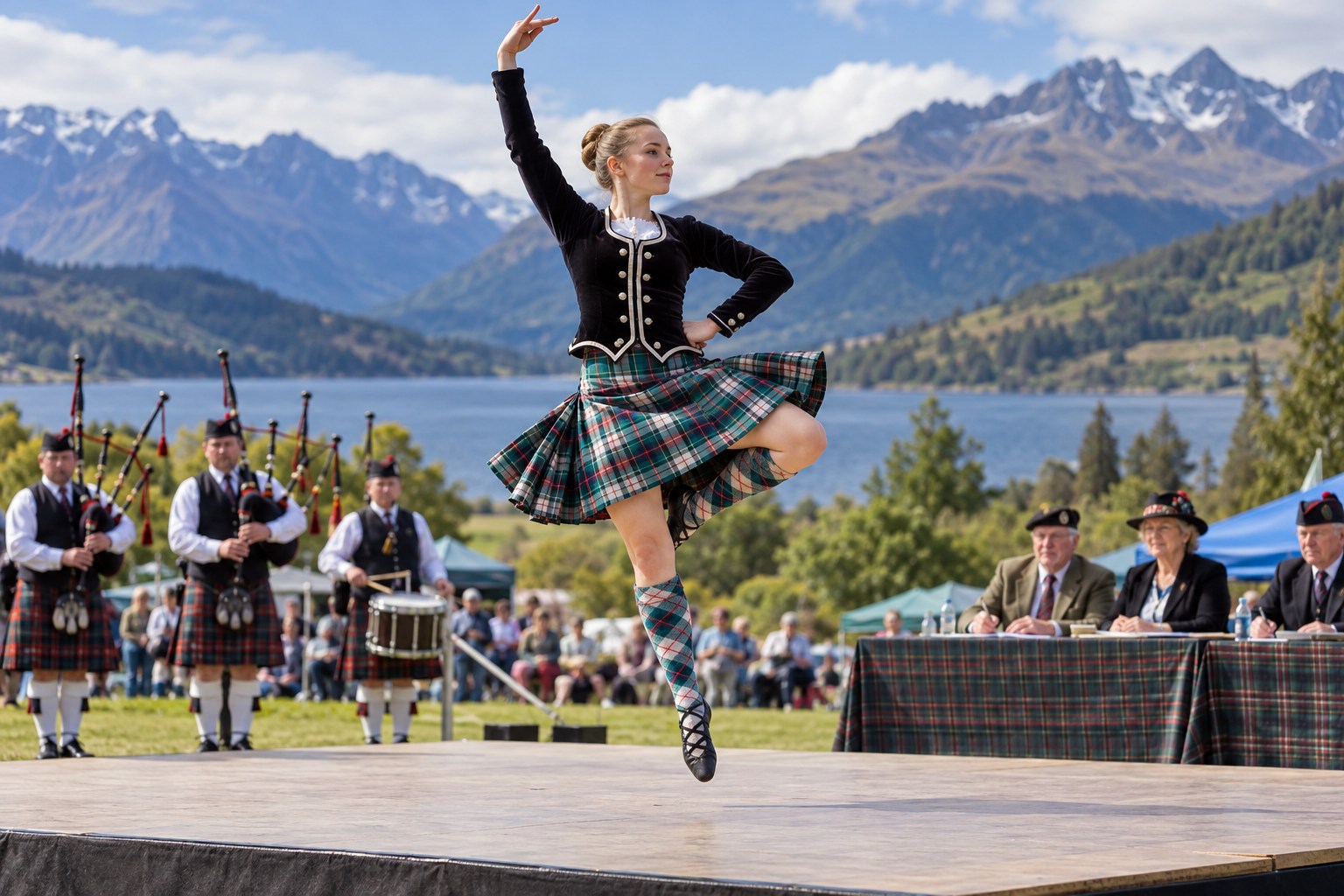
Scottish-rooted Highland dancing lives in Aotearoa through festivals, competitions and community instruction.
Scottish-rooted Highland dancing lives in Aotearoa through festivals, competitions and community instruction.
Why it matters
Scottish settlers and their descendants brought and maintained these precise dances, including the Highland Fling. It is a heritage of migration rather than an Indigenous Māori style.
Key facts
- Tradition: Settler heritage
- Context: Highland games and dance competitions
- Movement: Precise heel and toe positions, upright torso, arm lines and agile jumps.
- Music & rhythm: Scottish bagpipe music
- Where: Otago, Southland and Scottish heritage societies nationwide
- Learning: With respectful, informed teachers
History timeline
- Cultural roots — Scottish settlers and their descendants brought and maintained these precise dances, including the Highland Fling. It is a heritage of migration rather than an Indigenous Māori style.
- Today — Community artists and dancers continue this form with living regional variations.
Did you know?
- Scottish-rooted Highland dancing lives in Aotearoa through festivals, competitions and community instruction.
- For living cultural traditions, credit named performers and ask before filming or reproducing a ceremonial action.
Performances to watch
- Performance in context
- Cultural explanation
- Learning resources
Related dances
Why this dance?
How it's danced
Schools
Promote
Promote your classes on this page
Dancers