
History
Haka
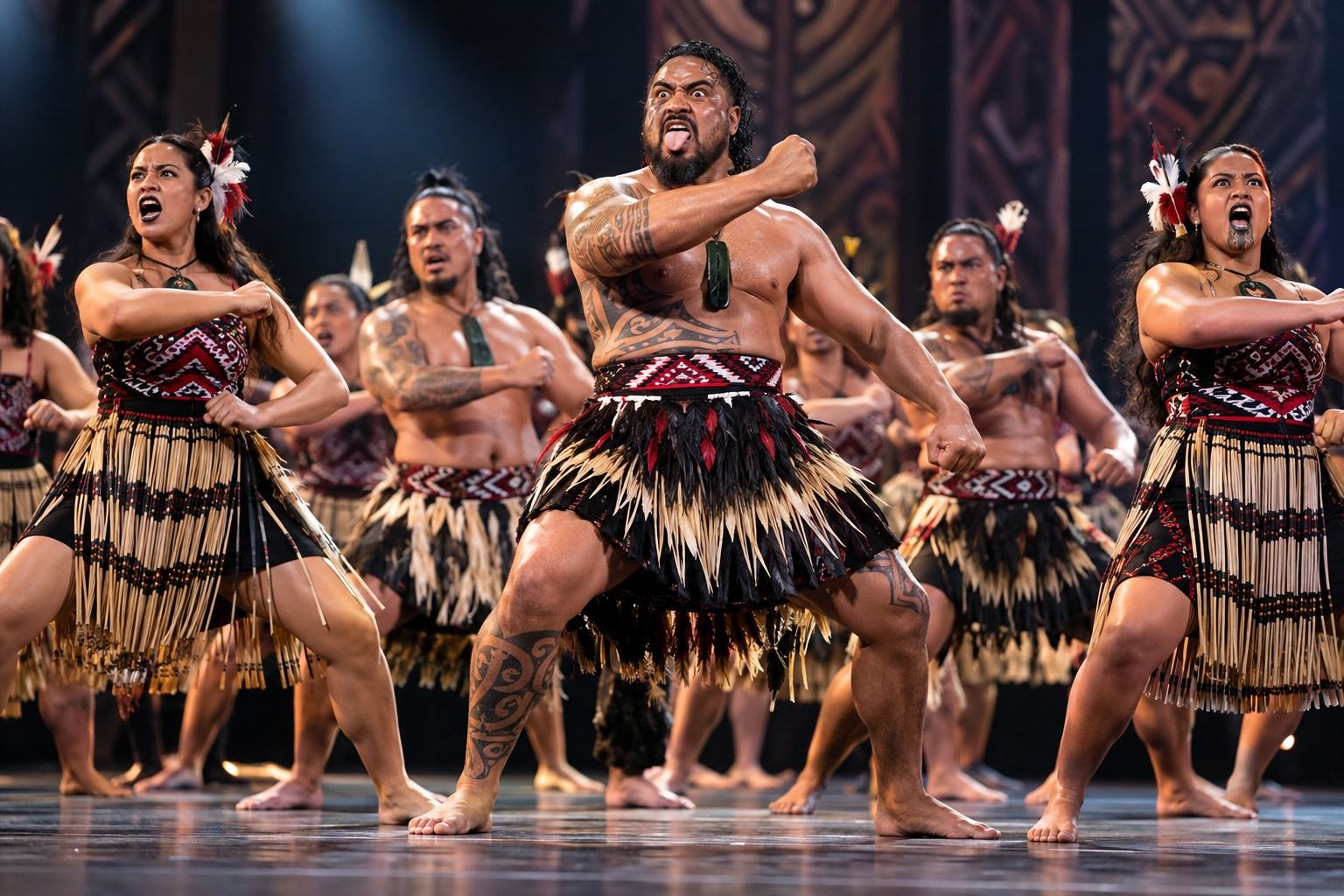
A powerful Māori performance tradition used in multiple contexts, including welcome, commemoration, challenge and collective affirmation.
A powerful Māori performance tradition used in multiple contexts, including welcome, commemoration, challenge and collective affirmation.
Why it matters
Haka is often mislabelled simply as a 'war dance'. Particular haka carry specific words, genealogies and purposes. Their performance should be guided by the communities who hold them.
Key facts
- Tradition: Māori performance
- Context: Welcomes, tributes, community gatherings, kapa haka
- Movement: Strong collective posture, stamping, rhythmic vocalisation, expressive hands and faces; motifs differ by composition.
- Music & rhythm: Human voice and coordinated body rhythm
- Where: Throughout Aotearoa
- Learning: With respectful, informed teachers
History timeline
- Cultural roots — Haka is often mislabelled simply as a 'war dance'. Particular haka carry specific words, genealogies and purposes. Their performance should be guided by the communities who hold them.
- Today — Community artists and dancers continue this form with living regional variations.
Did you know?
- A powerful Māori performance tradition used in multiple contexts, including welcome, commemoration, challenge and collective affirmation.
- For living cultural traditions, credit named performers and ask before filming or reproducing a ceremonial action.
Performances to watch
- Performance in context
- Cultural explanation
- Learning resources
Related dances
Why this dance?
How it's danced
Schools
Promote
Promote your classes on this page
Dancers