
History
Contemporary Dance
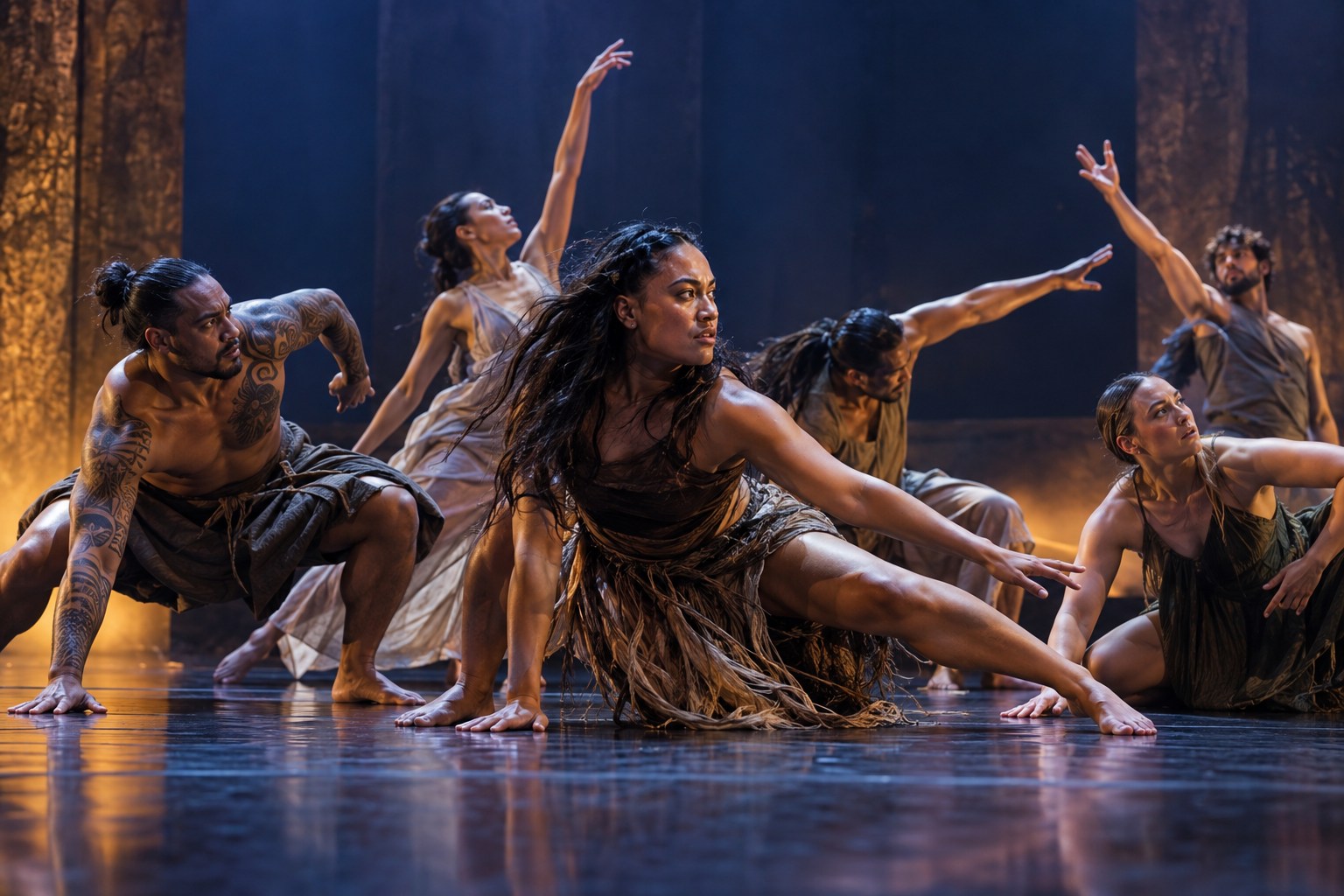
Aotearoa's contemporary choreography explores identity, ecology, urban life and Indigenous and Pacific perspectives.
Aotearoa's contemporary choreography explores identity, ecology, urban life and Indigenous and Pacific perspectives.
Why it matters
Contemporary creators often collaborate across languages and arts. Māori and Pacific contemporary work should be credited to the named choreographers and cultural communities, not treated as generic folklore.
Key facts
- Tradition: Professional stage
- Context: Theatres, festivals and dance education
- Movement: Grounded weight shifts, expressive improvisation, partner work and choreographic experimentation.
- Music & rhythm: Original scores, voice, electronic and ambient sound
- Where: Wellington, Auckland, Christchurch and touring stages
- Learning: With respectful, informed teachers
History timeline
- Cultural roots — Contemporary creators often collaborate across languages and arts. Māori and Pacific contemporary work should be credited to the named choreographers and cultural communities, not treated as generic folklore.
- Today — Community artists and dancers continue this form with living regional variations.
Did you know?
- Aotearoa's contemporary choreography explores identity, ecology, urban life and Indigenous and Pacific perspectives.
- For living cultural traditions, credit named performers and ask before filming or reproducing a ceremonial action.
Performances to watch
- Performance in context
- Cultural explanation
- Learning resources
Related dances
Why this dance?
How it's danced
Schools
Promote
Promote your classes on this page
Dancers