
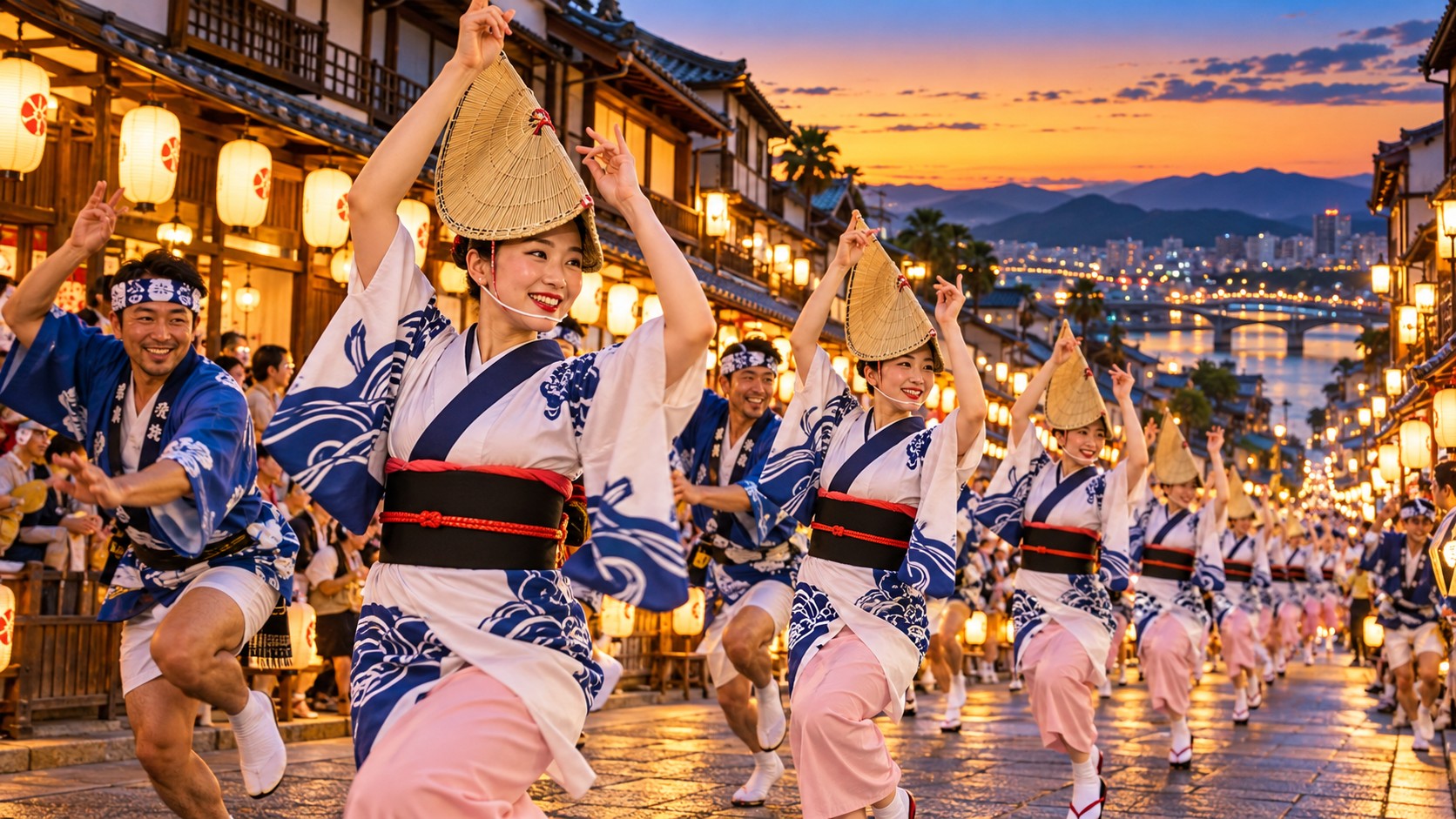
Japan
Eleven dance worlds, many communities — from festival streets to sacred and contemporary stages.
Japan cannot be told through a single kimono or choreography. Begin with Bon Odori, Awa Odori and Yosakoi; encounter the theatrical refinement of Nihon Buyō, sacred Kagura, Okinawan Eisa and Ryūkyū dance, Indigenous Ainu traditions and contemporary creation. Each belongs to different communities, occasions and histories.
Traditional dances
- Bon Odori — Community circles honor ancestors during Obon; each region has its own songs and steps.
- Awa Odori — Tokushima’s exuberant festival dance fills summer streets with lively ren troupes.
- Yosakoi — Kōchi-born team dance blends naruko clappers, folk melodies and contemporary movement.
- Nihon Buyō — Refined Japanese classical stage dance uses subtle gesture and theatrical storytelling.
- Kagura — A diverse family of sacred shrine dances with myth, music and local ritual contexts.
- Eisa — Okinawan Obon dances join vigorous drumming, song and village memory.
- Ryūkyū Buyō — Okinawan classical and popular dance carries the distinct legacy of the Ryūkyū Islands.
- Traditional Ainu Dance — Indigenous Ainu community dances express nature, ceremony and collective belonging.
- Hanagasa Odori — Yamagata’s summer parade turns flowered straw hats into rhythmic moving color.
- Kasa Odori · Shan Shan — Tottori’s ringing umbrella dances are central to the Shan Shan celebration.
- Contemporary Dance in Japan — Today’s choreographers explore new movement on urban stages and independent platforms.
Explore
- History & Heritage — Original illustrated essays and primary-source context.
- Regions & Communities — From Hokkaidō to Okinawa, without erasing difference.
- Festivals & Performances — Confirmed schedules and honest “to be announced” notices.
- Schools & Organizations — Real organizations, distinct images and submission review.
Places
Six cultural landscapes connect dance stories to the country beyond the stage.