
Kagura: the dance of the gods
Kagura is Shinto sacred dance performed to entertain and honour the kami (deities). Court kagura is performed at the imperial palace, while village kagura at local shrines can be dramatic, with masks, swords and stories from Japanese mythology.
Nihon buyō, kabuki and noh
Nihon buyō, Japanese classical dance, developed from kabuki theatre in the Edo period (1603–1868). Dancers in kimono use fans and precise, elegant movement to tell stories, and the art is passed down by schools led by a family head. Kabuki and the older masked noh theatre, both rich in dance, are UNESCO Intangible Heritage.
Bon odori and Awa Odori: summer festival dances
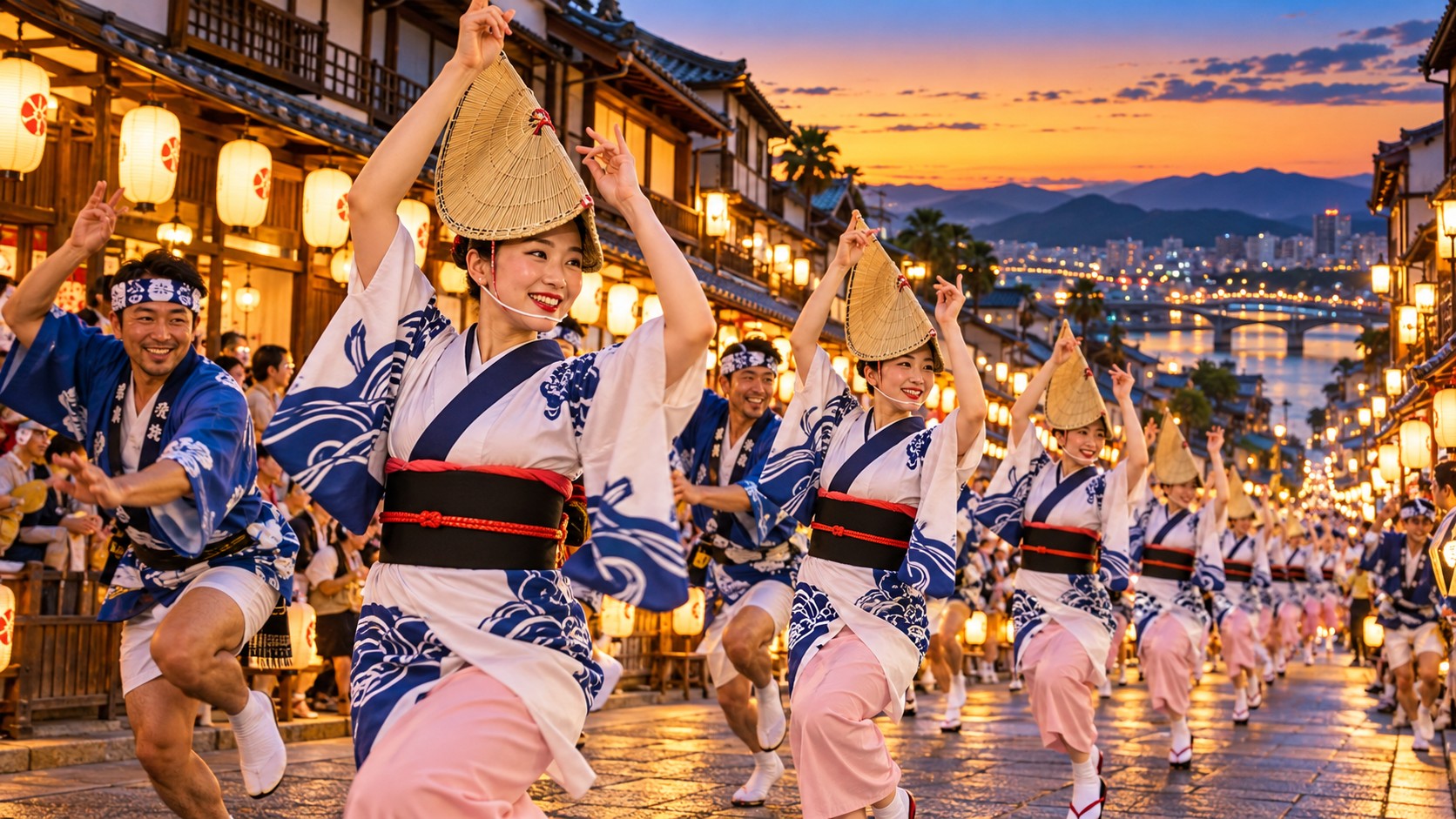
During Obon in summer, when families welcome the spirits of their ancestors, people of all ages dance bon odori in circles around a wooden tower called a yagura. Each region has its own songs and steps. The most famous is Awa Odori in Tokushima, held on 12–15 August, where groups called ren dance through the streets to shamisen, flutes and drums.
Yosakoi and Hanagasa
Yosakoi was born in Kōchi in 1954: teams dance energetic modern choreography holding naruko wooden clappers. Sapporo’s Yosakoi Soran Festival, held every June, adds the folk song Soran Bushi. In Yamagata, the Hanagasa Odori is danced in August with straw hats decorated with red flowers.
Okinawa and the Ainu
In Okinawa, young people dance eisa during Obon to big drums, and the elegant court dances of the old Ryukyu Kingdom (Ryukyu buyō) live on; kumiodori, Okinawa’s musical dance-theatre, is UNESCO heritage. In Hokkaido, the traditional dances of the Ainu people, connected to ceremonies and nature, are also on UNESCO’s list.
Butoh: Japan’s modern avant-garde
Butoh appeared in 1959 with the work of Tatsumi Hijikata and Kazuo Ohno: slow, intense, often white-painted bodies exploring darkness, memory and transformation. It became one of Japan’s best-known contributions to contemporary dance.
Frequently asked questions
What is the traditional dance of Japan called?
There are many: nihon buyō is the classical dance, kagura the sacred dance, and bon odori the most popular community dance.
When can I see bon odori?
Mainly in July and August during Obon; Awa Odori in Tokushima is held on 12–15 August.