
Tap a region to read its story
Famous Places in Japan
Cultural landscapes beyond the dance stage
Explore famous places without inventing performances there. Each entry connects landscape, community and cultural history through careful language.
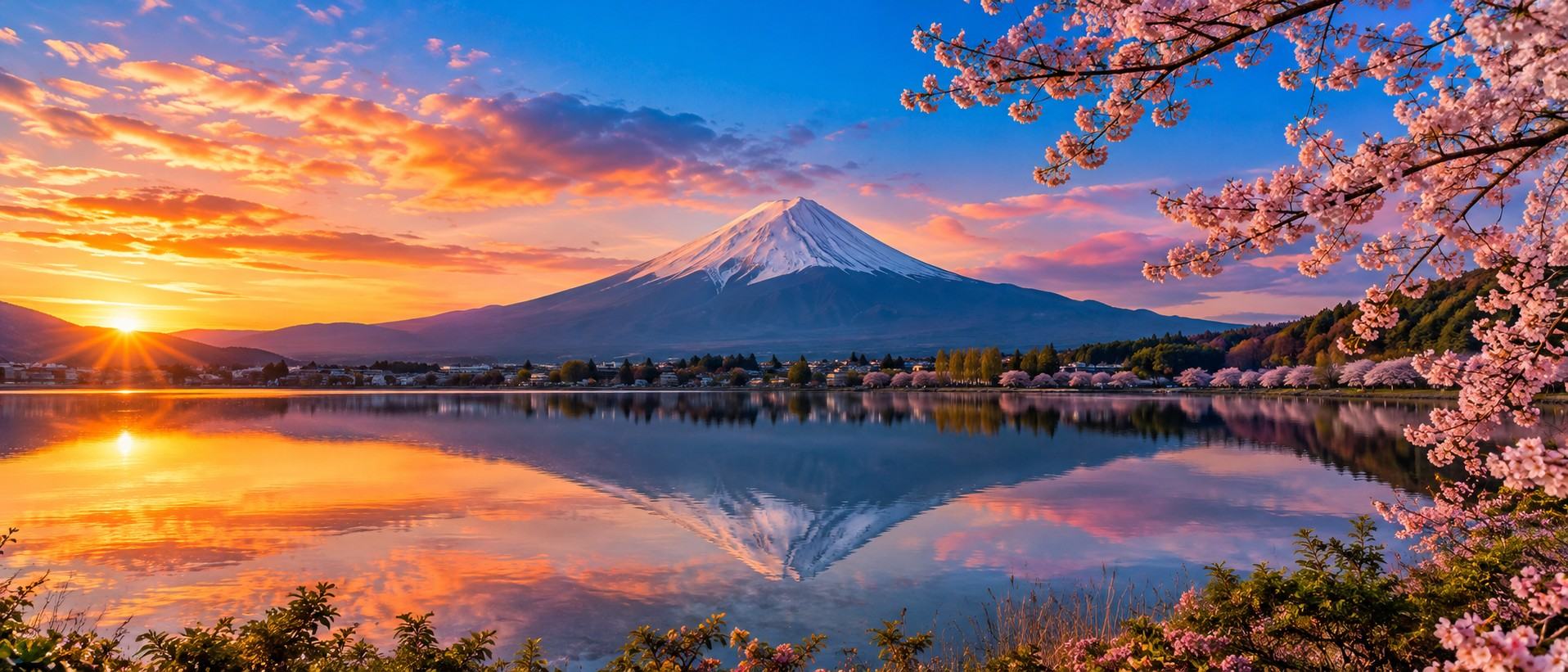
Mount Fuji & Lake Kawaguchi
Original editorial illustration · not an archival photograph
Japan’s iconic volcanic landscape; a cultural destination, not a fixed dance venue.
The Mount Fuji area is a national landscape with towns and lakes rather than a single dance stage. Dance events occur in communities around the region, but a scenic photograph must not be labeled as a performance.
Kyoto · Fushimi Inari
Original editorial illustration · not an archival photograph
Sacred shrine paths and a city of theatre, court arts and living performance.
Kyoto’s sacred sites and preserved streets reveal many historical layers. Fushimi Inari is a shrine, while formal performance traditions belong to their own venues and lineages. Enjoy the architecture without assuming a ritual may be imitated freely.
Tokyo · Asakusa & theatres
Original editorial illustration · not an archival photograph
The capital juxtaposes historic streets with contemporary and classical stages.
Tokyo combines Asakusa’s older temple environment with modern dance theatres and schools. The New National Theatre supports choreographic training, while local festivals and Nihon Buyō schools follow other calendars and contexts.
Osaka · Dōtonbori
Original editorial illustration · not an archival photograph
A lively performance city whose theatres and entertainment streets have many histories.
Osaka’s lively entertainment districts reflect the public history of performance. The city is not represented by one named traditional dance, and visiting Dōtonbori does not guarantee a specific live show. Check current theater schedules for performances.
Nara · Tōdai-ji
Original editorial illustration · not an archival photograph
Historic temples and heritage landscapes suggest the older layers of performing culture.
Nara’s temples are part of Japan’s historic cultural landscape. Movement, ritual and courtly arts belong to carefully maintained contexts; a visit should be respectful and separate sacred heritage from entertainment.
Okinawa · Ryūkyū heritage
Original editorial illustration · not an archival photograph
Island landscapes frame distinct Eisa, Ryūkyū dance and sanshin traditions.
Okinawa’s beaches and urban districts form the setting of island communities whose Eisa and Ryūkyū dance histories differ from the mainland. Seek performances by identified local groups and learn from Okinawan sources.
Sources
- Japan National Tourism Organization — Dance & Festivals — Japan National Tourism Organization — Dance & Festivals
- JNTO — Awa Odori in Tokushima — JNTO — Awa Odori in Tokushima
- JNTO — Yosakoi Sōran in Sapporo — JNTO — Yosakoi Sōran in Sapporo
- Nihon Buyo Association — Nihon Buyo Association
- UNESCO — Traditional Ainu Dance — UNESCO — Traditional Ainu Dance
- UNESCO — Kumiodori — UNESCO — Kumiodori
- Official Okinawa Tourism — Traditional Performing Arts — Official Okinawa Tourism — Traditional Performing Arts
- JNTO — Tottori Shan Shan — JNTO — Tottori Shan Shan
- JNTO — Yamagata Hanagasa — JNTO — Yamagata Hanagasa
- New National Theatre, Tokyo — Ballet & Dance — New National Theatre, Tokyo — Ballet & Dance
Traditions through the year
Dance history in numbers
Timeline
Swipe the timeline