
History
Rapper Sword Dance
A living form with local and diaspora interpretations
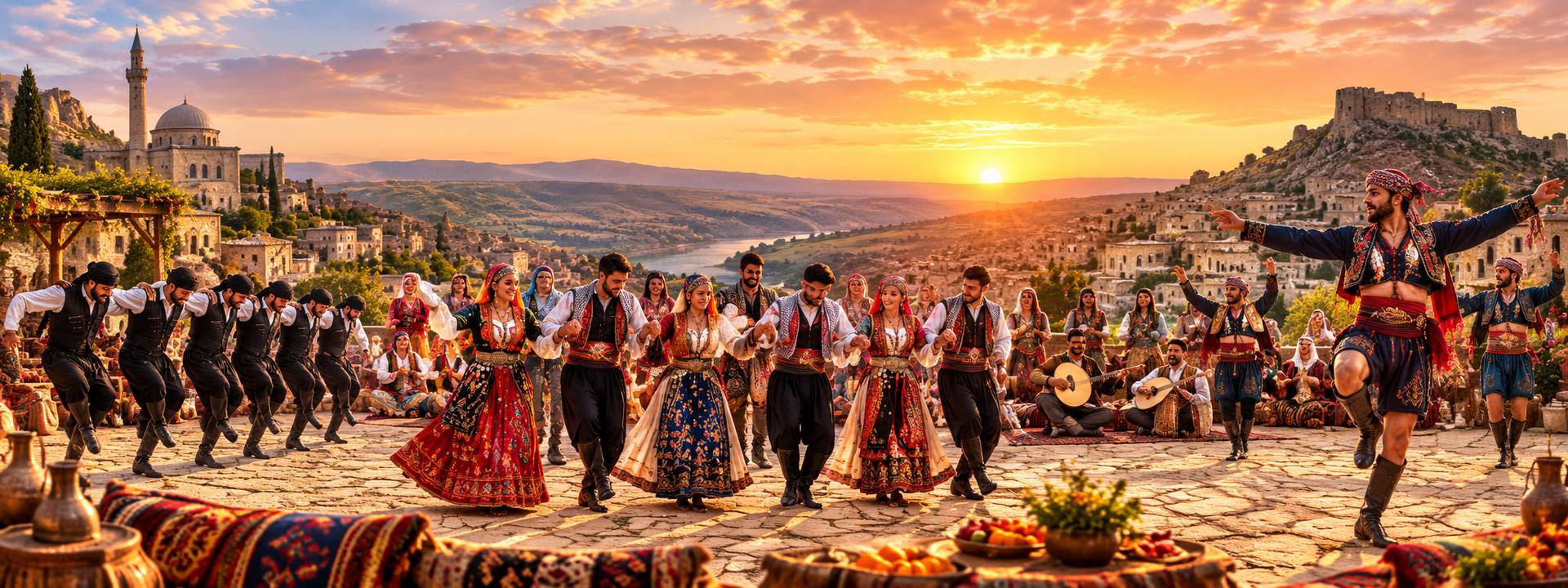
Koçerî (also recorded as Dunigî in some vocabularies) belongs to the varied repertoire of Kurdish communal dances. Its local name and its precise pattern should be documented together with the city, musicians and teachers who perform it.
Why it matters
Koçerî (also recorded as Dunigî in some vocabularies) belongs to the varied repertoire of Kurdish communal dances. Its local name and its precise pattern should be documented together with the city, musicians and teachers who perform it. This tradition belongs to Kurdish communities and should be credited by name, rather than presented simply as an anonymous "Turkish folk dance".
Key facts
- Type: Line dance
- Origin: Urfa and eastern Anatolia
- Music: Davul and zurna, or live singers
- Level: Moderate
- Where: Weddings, Newroz, community celebrations
History timeline
- The name — Koçer means “nomad” in Kurdish: the name links the dance to nomadic communities.
- Today — Danced at weddings and Newroz celebrations by Kurdish communities in Türkiye, Iraq, Iran, Syria and the diaspora.
Did you know?
- Like many Kurdish dances, it varies from village to village and family to family.
- Newroz, on 21 March, is one of the biggest occasions for Kurdish line dancing.
Performances to watch
- Koçerî · Kurdish Dance – Performances
Related dances
Why this dance?
How it's danced
Schools
Promote
Promote your classes on this page
Dancers