History
Traditional Ainu Dance
Hokkaidō · Indigenous Ainu communities
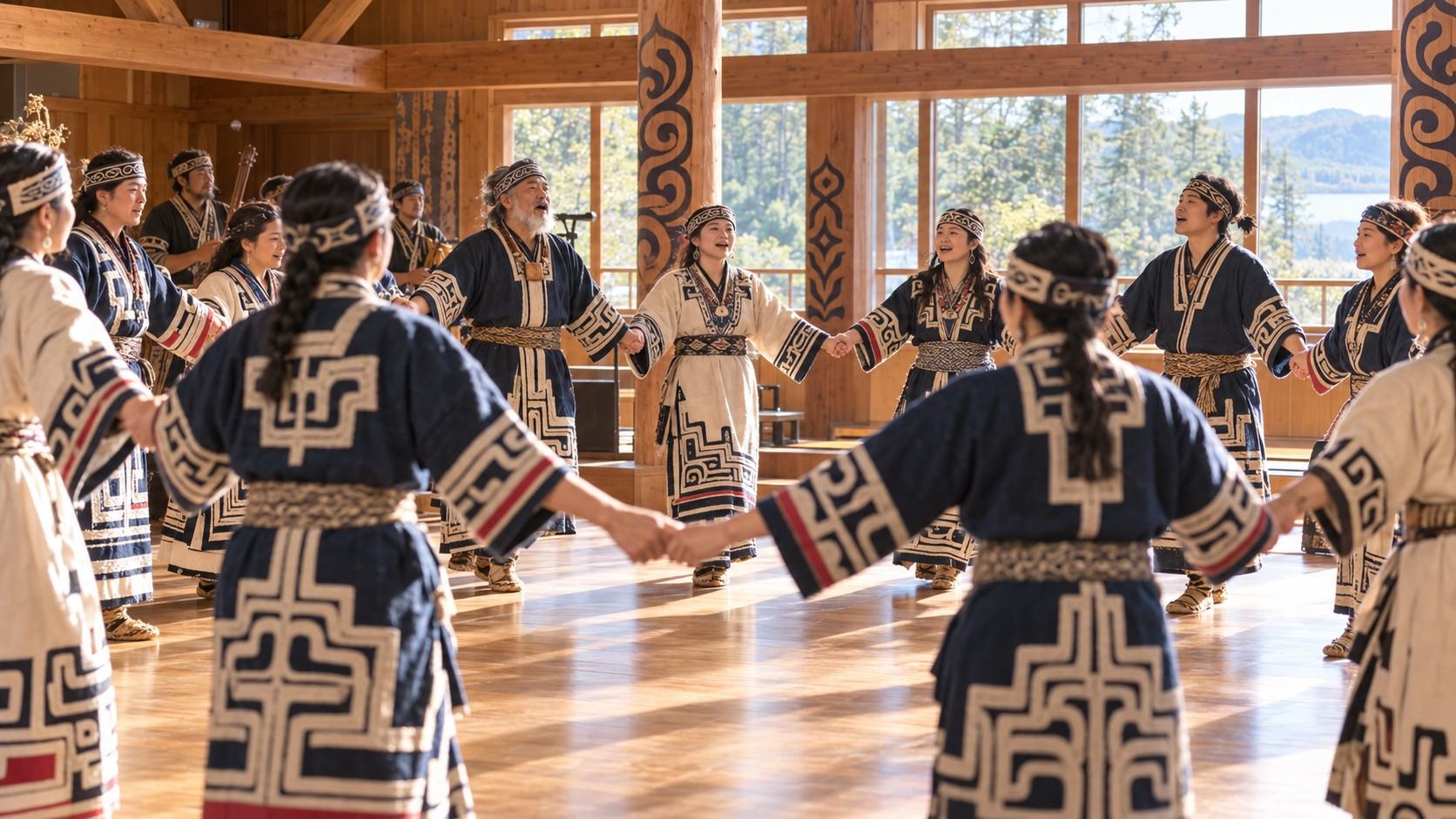
Indigenous Ainu community dances express nature, ceremony and collective belonging. The Ainu are Indigenous people with their own cultural histories, languages and worldviews, especially associated today with Hokkaidō. UNESCO inscribed Traditional Ainu Dance in 2009, describing forms performed for ceremonies, gatherings, daily enjoyment and relationships with nature. It is not a single “Japanese folk dance” that outsiders may copy without context: communities preserve distinct songs, occasions and responsibilities.
Why it matters
Dance can sustain relationships to land, spiritual life, family memory and other northern Indigenous cultures. Ainu communities remain the authorities on what may be taught, recorded and represented. DANZO therefore treats cultural attribution, consent and the distinction between open public performance and sacred ceremony as part of the dance story itself, not an optional footnote.
Key facts
- Region: Hokkaidō · Indigenous Ainu communities
- Movement: Circle, sung pulse and mimetic forms
- Setting: Indigenous community tradition
- Heritage: Distinct communities and repertoires
History timeline
- Community and historical roots — The Ainu are Indigenous people with their own cultural histories, languages and worldviews, especially associated today with Hokkaidō. UNESCO inscribed Traditional Ainu Dance in 2009, describing forms performed for ceremonies, gatherings, daily enjoyment and relationships with nature. It is not a single “Japanese folk dance” that outsiders may copy without context: communities preserve distinct songs, occasions and responsibilities.
- Living transmission — Dance can sustain relationships to land, spiritual life, family memory and other northern Indigenous cultures. Ainu communities remain the authorities on what may be taught, recorded and represented. DANZO therefore treats cultural attribution, consent and the distinction between open public performance and sacred ceremony as part of the dance story itself, not an optional footnote.
Did you know?
- Indigenous Ainu community dances express nature, ceremony and collective belonging.
- One recorded performance never represents all schools, families or local variants.
Performances to watch
- Explore more documented performances
Related dances
Why this dance?
How it's danced
Schools
Promote
Promote your classes on this page
Dancers