History
North West Morris
Lancashire · Greater Manchester · Cheshire
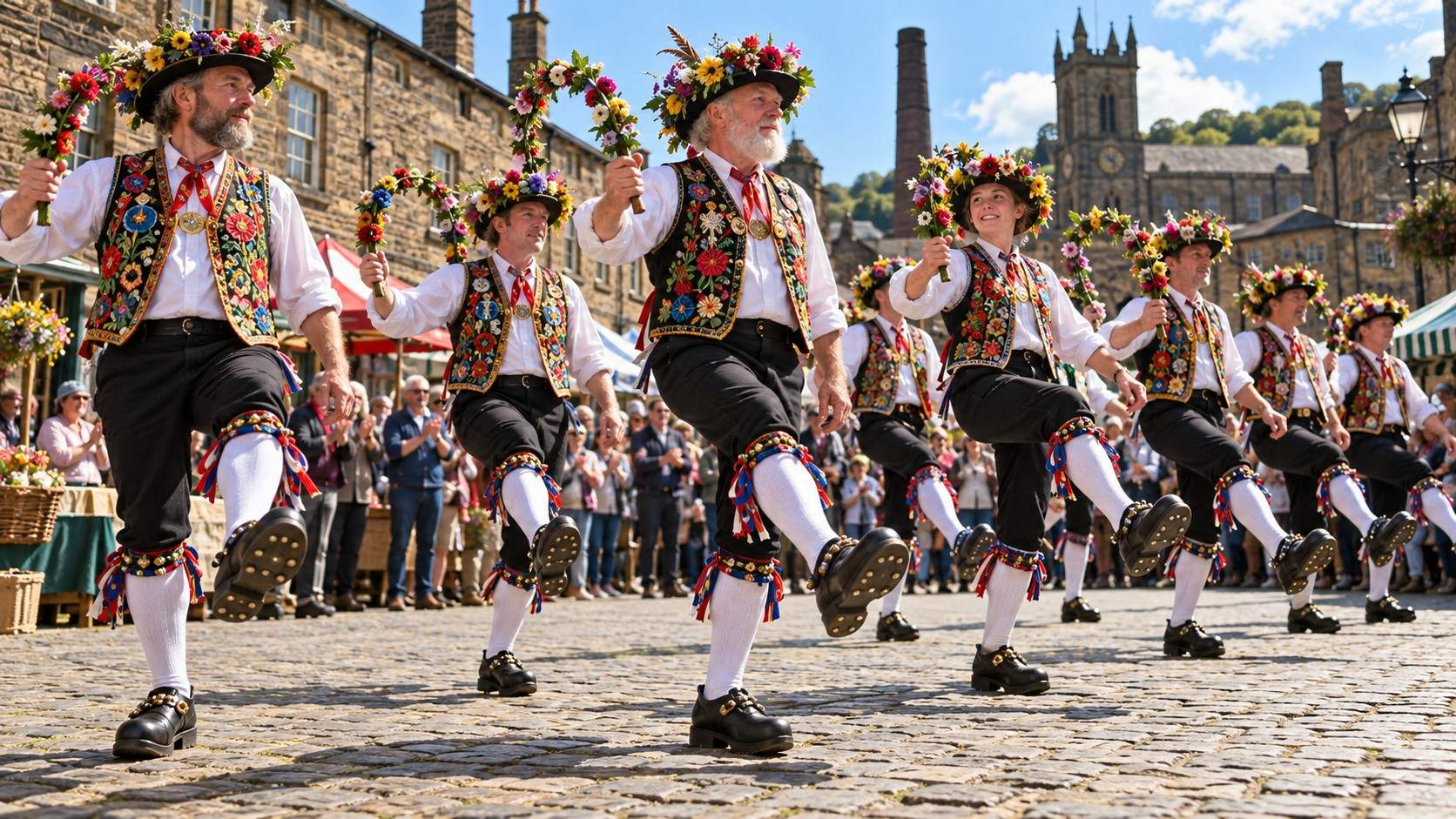
Decorated teams, processional steps and community pride in Lancashire. Explore the people and music behind this English tradition in the chapters below.
Why it matters
The sight of neighbors moving as a team can make a street feel like a shared home. North West Morris keeps alive a special form of local memory through social dances and public appearances, while welcoming newcomers to learn the discipline and joy of the group. Watch how experienced dancers respond to one another. The sound, the gathering and the local story are as important as any individual step.
Key facts
- Type: Processional team dance in clogs
- Origin: Lancashire and Cheshire mill towns
- Rhythm: Marches, mostly 4/4
- Music: Melodeon, drums, brass in the past
- Level: Moderate · drilled team work
- Where: Rushbearing festivals, carnivals, processions
History timeline
- 19th century — Danced in processions at rushbearings and town wakes in the industrial North West.
- Rushbearing — Rushes were carried to the church to cover its floor; dancers led the procession.
- 1970s — Revival teams form across England and beyond the North West.
- Today — Seen at festivals such as the Sowerby Bridge Rushbearing in Yorkshire.
Did you know?
- Dancers wear wooden-soled clogs, which make the processions loud and rhythmic.
- Short sticks, slings and flower garlands are typical props.
Performances to watch
- North West Morris – Performances
Related dances
Why this dance?
How it's danced
Schools
Promote
Promote your classes on this page
Dancers