··EN · ES · FA
Tap a region to read its story
Swipe the timeline
Twelve places where American dance lives: Broadway and Harlem, the French Quarter, Nashville’s honky-tonks, Chicago, Los Angeles, Little Havana, Hilo, the Blue Ridge, Acadiana, the Smithsonian and the Grand Canyon.
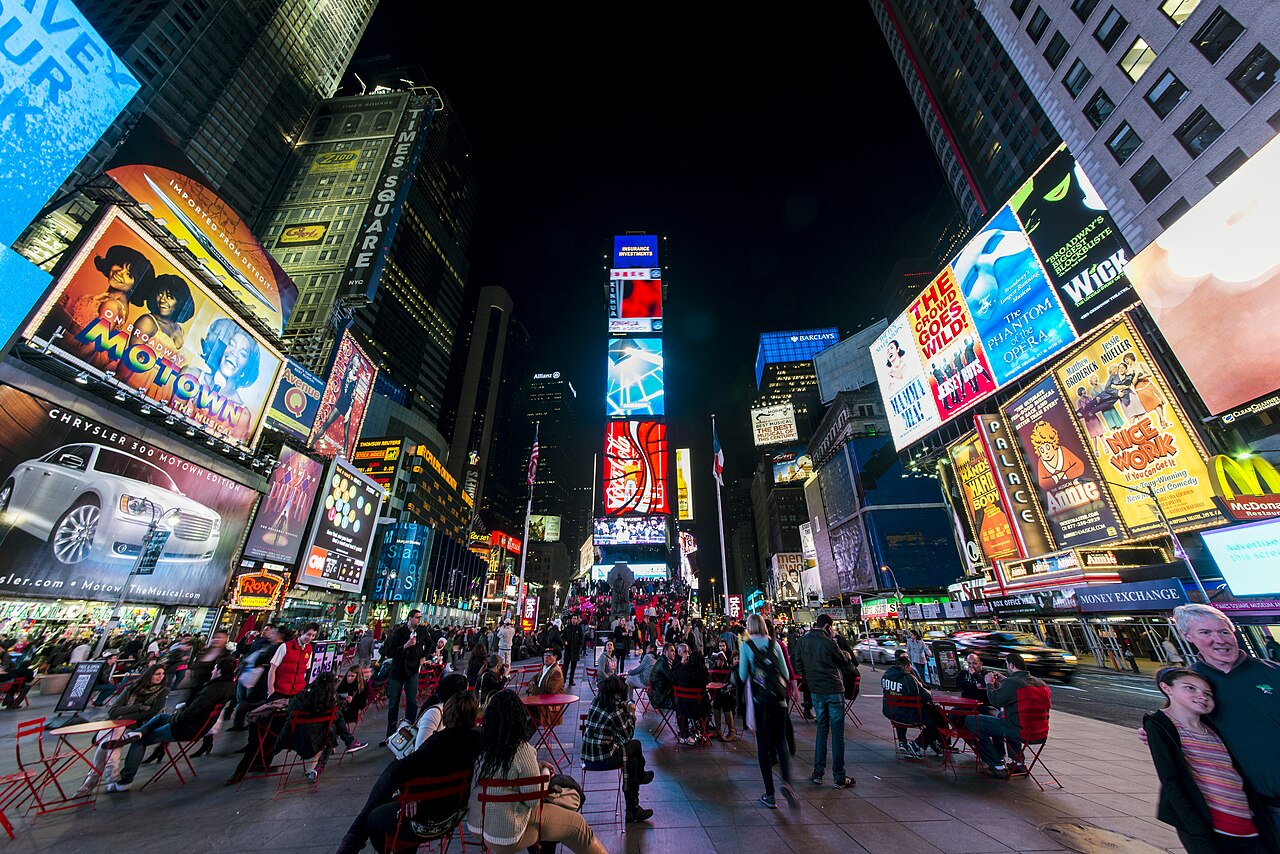
New York is where Broadway musicals, modern dance companies and studio culture meet. Dancers come from all over the world to take open classes at Ailey Extension, Broadway Dance Center, Steps on Broadway and Peridance.
At night the city dances salsa on2, Lindy Hop, house and voguing; in July the American Tap Dance Foundation’s Tap City fills its stages with tap.
Harlem is the cradle of the Lindy Hop and of ballroom voguing. The Savoy Ballroom stood on Lenox Avenue from 1926 to 1958; a plaque marks the spot today.
The Apollo Theater’s Amateur Night has launched generations of dancers and singers, and the Harlem Swing Dance Society teaches Lindy Hop in the neighborhood where it was born.
New Orleans is the birthplace of jazz and a city where people dance in the street. Congo Square in Tremé remembers the Sunday drumming of enslaved Africans; brass bands lead second lines almost every Sunday from late August to June.
Mardi Gras, the French Quarter Festival and the Jazz & Heritage Festival fill the spring calendar. Head to Frenchmen Street for live brass bands and swing dancing any night.
Southwest Louisiana — Acadiana — is the heartland of Cajun and zydeco music. Vermilionville, a living-history museum, hosts live music and dancing every Sunday afternoon; Glide Studios offers Cajun dance lessons.
On Saturday mornings people even dance at breakfast in Breaux Bridge; every Labor Day weekend the Zydeco Music Festival fills a field near Opelousas.
Nashville is the capital of country music. Along Lower Broadway, honky-tonks play live music from morning to night, and the huge Category 10 (in the former Wildhorse Saloon building) teaches free line dance lessons several times a day.
The Grand Ole Opry, on the radio since 1925, once featured square dancers and cloggers on its stage.
The Blue Ridge Mountains of North Carolina, Virginia and Tennessee are the home of old-time music, flatfooting and team clogging. Asheville’s Mountain Dance and Folk Festival has run since 1928.
The John C. Campbell Folk School in Brasstown teaches crafts, music and dance and has its own community dance teams.
Chicago was a stop on the Great Migration and became a city of jazz, blues and dance halls. In the 1980s DJs at clubs like the Warehouse created house music, which gave birth to house dance.
On the South Side, young dancers invented footwork, a lightning-fast style danced to 160-bpm juke music. The Joffrey Ballet’s Grainger Academy trains classical and jazz dancers downtown.
Los Angeles is the capital of dance on screen. Locking was born here in 1970, Soul Train was taped here, and today the city’s studios train the dancers of music videos, tours and films.
Millennium Dance Complex (since 1992) and the Debbie Allen Dance Academy are famous training grounds; krump was born in South Central in the early 2000s.
Miami’s Cuban, Puerto Rican, Colombian and Venezuelan communities make it a capital of Latin dance in the United States. Cuban casino salsa and rueda de casino are danced in clubs and parks.
Little Havana’s Calle Ocho is the place to start — and in March the Calle Ocho Festival turns it into one of the largest street parties in the country.
Every spring, the week after Easter, the town of Hilo on the Big Island hosts the Merrie Monarch Festival, the world’s most prestigious hula competition, founded in 1964 and named after King Kalākaua.
Tickets are hard to get, but the free hoʻolauleʻa, parade and craft fair are open to everyone, and the competition is broadcast live.
The Smithsonian’s museums on the National Mall tell the story of American dance: the National Museum of the American Indian hosts Native dance and music programs, and the National Museum of African American History and Culture (2016) presents the history of Black music and dance.
Each summer the free Smithsonian Folklife Festival brings dancers and musicians from across the country to the Mall. D.C. also has its own go-go music and the ‘beat ya feet’ dance.
The Grand Canyon is not only a natural wonder: it is the ancestral homeland of the Havasupai, Hualapai, Navajo, Hopi, Paiute and other Nations, whose stories, songs and dances are tied to the land.
Look for Native-led cultural demonstrations in the park, and in Phoenix visit the Heard Museum, home of the World Championship Hoop Dance Contest.